Kitchen Remodel Before and After: What to Expect
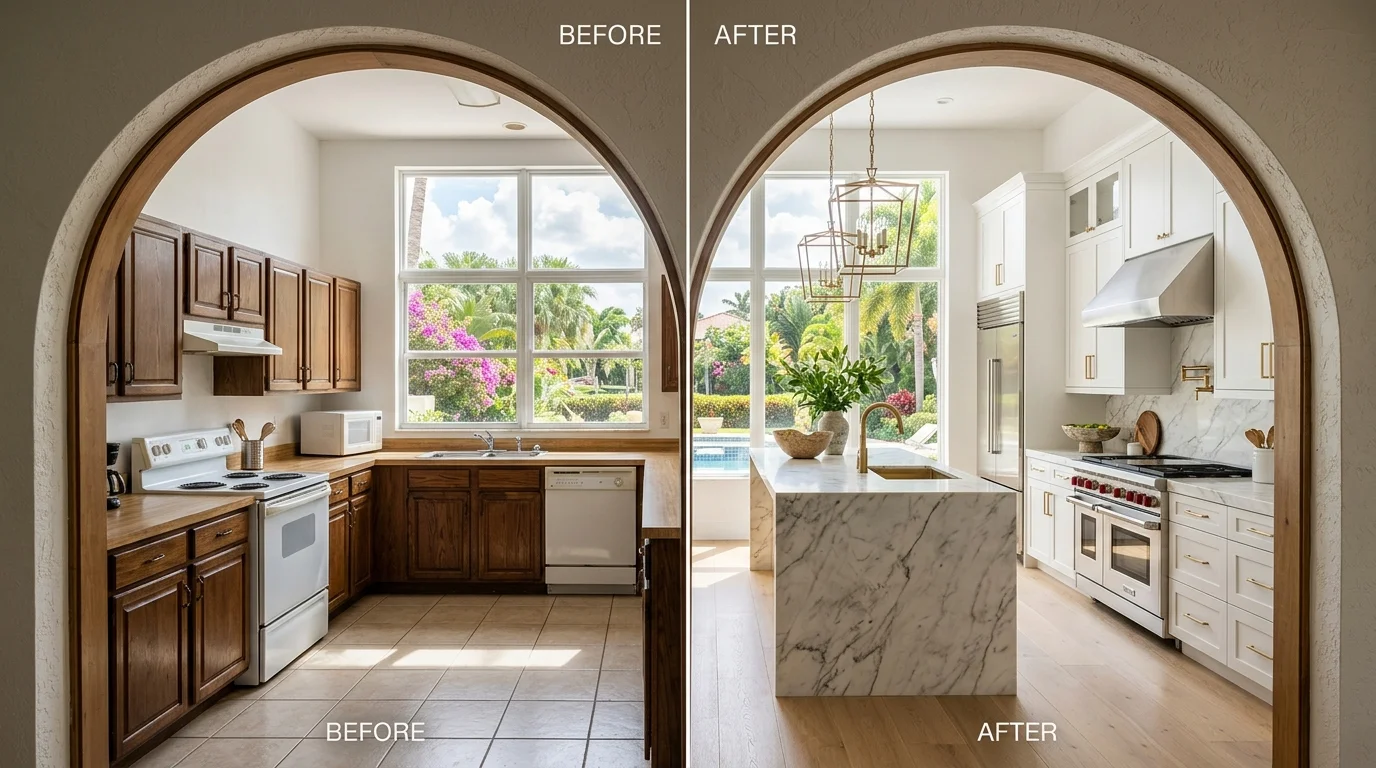
Every kitchen remodel before and after story looks effortless in a magazine spread. The reality? There's demolition dust, decision fatigue, and at least one week where you're eating takeout on the couch. Our team at South Florida Kitchen & Bath has completed hundreds of kitchen transformations across Palm Beach County, in Boca Raton condos, Wellington single-family homes, Jupiter waterfront properties, and Delray Beach townhouses. What we see over and over is that homeowners who come in with realistic expectations end up happiest with the results. This guide walks you through what the before looks like, what happens during the project, what the after actually delivers, and what it costs here in our market.
What the 'Before' Actually Looks Like
Most kitchens we walk into before a remodel fall into one of three categories. The first is the original-builder kitchen, laminate countertops, raised-panel oak cabinets from the mid-1990s, fluorescent tube lighting, and a drop-in sink that's seen better days. These are everywhere in Palm Beach County's stock housing from the 1985-2005 build era. The second category is the half-updated kitchen, someone swapped the countertops but never touched the cabinets, or painted over the oak without proper prep, and now everything looks mismatched and dated. The third is the neglected-but-solid kitchen, good bones, decent layout, but moisture damage under the sink, warped cabinet doors from Florida humidity, and grout that no amount of scrubbing will fix.
Understanding which category you're starting from matters because it shapes your budget, your timeline, and what's actually worth keeping. If you have a solid layout that works for how you cook, you may not need a full gut remodel. A refresh versus a full remodel is a conversation we have at nearly every first consultation. Sometimes $15,000-$25,000 spent on new cabinet fronts, a countertop upgrade, and a tile backsplash transforms a space more effectively than tearing everything down to studs.
What we always look at during a walkthrough: cabinet box condition, whether the layout is efficient, the state of the flooring, and whether the existing lighting plan makes sense. Soft-close hinges and drawer slides can be added to existing boxes during a reface. But if the boxes themselves are water-damaged or the layout forces you to walk in circles, a full replacement is the right call.
What Changes During a Remodel
The transformation from before to after happens in layers, and understanding the sequence helps you stay sane when the kitchen looks worse at day five than it did on day one. Here's how a typical full kitchen remodel unfolds on our end.
Demolition comes first. Cabinets come out, countertops come off, old backsplash tile gets removed. If the scope includes moving the sink location, relocating an island, or opening a wall, your general contractor handles those structural moves, framing, plumbing rough-in, electrical rough-in, before we ever set a cabinet. Permits are required when the project involves moving major plumbing, changing electrical service capacity, running new gas lines, or removing load-bearing walls. A straight cabinet-and-counter replacement on the existing footprint typically does not require a permit, which covers a significant portion of the remodels we do.
Once the space is prepped and any GC rough-in work is inspected, our crew begins cabinet installation. Upper cabinets go first, then base cabinets. This is where the space starts to look like a kitchen again. After cabinets are set and leveled, countertop templating happens, a fabricator comes out to template the exact dimensions, then slabs are cut and returned for installation, usually within one to two weeks depending on the material and the shop's schedule. Backsplash tile goes in after counters are set. Then lighting, hardware, and finish trim close everything out.
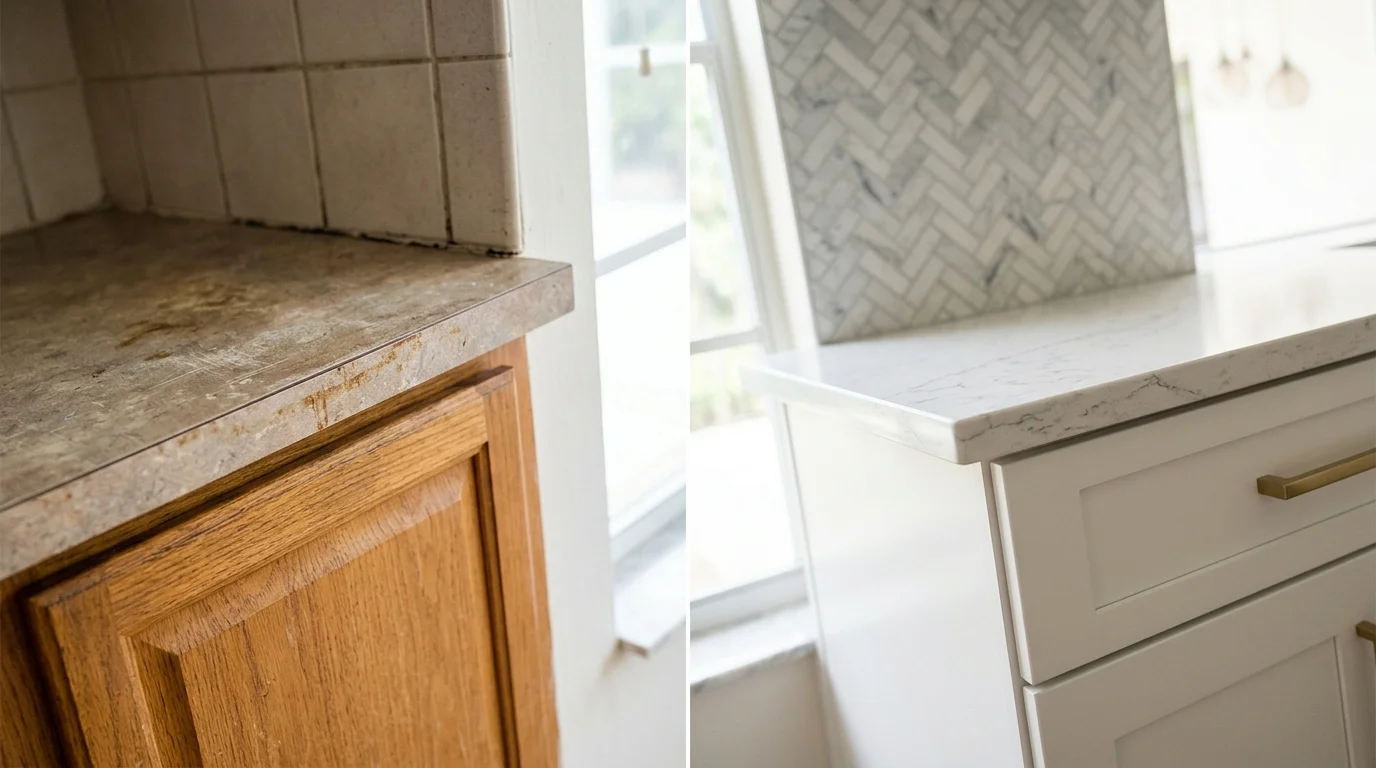
The details that create the biggest visual impact in the after photos are often the ones people underestimate during planning. Cabinet hardware finish, whether you go with brushed brass, matte black, or satin nickel, changes the entire mood of the kitchen. Choosing the right cabinet style for South Florida homes matters just as much as the color. Shaker doors read clean and timeless. Flat-front slab doors feel more contemporary. Raised panel reads traditional and can feel heavy if the kitchen gets a lot of natural light.
Backsplash is another high-impact finish. We recommend full-height backsplash over a 4-inch option in most South Florida kitchens, it reads more polished, it's easier to clean, and it gives the countertop material a chance to shine from counter level all the way to the upper cabinets. The difference in material cost is smaller than most homeowners expect.
Lighting is the sleeper upgrade. Before photos almost always feature a single overhead fixture casting flat, yellowish light. After photos with layered recessed lighting plus under-cabinet LED strips look dramatically different, not because the kitchen changed shape, but because the light shows off the materials. If you haven't looked at your lighting plan yet, a proper recessed lighting layout for your kitchen is worth doing before drywall closes up.
Realistic Timeline for Palm Beach County Projects
This is where expectations need to be grounded in reality, not HGTV. A well-run kitchen remodel in Palm Beach County does not happen in two weeks. Material lead times, permitting (when required), fabrication schedules, and inspection windows all add time. Here's what a realistic project calendar looks like:
Design and selection phase: 2-4 weeks. This is where you're choosing cabinets, countertop slabs, tile, hardware, and appliances. Rushing this phase causes regret. Take the time to see slab options in person, what looks good on a screen looks completely different under your kitchen's lighting conditions. If you want to see actual slabs before committing, knowing where to shop for countertop slabs in Palm Beach County gives you a head start.
Material ordering and lead times: 2-6 weeks. Semi-custom cabinets run 3-5 weeks from most suppliers we work with. Custom cabinetry can run 6-10 weeks. Stock cabinets ship faster but offer fewer configuration options. Countertop slabs need to be ordered and held once you select them, popular materials like Taj Mahal quartzite or Calacatta quartz move fast in this market.
Construction phase: 2-5 weeks. For a full kitchen remodel with no layout changes, figure 2-3 weeks of active work once cabinets arrive on site. Add a week or more if your scope includes structural work your GC is managing. Countertop fabrication after templating adds 7-14 days. Backsplash tile installation is typically 2-3 days. Punch list and finish work at the end runs 1-3 days.
Total realistic range: 6-14 weeks from first design meeting to final walkthrough. Projects with custom cabinetry, layout changes, or permit requirements sit at the longer end. A cabinet-and-counter refresh on an existing layout with in-stock materials can move faster. For a deeper look at timelines, our article on how long a kitchen remodel takes in Palm Beach County breaks this down by project type.
One thing that adds time homeowners don't anticipate: discovery work. Open a wall in a 1990s Palm Beach County home and you may find undersized wiring, old copper supply lines that need replacement, or a subfloor that needs sistering before new flooring can go down. Your GC handles those surprises. We've learned to flag this risk upfront so clients aren't caught off guard. It's also why padding your budget by 10-15% for the unexpected is advice worth taking seriously, see kitchen remodel hidden costs for a full breakdown of what catches people off guard.
Cost Guide: Kitchen Remodel Before and After in Palm Beach County
Cost is where before-and-after transformations get real. What you see in the after photo reflects real decisions made at real price points. Here's how the numbers break down in the Palm Beach County market. These are our actual ranges, not national averages pulled from a content farm.
The 30 percent rule in remodeling is a useful sanity check: your kitchen remodel budget shouldn't exceed about 30% of your home's current market value. In a market where entry-level homes in Wellington or Delray Beach are selling for $450,000-$600,000, that gives you significant headroom before you're over-improving for your neighborhood.
Appliances are almost always a separate line item from cabinetry and finish work. A mid-range appliance package, a quality range, dishwasher, and refrigerator, runs $4,000-$10,000. A high-end package with a 48-inch range, column refrigerator/freezer pair, and built-in dishwasher can run $20,000-$40,000 before installation. We design the cabinet layout around the appliance specs you've chosen, so appliance selection needs to happen early in the process, not after cabinets are already ordered.
For a more detailed breakdown by kitchen size, our kitchen remodel cost guide for Palm Beach County covers per-square-foot pricing and what drives costs up or down in our specific market.
South Florida Considerations That Shape Every Before and After
Kitchens in Palm Beach County age differently than kitchens in the midwest or the northeast. The combination of heat, humidity, salt air in coastal communities, and the way we actually use our kitchens, often with the back door open, the A/C running hard, and a lot of outdoor-to-indoor traffic, puts specific demands on materials and construction methods that generic remodeling advice doesn't address.
Cabinet material matters more here than almost anywhere. Solid wood doors in a kitchen that sees significant humidity swings will move, they expand and contract, and if they weren't built for it, they warp. This is why we see so many warped cabinet doors in homes that weren't originally built with Florida conditions in mind. Medium-density fiberboard (MDF) painted doors are actually more stable than solid wood in high-humidity environments, which is counterintuitive but true. For stained wood looks, species selection and finish type matter, not every wood performs equally in South Florida conditions.
Countertop selection is equally climate-dependent. Marble looks stunning but requires more maintenance in a working kitchen. Quartz is the workhorse choice for most of our clients, non-porous, consistent, and holds up to the cleaning products people use in South Florida homes. Natural quartzite (not the same as quartz) gives you a natural stone look with better durability than marble but still requires sealing. The best countertop materials for Florida's humidity and heat aren't always the most Instagrammable, they're the ones that still look good in five years.
Backsplash tile in coastal kitchens near Jupiter or Boca Raton should be rated for the moisture environment. Large-format porcelain tiles are a strong choice, fewer grout lines mean fewer places for mold to establish. If you're going with a natural stone mosaic, proper sealing and grout selection matters.
HOA and community design review requirements add a layer that homeowners in gated communities often underestimate. Many communities in Wellington, Palm Beach Gardens, and Boca Raton require design approval before construction begins, even for interior work if it affects exterior-facing windows or doors. The approval process can add 2-4 weeks to your project start date. We supply design drawings and material samples to support your package submission; your GC or community manager handles the actual submission and approval tracking. For more on navigating this process, see our guide on remodeling a kitchen in a gated community in Palm Beach County.
According to the National Association of Home Builders Cost vs. Value data, kitchen remodels consistently rank among the top ROI projects for resale, and in a high-demand market like Palm Beach County, that effect is amplified. Buyers in our market expect updated kitchens. A dated kitchen in an otherwise well-maintained home is one of the fastest ways to lose negotiating position on a sale price.
Finally, the permit question. The Palm Beach County Building Division requires permits when scope involves moving plumbing, changing electrical service, running new gas lines, or structural modifications. A straight cabinet swap, countertop replacement, or tile backsplash update on the existing footprint typically does not require a permit. Your GC will advise on your specific scope, and pulling permits when required protects you at resale, when buyers' inspectors look for unpermitted work.