Rain Shower & Shower System Guide: Everything You Need to Know
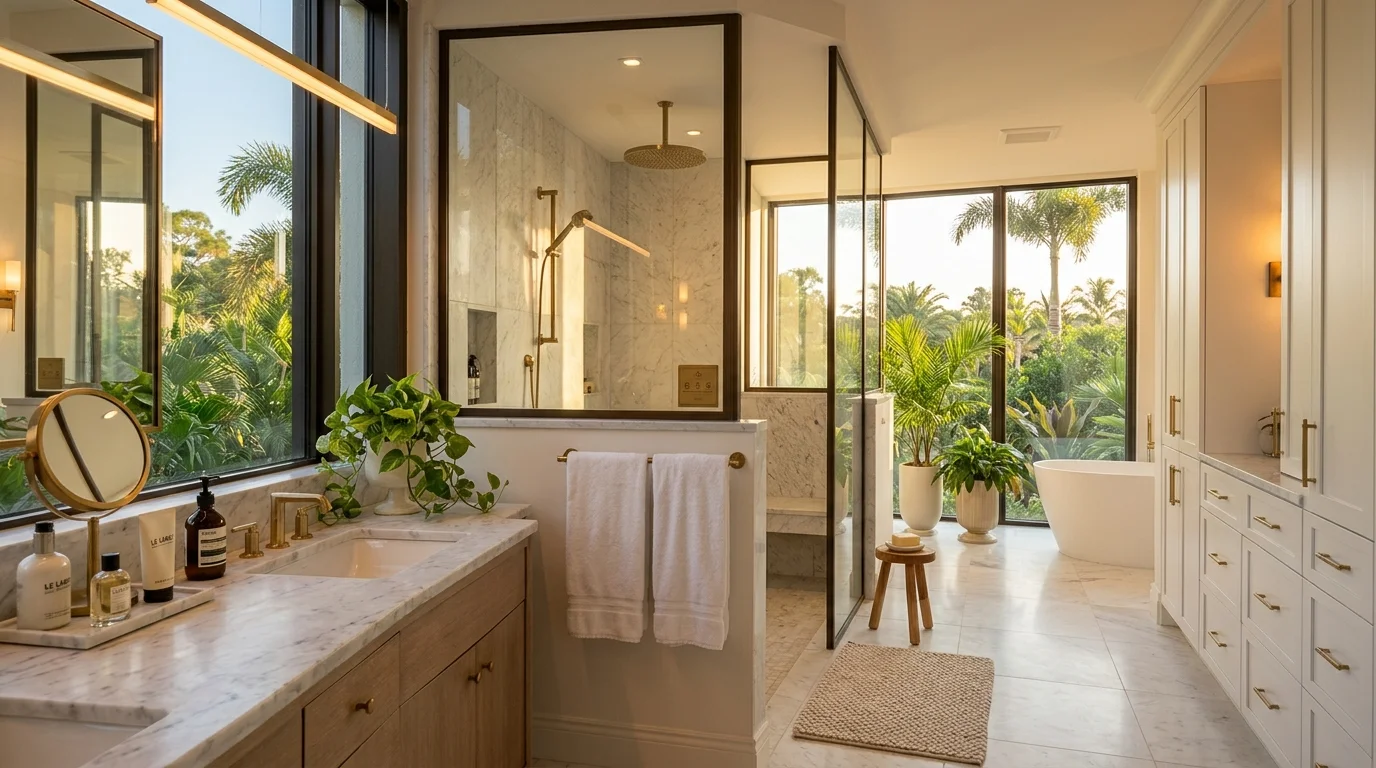
If you're planning a shower remodel in Palm Beach County, the fixture package is one of the most confusing parts of the whole project. This rain shower head guide breaks down what's worth spending on, what's marketing fluff, and how a full shower system actually goes together. Rain heads, body sprays, thermostatic valves, digital controls, there's a lot to sort through before your plumber ever touches a pipe.
Rain Shower Head Basics
A rain shower head is a wide, low-pressure fixture designed to deliver a broad, gentle curtain of water directly overhead. The experience is meant to mimic standing in warm rain. That's the pitch. The reality depends entirely on two things: the size of the head and your home's water pressure.
Sizes range from 8 inches all the way up to 24 inches or more. Our team recommends at least a 12-inch head for a solo shower and 16 inches or larger for a double shower or any space over 48 inches wide. Anything smaller than 10 inches tends to feel like a standard showerhead with worse coverage. Don't let a low price on an 8-inch rain head fool you.
Mounting matters just as much as size. You have three options: ceiling-mounted, arm-mounted from the wall, or integrated into a full overhead panel. Ceiling-mounted is our preference. It delivers true vertical flow and looks cleaner than a wall-arm that angles the head out over open air. The tradeoff is that ceiling mounting almost always means opening the wall or ceiling to run new supply lines, that's work your general contractor or plumber handles before our crew ever arrives to do tile and finish work.
Flow rate is another number homeowners overlook. Standard showerheads run at 2.5 GPM (gallons per minute). Florida adopted the federal WaterSense standard, which caps new fixtures at 2.0 GPM. Many premium rain heads actually run at 1.8 GPM or lower. If your water pressure is already on the soft side, common in older Delray Beach and Boca Raton homes, a low-flow rain head can feel underwhelming. Ask your plumber to test static pressure before you commit to a fixture package. The sweet spot for a satisfying rain shower experience is 45-80 PSI at the valve.
Materials and finish are where the aesthetic choices live. Brushed nickel still dominates Palm Beach County installs because it hides water spots well in our hard-water environment. Matte black looks sharp but shows mineral deposits faster. Polished chrome is easy to wipe down. If you're drawn to black fixtures, read our breakdown of whether that trend holds up long-term before committing your whole shower to it.
Top brands we see regularly on South Florida projects: Kohler, Delta, Hansgrohe, Moen, and Grohe. For true luxury installs in Jupiter and Wellington, Hansgrohe's Raindance line and Kohler's Statement collection are popular. Both offer WaterSense-certified options. The EPA WaterSense program certifies fixtures that use at least 20% less water without sacrificing performanceworth checking when you're comparing specs.
Body Sprays, Handhelds & Side Jets
A rain head alone is a solid upgrade. But a full shower system adds body sprays, side jets, and a handheld wand to create something closer to a spa experience. Knowing how these components work together, and what they demand from your plumbing, saves a lot of budget surprises.
Body sprays are small individual nozzles mounted into the shower wall, typically at torso height. A standard install uses 6-8 body sprays in two vertical columns flanking the shower. Each spray has its own adjustable head and covers a targeted zone. Used alone, they're excellent for rinsing off after the beach or loosening tight muscles. Paired with a rain head, they produce what most homeowners picture when they imagine a resort-style shower.
The catch with body sprays is water demand. A single body spray runs at around 0.5-0.75 GPM. Run eight of them simultaneously and you're pulling 4-6 GPM before the rain head is even on. Your home's supply line, water heater capacity, and pressure all need to be evaluated before this layout gets designed. This is a conversation your plumber needs to have early. We design the tile and niche layout around whatever fixture plan your GC confirms is feasible for the space.
Side jets are a variation on body sprays, usually larger and mounted horizontally to target specific zones like the lower back or shoulders. They're common in luxury master bath projects in Palm Beach Gardens and North Palm Beach. They work well but require the same pressure and volume considerations as standard body sprays.
Handheld wands are non-negotiable in our opinion. Every shower we design gets a handheld, full stop. They make rinsing hair straightforward, cleaning the shower itself much faster, and they're the first thing an aging-in-place plan calls for. If accessibility is part of your planning, our guide to aging-in-place bathroom design covers how handhelds fit into a broader safety strategy. A slide bar mount lets you position the wand at any height, which is practical for households with kids or height differences between users.
Shower panels are an alternative to plumbing multiple individual fixtures. These are vertical tower units that include a rain head, body jets, and a handheld all plumbed through one supply connection. They look sleek and simplify installation. The limitation is that you're locked into whatever the panel's layout provides. We see them work well in condo bathrooms in Boca Raton where wall space is tight and opening walls isn't practical. For a custom master bath with room to work, we prefer individual fixtures on a thermostatic system every time.
Thermostatic Valves Explained
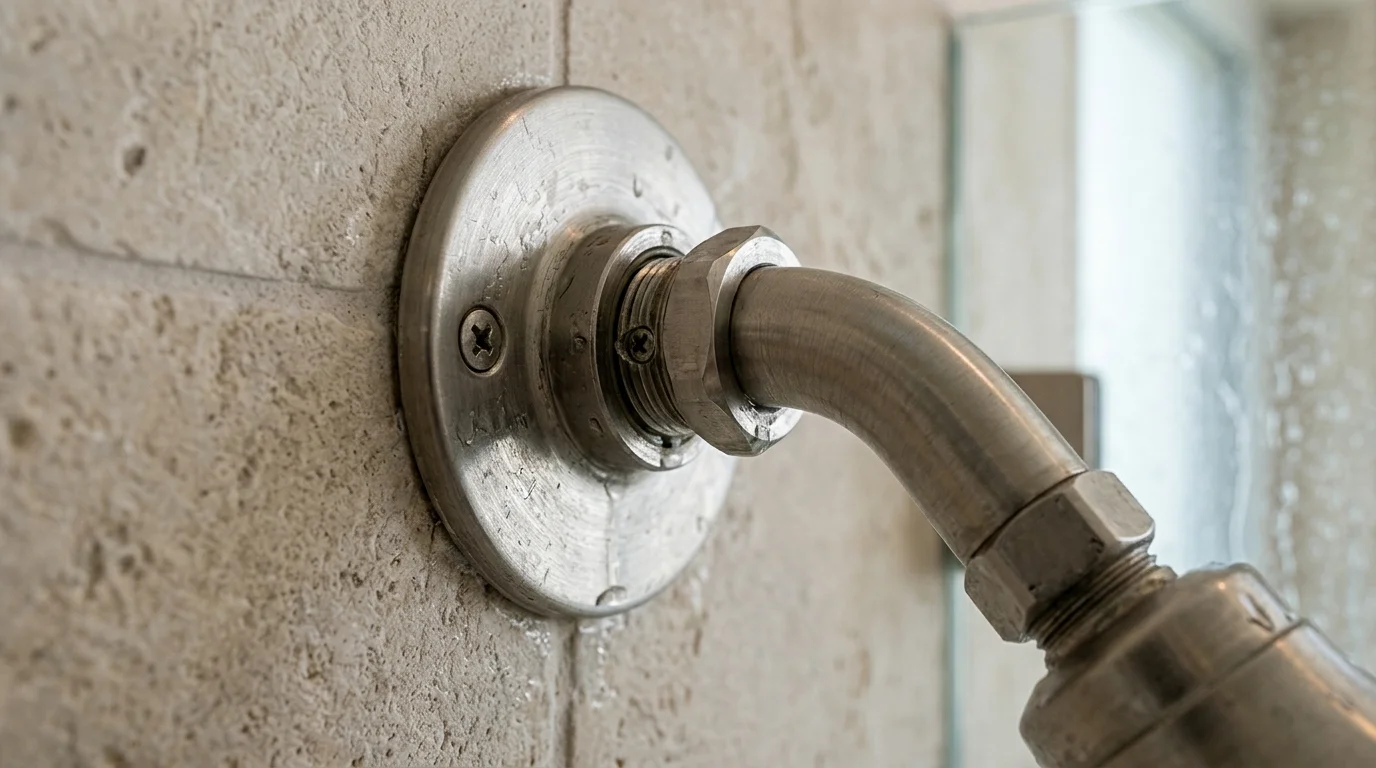
This is the section most homeowners skip over in the showroom, then regret skipping once their shower is tiled. The valve is the brain of your shower system. Getting it wrong means you're fighting temperature swings, running multiple outlets on a single handle, or wishing you'd spent another $400 when you're already two years into owning the finished shower.
There are two basic valve types: pressure-balancing and thermostatic. Every shower in a Florida home built after 1994 is required to have at least a pressure-balancing valve, that's the valve that prevents scalding when someone flushes a toilet and drops cold water pressure. It reacts to pressure changes but doesn't lock in a temperature. You'll still adjust the handle every time you shower to dial in where you want to be.
A thermostatic valve does something smarter. It locks in an exact water temperature at the valve and holds it regardless of what's happening elsewhere in the house. You set 104 degrees once. Every shower starts at 104. No adjustment, no waiting for the water to stabilize. For families with young kids or elderly household members in Boca Raton and Delray Beach homes, this is a meaningful safety feature as well as a convenience one.
Thermostatic valves also allow volume to be controlled independently from temperature. That's the key to running a multi-outlet shower system properly. A standard thermostatic setup uses one thermostatic cartridge and separate volume controls, called diverters or trim kits, for each outlet. The rain head has its own control. The body sprays have their own control. The handheld has its own. You can run them in any combination without touching the temperature. This is how the system works at a hotel, and it's exactly how we spec it for luxury shower builds in Wellington and Jupiter.
The practical limit is how many outlets a single thermostatic valve can handle. Most residential thermostatic valves support 2-4 outlets. If you're designing a shower with 8 body sprays, a rain head, a handheld, and a steam generator, you may need a second valve or a digital system. Brands like Kohler's DTV+ and Hansgrohe's iBox offer digital thermostatic platforms that control everything from a touchscreen panel. These are premium products, expect to budget accordingly.
Digital shower controls are worth considering on larger builds. You can preset personal shower profiles, control multiple zones from outside the spray zone, and integrate with smart home systems. The tradeoff is complexity and cost. A digital system from Kohler or Moen adds $1,500-$4,000 to your fixture budget before installation. For a primary master bath that you'll use every day for the next 15 years, that's often a worthwhile number. For a guest bath, it's overkill.
Valve trim, the visible plate and handles on the wall, needs to match across all controls for a clean finished look. This is something we pay close attention to during design. Mixing handle styles or finishes across a multi-outlet system looks disjointed. Pick a family of fixtures from one brand and stay in it. That discipline also makes ordering replacement parts easier down the road.
One more thing on valves: permits. If your plumber is relocating supply lines to accommodate a new ceiling-mounted rain head or adding rough-in for body sprays that weren't there before, that work typically requires a permit from the Palm Beach County building department. Your general contractor handles permit applications, not our team. We coordinate our tile and finish scope around whatever the GC's permit allows. For a broader look at what bathroom remodel costs look like across the county, our cost guide covers the full range by project type.
Cost Guide
Shower system costs in Palm Beach County vary significantly by fixture brand, outlet count, and whether the plumbing rough-in is already in place. The numbers below reflect installed costs, fixture plus your plumber's labor. Our team handles tile, niche, and finish work; plumbing rough-in is your GC's scope and is billed separately.
These numbers are fixture-focused. The full shower remodel picture, tile, waterproofing, glass enclosure, niche, bench, adds significantly to your total. Our shower remodel cost guide for Palm Beach County breaks down the complete project scope, not just the fixtures.
One common budgeting mistake: homeowners price out a premium fixture package and forget to budget for the plumbing rough-in changes needed to support it. A ceiling-mounted rain head in a bathroom where the supply currently comes out of the wall is not a simple swap. Your plumber may need to run new lines through the ceiling, which could involve your GC opening up soffit or ceiling drywall. Factor that in early.
South Florida Considerations
Palm Beach County's climate and water quality create a few specific challenges for shower systems that you won't read about in a generic buying guide. Here's what actually matters when you're living and showering in South Florida year-round.
Hard water is real and it's aggressive here. South Florida's municipal water supply is treated but still carries enough mineral content to build up scale inside shower heads and body spray nozzles over time. Rain heads with rubber nozzles (most premium brands have them) are easier to clean, you can rub off mineral deposits with your fingers. Ceramic disc valves inside thermostatic cartridges handle hard water better than older brass-seat designs. Installing a whole-home water softener or at minimum a point-of-use filter at the shower valve significantly extends fixture life.
Humidity management matters in shower design too. South Florida bathrooms are already operating in a high-humidity environment before anyone turns the water on. Proper exhaust ventilation is mandatory, your GC should spec a bathroom fan rated for the square footage of the space, and in many cases a larger-than-standard unit is the smarter call. Shower niches, bench surfaces, and wall tiles all need proper waterproofing behind them. Our bathroom waterproofing guide covers what a correctly waterproofed shower assembly looks like in Florida's conditions.
Tile selection for a rain shower setup deserves a focused conversation. Large format tiles look stunning in a rain shower, but the floor tile needs adequate slip resistance. Florida Building Code requires a minimum coefficient of friction rating for wet floor surfaces. Polished stone floors under a rain head are a liability. Our bathroom floor tile guide walks through which tile types perform best in Palm Beach County bathrooms, including wet zones with heavy overhead water flow.
HOA and ARB approval is a reality in many Wellington, Boca Raton, and Jupiter communities. If your master bath remodel involves any exterior penetration, a new exhaust vent, for example, your GC will need to supply design drawings and material specs to the HOA. Our design team provides drawings and finish samples for your GC's submission package. We don't submit directly to the building department or HOA, but we make sure our documents are ready when they're needed.
Water pressure in older Florida homes can be an issue. Homes built in the 1970s and 1980s, common in Delray Beach and unincorporated Palm Beach County, sometimes have galvanized or undersized supply lines that can't support a full multi-outlet shower system without a pressure drop that makes the whole thing feel weak. Have your plumber test and confirm before you buy a $3,000 fixture package. If supply lines need upgrading, do it as part of the remodel, not as an afterthought after the tile is in.
For condo projects specifically, body spray systems often aren't feasible because the water demand exceeds what the building's supply pressure can deliver to upper floors. A ceiling-mounted rain head with a thermostatic valve and a handheld wand is the smarter condo package, it delivers a significant upgrade over a standard showerhead without stressing the building's plumbing infrastructure. Our walk-in shower design guide for South Florida bathrooms covers how to design a great shower within condo and older home constraints.
Finally, the shower glass enclosure works with the fixture layout, not independently of it. A rain head on the near wall of a shower will soak anyone opening a swinging door. Ceiling-mounted heads positioned toward the center or back of the shower pair better with frameless glass. Our design team coordinates the fixture layout with the glass enclosure design before anything gets roughed in. Getting that sequence right is one of the things that separates a shower that functions well from one that looks great in photos but annoys you every morning. See our frameless shower glass guide for enclosure options that work with different fixture configurations.