Scullery Kitchens: the Hidden Prep-Pantry Trend
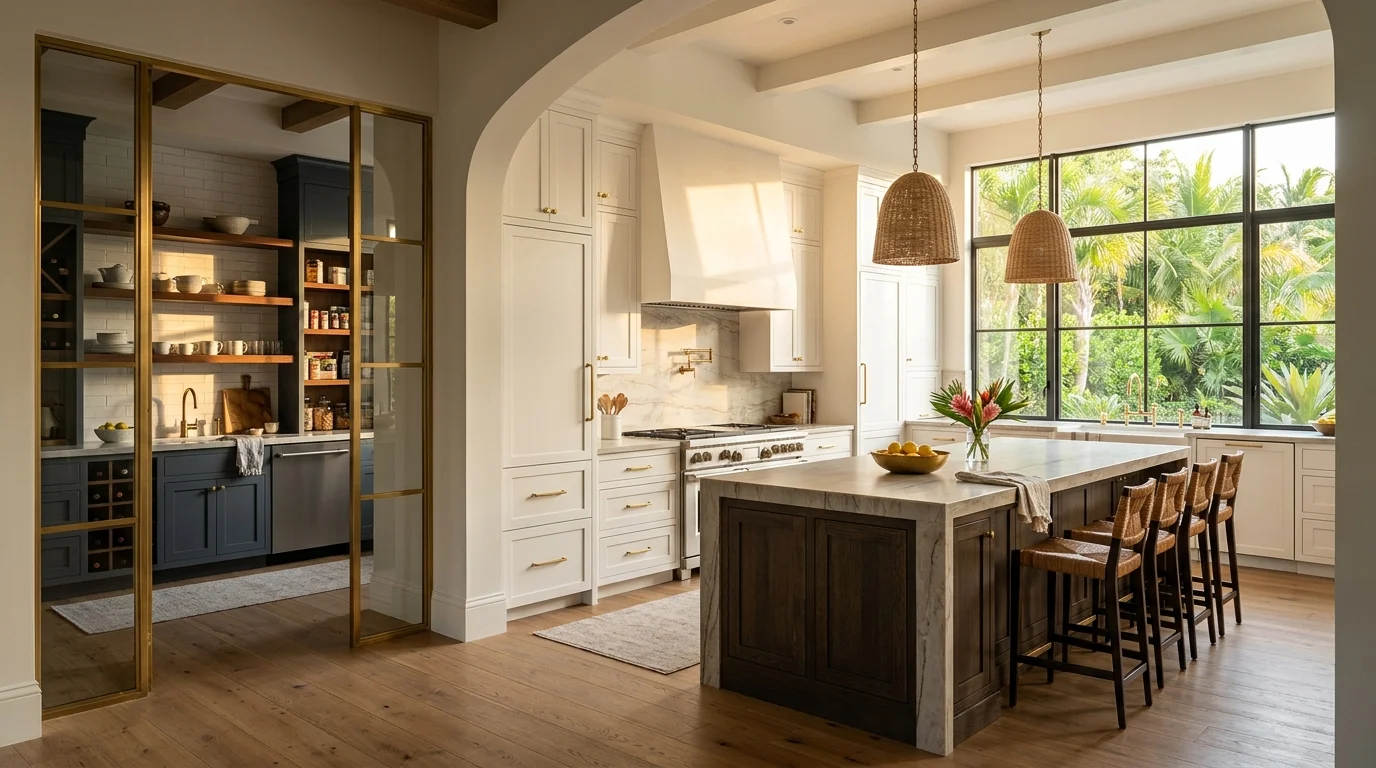
A scullery kitchen is one of the fastest-growing requests we get from homeowners across Palm Beach County, and for good reason. If you've been watching kitchen design trends at all, you've probably seen photos of a tucked-away prep room just off the main kitchen: a second sink, open shelving stacked with mixing bowls, a spare refrigerator, and enough counter space to stage an entire dinner party out of sight. That's a scullery. It's not new, the concept goes back centuries, but the way people are using it in 2026 is completely fresh. Here's what you need to know before you start planning one.
What Is a Scullery Kitchen?
The word "scullery" comes from the Latin scutella, meaning a tray or dish. Historically, a scullery was a back room where dishes were washed, vegetables were prepped, and messy kitchen work happened away from the formal cooking space. Think of it as the workhorse room that kept the main kitchen looking presentable.
Today's version serves the same purpose, just updated for modern life. A scullery kitchen is a secondary food-prep and storage room that connects directly to the primary kitchen. It typically includes a prep sink, counter space for appliances and staging, pantry-style shelving or cabinetry, and often a second dishwasher. Some homeowners in Boca Raton and Wellington add a spare refrigerator or wine cooler as well.
The defining characteristic is the door. A scullery closes off from the main kitchen. That's what makes it different from an open pantry or an exposed back-kitchen wall. When guests are over, you close the door and the main kitchen looks pristine. The chaos of real cooking, the unwashed prep bowls, the open cereal boxes, the small appliances you don't want on display, lives in the scullery.
We've built sculleries that range from a 6-foot-wide galley-style pass-through to full 10x12 rooms with their own lighting zones, dedicated appliance garages, and tile that's completely different from the main kitchen. Size varies widely, but the function stays the same: hide the work, show the beauty.
If you're weighing whether a scullery fits your project budget, our guide on the 30 percent rule in remodeling is a solid starting point for figuring out what's realistic for your home's value and square footage.
Scullery vs. Butler's Pantry
People use these terms interchangeably all the time. They're not the same thing, and knowing the difference helps you plan the right space.
A butler's pantry is a pass-through corridor between the kitchen and dining room. Historically it was where a butler staged food before serving it, plating dishes, decanting wine, arranging glassware. It's a transition space, not a working prep room. A butler's pantry usually has glass-front upper cabinets, a small sink, and display-worthy finishes because it's meant to be seen by guests moving from the kitchen to the dining area.
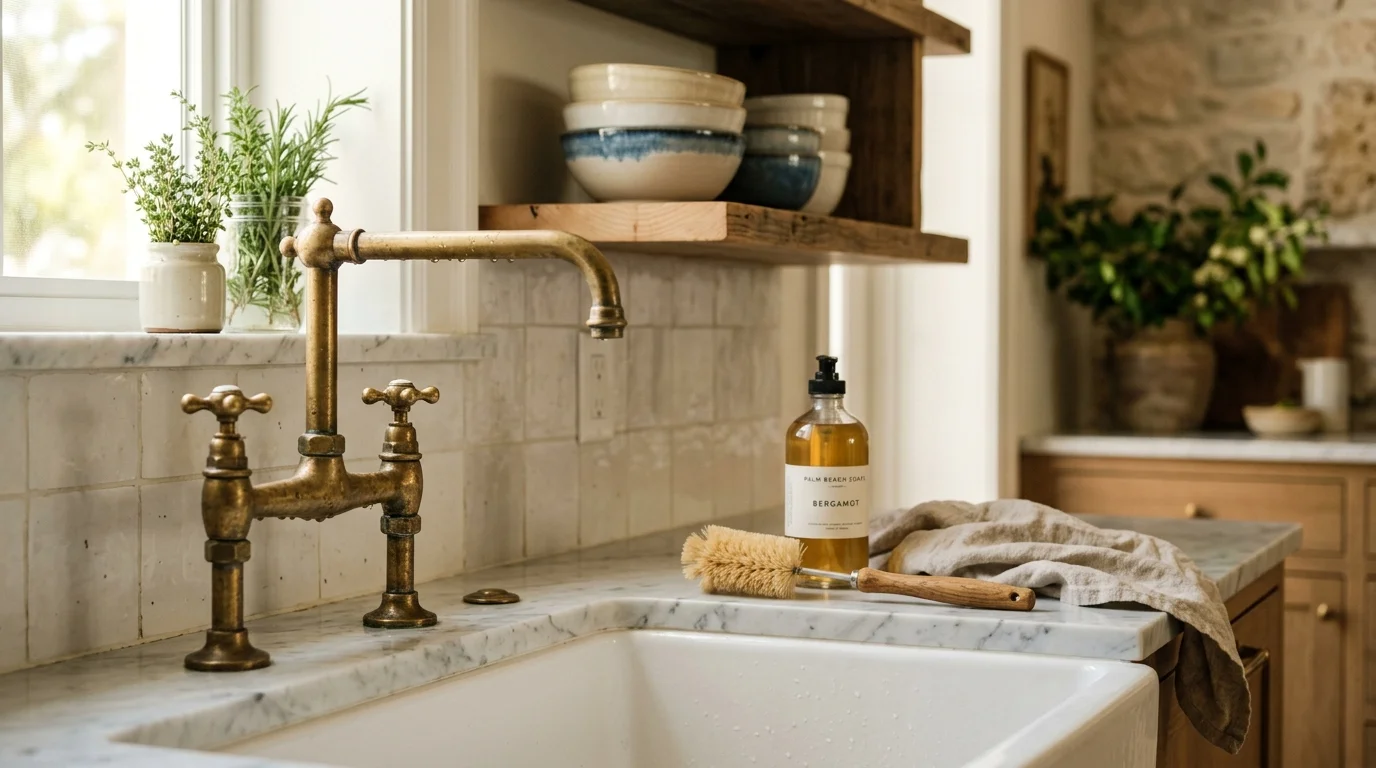
A scullery is hidden and purely functional. It's not a pass-through, it's a room with a door. The finishes can be simpler because no one sees them except you. The counter space is deeper, the shelving is more utilitarian, and the sink is typically larger (a farmhouse or deep double-bowl setup built for actual washing, not just hand-rinsing a wine glass).
Some projects, especially in larger Jupiter and Delray Beach homes, combine both. You get a butler's pantry on the dining room side with refined finishes, and a scullery tucked behind the main kitchen for the real prep work. That's the full setup. Most homeowners, though, are choosing between one or the other, and our recommendation is clear: if you entertain frequently and you cook real food, the scullery adds more daily value than a butler's pantry. The butler's pantry looks great on an open house tour. The scullery makes your life easier every single weekend.
For a deeper look at costs and design options for a butler's pantry specifically, check out our dedicated post on butler's pantry additions in Palm Beach County.
Layout and Space Requirements
You don't need a massive home to pull off a scullery kitchen. But you do need some honest planning. Here's what actually matters.
Minimum workable footprint: We consider 5 feet wide by 8 feet long the bare minimum for a functional scullery. That gives you counter space on one or two walls, a sink, and overhead or open shelving. Anything smaller starts to feel like a closet with plumbing, and it will frustrate you.
Ideal footprint: 8 feet by 10 feet or larger. At that size you can run a full counter run on both walls, install a second dishwasher, add a tall pantry cabinet or two, and still have clearance to move around comfortably while someone else is in the main kitchen. This is where sculleries really shine.
Connection to the main kitchen: The scullery needs to connect directly to the primary kitchen, ideally through a single doorway that can be closed quickly. Pocket doors and barn doors are both popular here. We lean toward pocket doors when wall space allows, because they disappear completely and don't interfere with traffic flow the way a barn door track can.
Plumbing access: You need a prep sink, which means your GC needs to run a water supply and drain line to the scullery. In existing homes, this is easiest when the scullery backs up to an existing plumbing wall or when the main kitchen plumbing runs adjacent. If your GC needs to open walls or reroute lines significantly, permits may be required, scope-dependent, as always. Your GC handles that assessment and any permit filings.
Ventilation: If you're putting a second cooktop or range in the scullery (some homeowners do), you need dedicated ventilation. This adds cost and complexity. Most sculleries skip the cooktop entirely, they're for prep, washing, and storage, not for a second cooking station.
Lighting: Under-cabinet lighting is non-negotiable in a scullery. You're working in a room with less natural light than the main kitchen. Good task lighting makes it functional. Poor lighting makes it a room you avoid. Our post on under-cabinet lighting in Palm Beach County kitchens covers the options in detail.
Cabinetry: Open shelving is common in sculleries because it's faster to grab things when everything is visible. We recommend a hybrid approach, open shelves for everyday items you reach for constantly, closed cabinets below for bulkier items. If you go all open shelving, the space requires discipline to stay organized. In Florida's humidity, items left exposed for too long can collect dust and moisture. A mix works better.
For the main kitchen cabinetry adjacent to your scullery, the door style you choose affects how the transition looks. Our guide to kitchen cabinet styles in South Florida covers everything from shaker to flat-front and how they hold up in the climate here.
Why 2026 Wants One
The scullery kitchen isn't trending because of a single Instagram post. There are real lifestyle drivers behind it, and most of them accelerated after 2020.
First, open-concept kitchens created a problem nobody fully anticipated. When the kitchen is exposed to the living room and dining room at all times, there's no place to hide the mess. People started designing beautiful kitchens and then stressing every time someone dropped by unexpectedly. The scullery solves that. It gives open-concept homes a place to relocate the chaos without sacrificing the open layout.
Second, people are cooking more. Not just heating things up, actually cooking. Sourdough, meal prep, elaborate dinner parties. That kind of cooking generates a lot of equipment, a lot of dishes, and a lot of surfaces that need to be clear and ready. A scullery absorbs all of that.
Third, Palm Beach County homes, especially in areas like Wellington, Boca Raton, and Jupiter, tend to be larger new-builds or substantial remodels where the square footage exists to do this right. Homeowners who have the space are choosing to allocate it to function, not to another formal dining room nobody uses.
Fourth, the real estate angle. Buyers in this market notice. A well-designed scullery reads as a luxury upgrade, one that signals the kitchen was designed for people who actually cook, not just for showroom photos. That differentiates your home. For a breakdown of which kitchen upgrades deliver the strongest return in South Florida, our piece on kitchen upgrades that add the most value to Florida homes is worth reading before you finalize your scope.
Finally, appliance proliferation. Air fryers, stand mixers, Instant Pots, coffee stations, sous vide circulators, the average kitchen has far more countertop appliances than it did fifteen years ago. Most of them are ugly when left out. A scullery gives them a home. You pull the appliance out when you need it, slide it back when you don't, and the main kitchen stays clean.
We're also seeing sculleries requested alongside dedicated coffee bar setupshomeowners want the coffee station accessible but out of the main sightline. A scullery wall is a perfect place to build that in.
According to the National Association of Home Builders, dedicated food prep areas and walk-in pantry spaces consistently rank among the top kitchen features buyers want, and a scullery hits both categories at once.
Cost Guide
Scullery kitchen pricing in Palm Beach County depends heavily on the size of the room, whether it's a new addition or a conversion of existing space, and the level of finish you want. Here's how it breaks down.
Converting an existing space, a large walk-in pantry, a laundry room that's being relocated, an underused mudroom, is significantly less expensive than building a new addition. Most sculleries in the county fall into the conversion category, which keeps costs more manageable.
Note that plumbing rough-in, electrical work, and any structural changes are your GC's scope and are priced separately. The cabinetry, countertops, tile, and finish carpentry is where our team focuses. For a broader picture of what a full kitchen project costs in this market, our kitchen remodel cost guide for Palm Beach County covers the full range from budget to luxury.
One thing we tell every homeowner: don't underestimate the cabinetry spend in a scullery. This is where people try to cut corners and then regret it. In a humid Florida environment, cheap box cabinets in a room with a working sink and steam from a dishwasher will fail faster than you'd expect. Invest in quality construction here. You'll feel it every day you use the space.
For countertop material selection, particularly if you're debating quartz versus natural stone, our guide on the best countertop materials for Florida's humidity is directly relevant to scullery applications where water exposure is constant.
South Florida Considerations
Building a scullery kitchen in Palm Beach County comes with a few regional factors that don't apply in other parts of the country. Here's what actually matters here.
Humidity is your biggest design challenge. South Florida's ambient humidity, especially in summer, means any scullery needs to be designed with moisture resistance as a priority. That means moisture-resistant cabinet construction (plywood boxes, not particleboard), proper ventilation, and countertop materials that handle repeated water exposure without staining or warping. Quartz is our first recommendation for scullery counters. Honed marble looks incredible but requires more maintenance in a working prep room. Butcher block, while charming, is a difficult choice in a South Florida scullery, read our honest take on butcher block countertops for Florida homes before you commit to it.
Tile selection matters more than people think. For scullery floors, we recommend large-format porcelain, it's easy to clean, resists moisture, and doesn't require grout sealing the way smaller tiles do. Avoid natural stone floors in a working wet room unless you're committed to a maintenance routine. The grout joints collect everything.
HOA and community considerations. Homeowners in gated communities across Wellington, Palm Beach Gardens, and Boca Raton may face architectural review requirements if a scullery addition involves exterior changes. Interior conversions typically don't trigger HOA review, but check your documents before you start. Your GC handles any applicable submissions; we supply the design drawings and material samples to support that process.
Permits are scope-dependent. If your scullery is a conversion of existing interior space with no new plumbing walls opened and no electrical panel changes, permits are often not required, check with your GC. If your project involves moving drain lines, adding a circuit, or any structural work, your GC will determine what filings are needed with Palm Beach County Building Division. That's their scope, not ours.
New-build vs. remodel opportunity. The best time to add a scullery is during a full kitchen remodel or a larger home renovation, when walls are already open and your GC's trades are already on site. Adding a scullery as a standalone project after a kitchen is finished is possible, but significantly more expensive because all the disruption happens twice. If a scullery is on your long-term wish list, plan it into your next kitchen project from the start.
Homeowners in Delray Beach and Boca Raton who are already mid-planning a larger kitchen project should look at our kitchen remodel order of operations guideit helps you understand exactly when the scullery cabinetry and finishes slot into the overall project sequence so nothing gets skipped or redone.