Coffee Bar Ideas for Your Kitchen
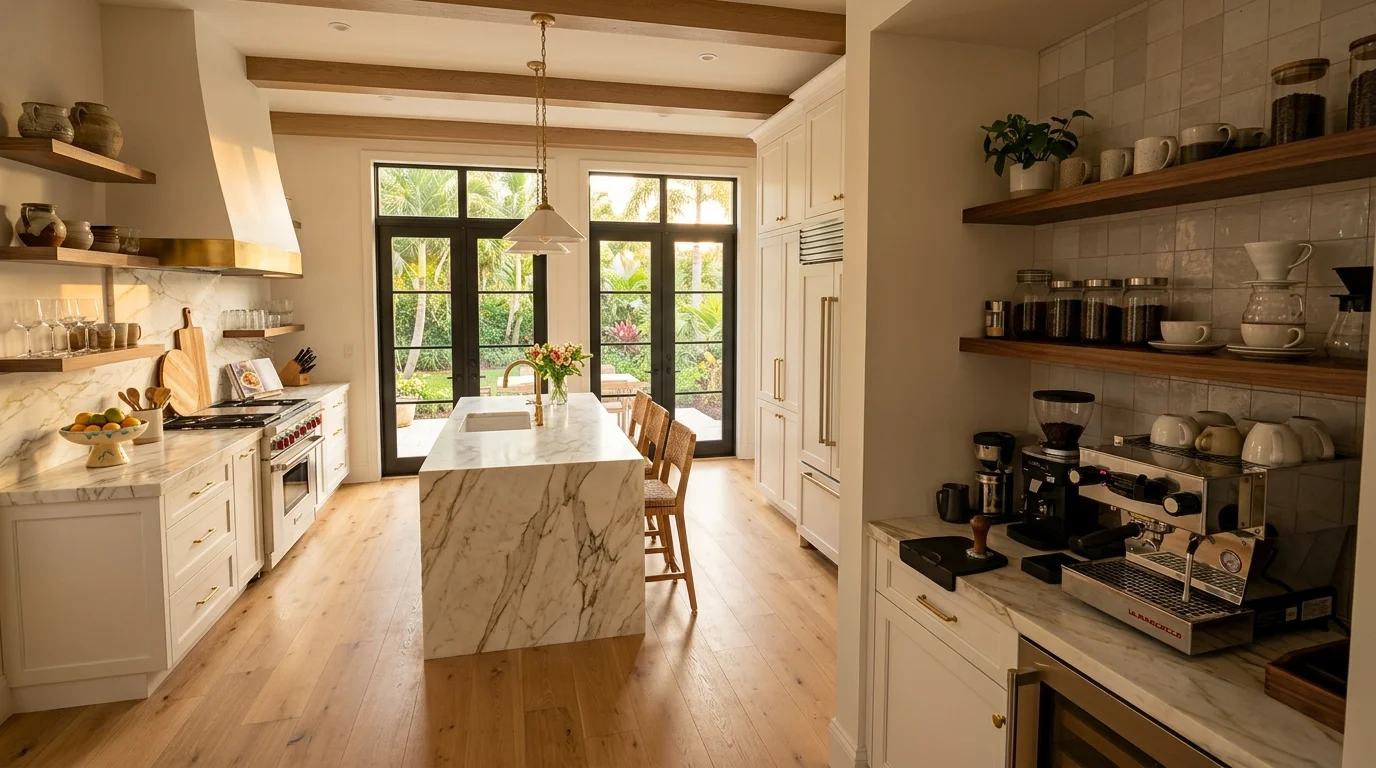
Coffee bar ideas are transforming Palm Beach County kitchens into personalized cafés where homeowners start each day with their perfect brew. We've designed dozens of coffee stations, from compact corner setups in Delray Beach condos to expansive beverage centers in Jupiter estates. The key is matching your coffee bar to your daily routine and kitchen layout.
Most homeowners underestimate the planning required for a functional coffee bar. It's not just about finding counter space for your espresso machine. You need dedicated storage for beans, mugs, filters, and syrups. Water access matters. Electrical requirements vary by appliance. Counter height affects usability.
We recommend treating your coffee bar as a focused work zone, similar to how you'd approach a kitchen island design. Every element should serve a purpose. Beautiful but impractical coffee bars collect dust.
Built-in Coffee Bar Layouts
The best coffee bar layout depends on your kitchen's existing flow and available space. We see three primary approaches in our Palm Beach County projects:
**Corner coffee bars** work well in L-shaped kitchens. You get dedicated counter space without disrupting the main work triangle. We typically install a 36-inch wide section with upper cabinets for storage. The corner location keeps coffee prep out of the cooking zone during busy mornings.
**Peninsula coffee bars** extend from your main cabinetry run. This layout works when you have adequate wall space but want the coffee station to feel integrated. We often design these with a raised counter section to separate the coffee bar visually from food prep areas.
**Butler's pantry coffee bars** are our top recommendation for larger homes. If you're considering a butler's pantry addition, dedicating part of that space to coffee service creates a true beverage command center. You get maximum storage plus the ability to close off the mess when entertaining.
Wall-mounted coffee bars save floor space in compact kitchens. We install floating shelves with hidden brackets and run electrical through the wall. This approach works best when you have limited counter space but adequate wall real estate.
Cabinetry and Storage Solutions
Coffee bar cabinetry needs differ from standard kitchen storage. You're storing smaller items more frequently. Daily access matters more than maximum capacity.
**Pull-out drawers** beat fixed shelves for coffee supplies. We install soft-close drawer slides rated for frequent use. The top drawer holds daily essentials: coffee pods, filters, sugar packets. Lower drawers store backup supplies and specialty items used less often.
**Mug storage** drives many design decisions. Open shelving displays your collection but creates dust issues in Florida's climate. We prefer glass-front upper cabinets with interior lighting. You get the display effect with practical protection. Proper hardware placement ensures smooth daily operation.
**Appliance garages** hide countertop clutter. We build these with tambour doors or lift-up mechanisms. The garage keeps your espresso machine accessible but contained. Electrical outlets go inside the garage, eliminating cord management issues.
**Spice rack integration** works well for coffee enthusiasts who add syrups, spices, or alternative sweeteners. We install narrow pull-out racks similar to those used for cooking spices. This keeps specialty coffee additives organized and visible.
Counter space planning affects the entire layout. Most coffee rituals need 18-24 inches of clear counter for workflow. We design with this minimum, then add space based on your specific equipment and habits.
Appliance Integration and Plumbing
Built-in coffee bars often require plumbing modifications for water access. Your general contractor handles these connections, but we design the cabinetry to accommodate the necessary lines.
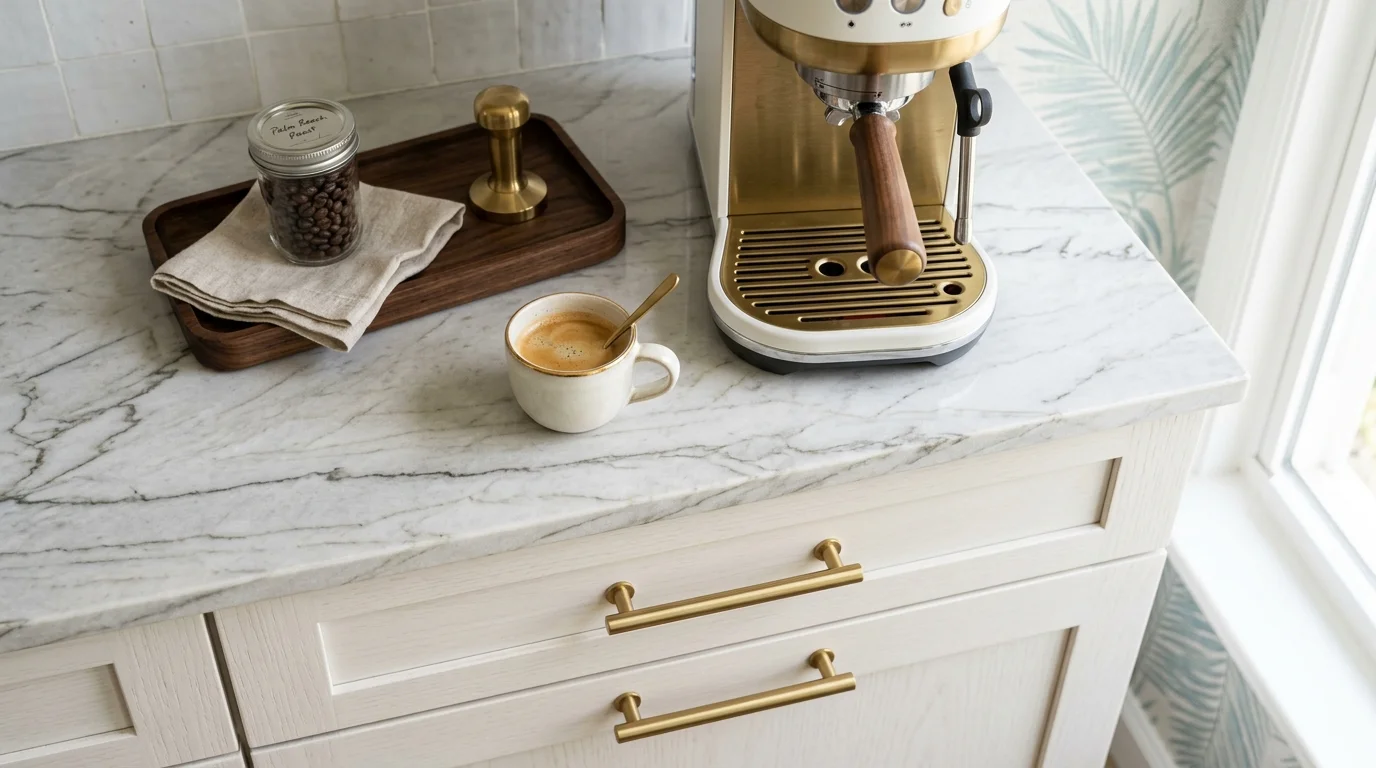
**Water line access** is the biggest infrastructure consideration. Espresso machines with direct water connections need a dedicated supply line. We leave space in the cabinet base for plumbing connections and ensure adequate clearance for service access.
**Electrical requirements** vary by appliance. Standard coffee makers need 15-amp circuits. Espresso machines often require 20-amp dedicated circuits. Built-in coffee systems may need 220-volt connections. We coordinate with your electrician to ensure proper outlet placement within our cabinetry design.
**Drainage considerations** matter for built-in espresso machines with automatic cleaning cycles. Some units require floor drains or connections to existing plumbing. We design cabinet bases to accommodate these requirements when specified upfront.
**Water filtration integration** is common in our Palm Beach County projects. Hard water affects espresso taste and equipment longevity. We leave space for under-counter filtration systems and include dedicated faucets when requested.
Appliance ventilation needs planning in Florida's humid climate. Built-in coffee systems generate heat and steam. We ensure adequate clearance and ventilation paths to prevent moisture issues within the cabinetry.
Popular 2026 Coffee Bar Designs
Coffee bar trends for 2026 emphasize functionality over flashy features. Homeowners want systems that work smoothly every morning, not showpieces that complicate their routines.
**Integrated beverage centers** combine coffee, tea, and cold drink storage in one dedicated zone. We design these with temperature-controlled storage for wine, beverage refrigerators for cold brew, and traditional coffee equipment. This approach works well in open concept layouts where the coffee bar serves multiple beverage needs.
**Natural wood accents** are trending in coffee bar design. We're incorporating natural wood elements as accent panels or open shelving within painted cabinetry. Walnut and white oak create warmth without overwhelming the space.
**Slim profile designs** maximize functionality in minimal space. These coffee bars use every inch efficiently, typically 24 inches deep instead of standard 25-inch cabinets. We specify slim shaker cabinet doors to maintain proportions while saving space.
**Task lighting integration** has become standard in our coffee bar designs. Under-cabinet LED strips illuminate the work surface. Interior cabinet lighting showcases mug collections. We include dimmer controls so the coffee bar can provide ambient lighting during evening entertaining.
**Two-tone color schemes** add visual interest without complexity. We often design coffee bars with darker lower cabinets and lighter uppers, or use accent colors that complement the main kitchen palette.
Cost Guide
Coffee bar costs vary significantly based on size, features, and integration complexity. Here's what we typically see in Palm Beach County:
These ranges include our design, cabinetry, installation, and standard countertop materials. Premium stone counters, custom millwork, or complex plumbing integration increase costs.
The 30 percent rule applies to coffee bar budgeting. Expect to spend about 30% more than the base estimate for upgrades, unforeseen issues, or scope changes you discover during design.
South Florida Considerations
Florida's climate creates specific challenges for coffee bar design that don't exist in other regions. Humidity affects storage decisions. Hurricane considerations influence appliance choices.
**Humidity control** matters more for coffee bars than other kitchen areas. Coffee beans, filters, and paper products absorb moisture quickly. We recommend airtight storage solutions and avoid open shelving for items used infrequently. Cabinet interiors need proper sealing to prevent moisture infiltration.
**Hurricane preparedness** influences appliance selection. Countertop appliances are easier to move and protect than built-in units during storm preparation. Many Palm Beach County homeowners prefer flexible coffee setups they can relocate when needed.
**Ventilation planning** prevents mold and moisture issues common in Florida kitchens. Coffee bars generate steam and heat, especially with espresso machines. We ensure adequate airflow around appliances and include ventilation in enclosed appliance garages.
**Material selection** for countertops focuses on heat and moisture resistance. Quartz and granite perform better than natural stone options that might stain from coffee spills or crack from temperature changes.
**Seasonal usage patterns** affect design decisions. Many residents entertain more during winter months when northern visitors arrive. We often design coffee bars with extra capacity for seasonal hosting needs.
The National Kitchen & Bath Association reports that beverage centers are increasingly popular in kitchen remodels nationwide, with Florida leading adoption rates due to indoor entertainment preferences during hot summers.