Veined Calacatta-style quartz · Standard slab format
Calacatta Gilde Quartz
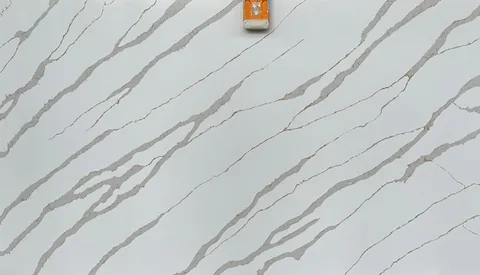
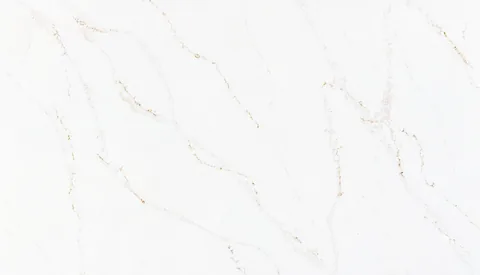
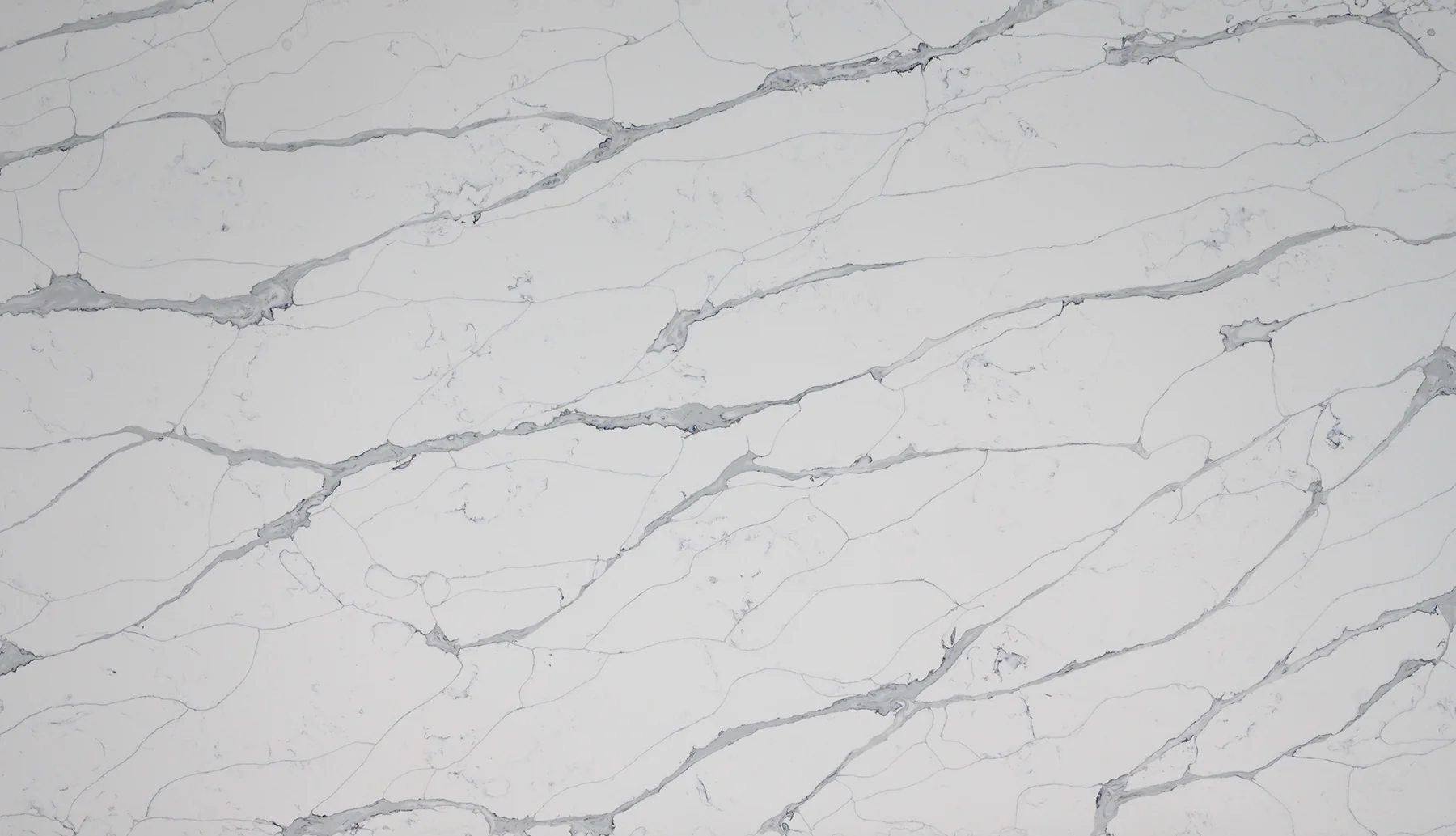
Calacatta Gilde is part of ST Stones' Calacatta standard slab line. The Calacatta family carries the bold dramatic veining of the Italian marble it's modeled on, rendered in engineered quartz for consistency and durability. Standard format slabs are typically around 74-75 sqft each. We confirm available inventory and slab pair selection (so your veins flow consistently across seams) at the consultation.
About Calacatta Gilde
Calacatta Gilde quartz - what to know
Character
How Calacatta Gilde reads in a kitchen
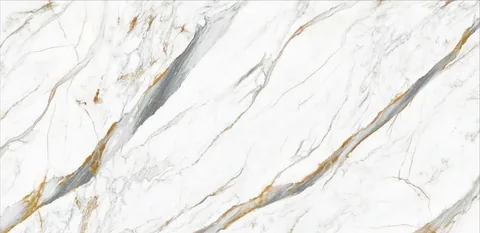
Calacatta Gilde reads as a clean white quartz with a calm, uncluttered field and minimal contrast. It's a workhorse choice that doesn't compete with cabinetry, floors, or backsplash.
South Florida fit
Why quartz works in our climate
Quartz is one of the strongest countertop choices for Palm Beach County kitchens. The surface is non-porous (so it won't absorb spills the way a natural stone can), it's highly heat-resistant up to the typical countertop range, and it shrugs off humidity, no sealing required, ever. Calacatta Gilde ships with the same maintenance profile as every other quartz in this catalog.
Pairings
Cabinetry, hardware, and design context
Calacatta Gilde pairs cleanly with brushed nickel or matte-black hardware and works with virtually any cabinet color, white, gray, hunter green, or navy. We always recommend laying the actual slab next to your cabinet sample before final commitment, quartz photographs differently from how it reads in person under your kitchen's actual lighting.
Specs at a Glance
Calacatta Gilde - quick reference
| Material | Quartz |
|---|---|
| Color family | White |
| Series / line | Calacatta |
| Thickness | 2CM or 3CM available |
| Slab format | Standard slab format (confirmed at consultation) |
| Finish | Polished |
| Care | Daily wipe with mild soap; no sealing required (non-porous engineered surface) |
| Best applications | Full perimeter, kitchen islands, master bathroom vanities, butler pantries |
| Service area | All Palm Beach County, FL - free in-home consultation |
Cabinet Pairings
Best paired with Calacatta Gilde
Our top cabinet recommendations for a White quartz countertop, hand-picked from the Calacatta install palette we use most often in Palm Beach County.
Related slabs
Other Calacatta and White options





Compare Materials
Considering something other than Calacatta Gilde?
Explore More
Where we install Calacatta Gilde - and what to read next
Closest Palm Beach County cities
Get In Touch
Quote on Calacatta Gilde
Let's build something beautiful together.
Interested in Calacatta Gilde quartz? Request a free in-home consultation and we'll price your kitchen or bathroom with this slab, itemized quote, 3D rendering, no obligation.
Sat: By appointment
Frequently Asked Questions
Common questions about Calacatta Gilde
Does Calacatta Gilde need to be sealed?
No. Quartz is engineered (roughly 90-93% natural quartz aggregate bound with resin) and is non-porous, so it never needs sealing. Wipe daily with mild soap and water; avoid harsh abrasives and leaving acidic spills (citrus, vinegar) sitting on the surface for extended periods.
Is Calacatta Gilde heat resistant?
Quartz handles brief heat contact well, but the resin binder can discolor under prolonged direct heat. Use a trivet for hot pots and pans straight off the stove. Don't set a heat-treated cast-iron skillet directly on the slab. No quartz is heat-proof in the way a true natural stone or solid-surface stone like soapstone is.
How does Calacatta Gilde compare to natural Calacatta or Carrara marble?
Engineered quartz mimics the look of natural marble but is dramatically more durable for a daily-use kitchen: non-porous, scratch-resistant, no etching from acids, no sealing. Natural marble has a softer, more living-stone feel but stains, etches, and needs sealing. Most South Florida clients pick quartz for the kitchen and reserve true marble for the powder-room vanity.
Countertop care, fabrication, and certification standards referenced on this page follow guidelines from the Natural Stone Institute, the NKBA, National Kitchen + Bath Association, and the ISFA, International Surface Fabricators Association.
More quartz