Tile Size Guide for Small Spaces: What Size Actually Works
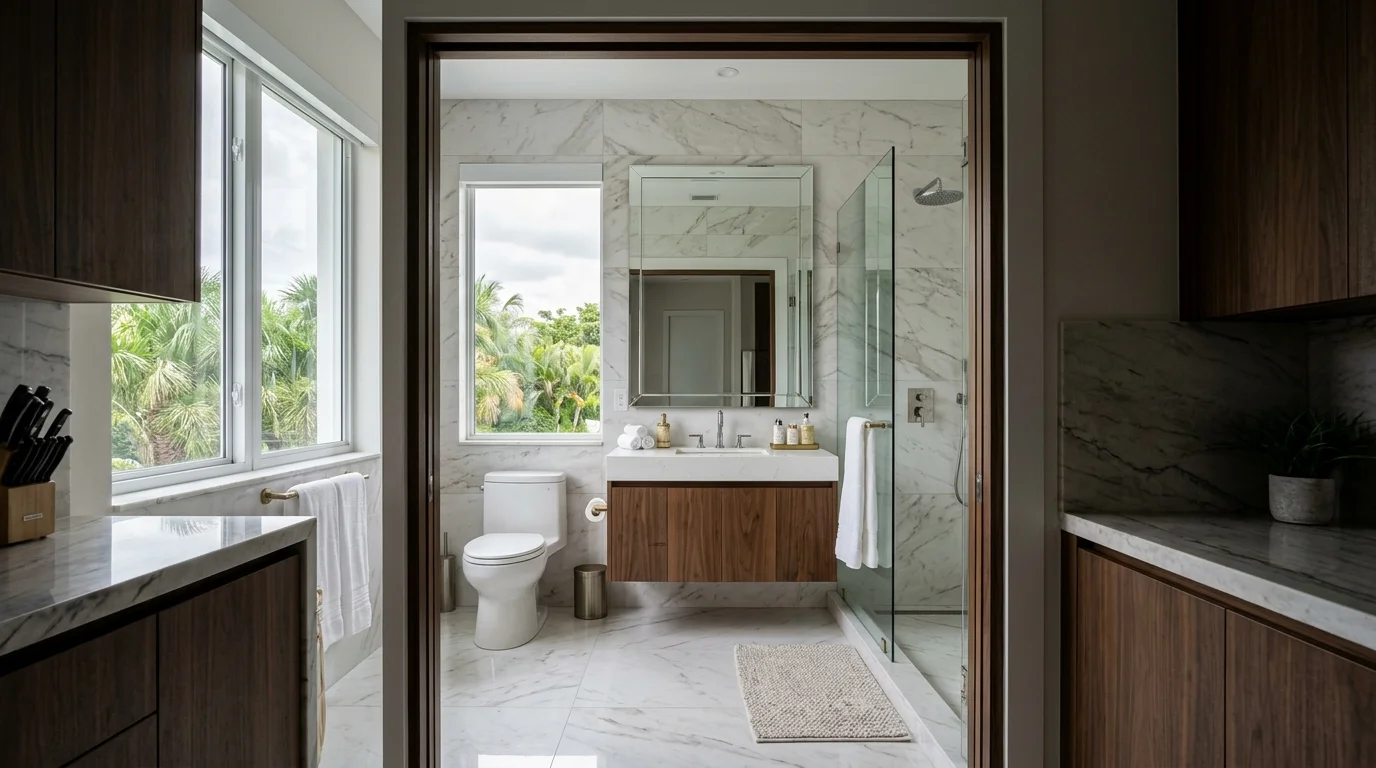
Picking the best tile size for small bathroom remodels is one of the most misunderstood decisions homeowners face. The old rule said small rooms need small tiles. That rule is wrong, and our team at South Florida Kitchen & Bath Design sees the fallout every week in Boca Raton, Delray Beach, Wellington, and Jupiter bathrooms that feel cramped not because of square footage but because of a cluttered tile grid. This guide lays out what actually works, what to skip, and why grout lines matter more than the tile dimension printed on the box.
The Big Tile Myth, Busted
For decades, designers and tile salespeople repeated the same advice: use small tiles in small rooms so the tile fits the space. The logic sounds reasonable. It is not.
Small tiles mean more grout lines. More grout lines mean more visual breaks across the floor and walls. More visual breaks mean the eye has nowhere to rest, and the room reads as busy and tight. That is the opposite of what you want in a 5x8 powder room or a 40-square-foot shower enclosure.
Large format tile, specifically 12x24, 24x24, or even 24x48 porcelain slabs, creates fewer seams. Fewer seams let the eye travel across the surface without interruption. The result is a room that reads larger than it actually is. Our crews have installed 24x48 rectified porcelain in bathrooms under 50 square feet in Palm Beach County condos and the transformation is dramatic every time.
That said, large format is not a universal answer. The wrong large tile in the wrong application can backfire. We will get into specifics below. The point is: stop letting tile size be dictated by room size alone. Let grout line count, layout direction, and surface plane make that call.
For a deeper look at how large format tile performs in South Florida's climate and humidity, read our guide on large format tile for South Florida bathrooms.
Best Tile Size by Application
Different surfaces inside a small bathroom have different rules. Here is how our team approaches each one.
Floor tile in a small bathroom. Our recommendation is 12x24 or 24x24 for most small bathroom floors. Installed in a staggered brick pattern or a straight stack, 12x24 gives you two grout lines per square foot instead of eight or ten. For floors under 40 square feet, go 12x24 laid lengthwise in the longest direction of the room. That horizontal run makes the floor feel wider. If the room is nearly square, 24x24 is a cleaner choice.
Avoid anything smaller than 4x4 on the floor. Penny tile and 2x2 mosaics look great in design magazines but they create a visual texture that reads as noise in a small space. Save mosaic tile for the shower floor where grip and water drainage are the priority, not the 1-inch variety on a broad bathroom floor.
Shower floor. This is where smaller tile earns its place. Shower floors need slope toward the drain, which means your installer needs to cut and pitch the surface. Smaller mosaic tiles, 2x2 or 1x1, conform to that slope more naturally than large format. They also provide more grout lines per square foot, which translates to more grip underfoot when wet. This is not a visual decision. It is a safety and waterproofing decision.
Shower walls. This is where large format wins hardest. A small walk-in shower clad in 12x24 or 24x48 tile reads like a spa. The same shower in 4x4 ceramic looks like a 1980s Florida remodel that never got updated. Our team consistently recommends rectified porcelain in 12x24 minimum for shower walls. Choosing the right tile for shower walls in a humid Florida climate also means prioritizing low porosity material, and large format rectified porcelain delivers on both the visual and performance side.
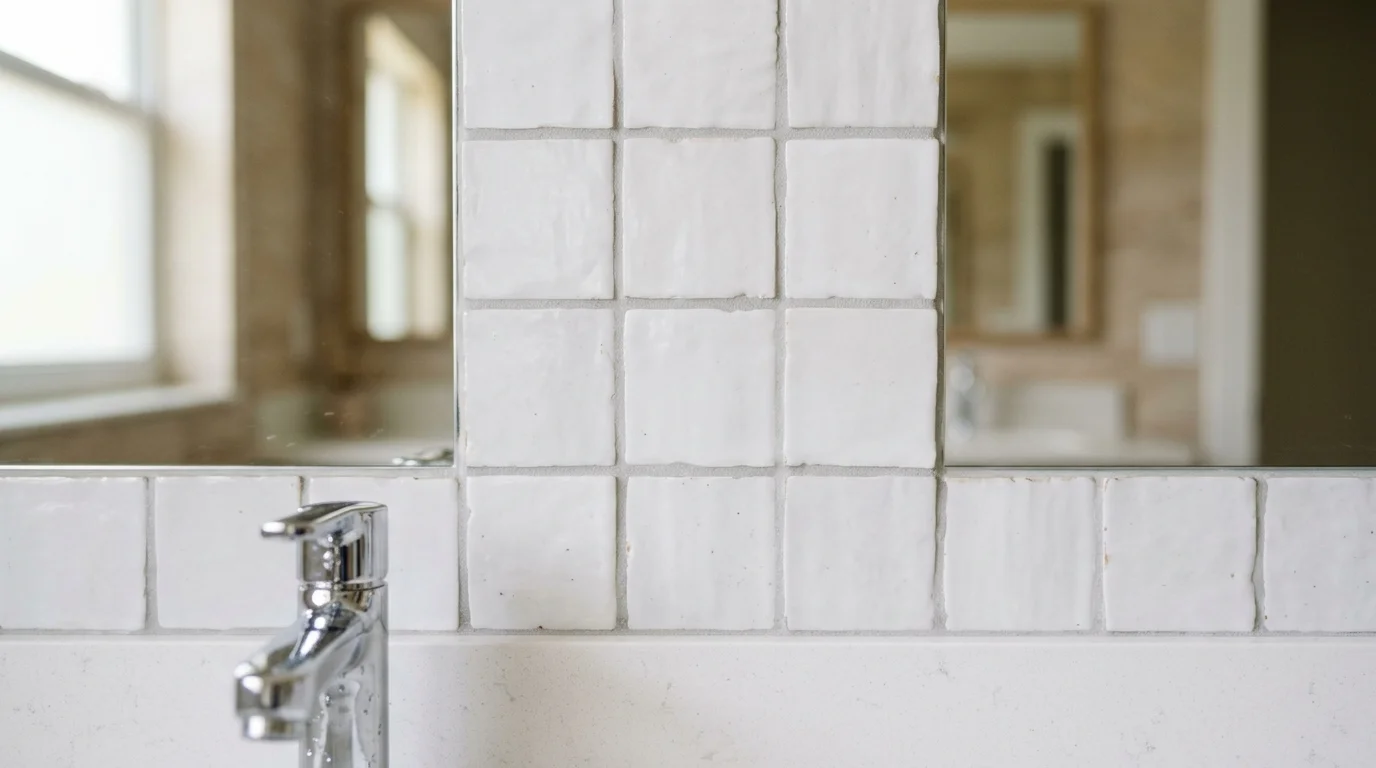
Accent walls and niches. Here you can go smaller for visual contrast. A 3x12 subway stack or a 4x4 zellige field behind a floating vanity creates interest without overwhelming the room. The trick is keeping the accent tile contained to one surface. One wall. One niche. Not the whole room.
Powder rooms. Powder rooms are the one place our team actually recommends getting adventurous with smaller tile. Because a powder room has no shower floor to worry about and very little foot traffic, you can install a bold 2x2 or 3x3 patterned floor tile as a statement piece. The room is small and you use it briefly. A punchy pattern works. Just keep the walls neutral.
For specific floor tile ideas that work well across Palm Beach County homes, our bathroom floor tile ideas guide covers pattern options and material choices in detail.
Why Grout Lines Change Everything
You can pick the perfect tile size and still wreck the visual effect with the wrong grout color or joint width. This is the part most homeowners skip over, and it costs them.
Joint width controls grout line visibility. Rectified tile, tile cut to exact dimensions with minimal variation, allows for tight 1/16-inch joints. Traditional non-rectified tile requires wider joints, sometimes 3/16 inch or more, to accommodate size variation between pieces. In a small bathroom, that difference is enormous. A floor of 24x24 non-rectified tile with fat grout lines can look as busy as a floor of 12x12 rectified tile with tight joints. Always specify rectified tile when you want clean minimal lines.
Grout color amplifies or erases the grid. Light grout on light tile blurs the lines. The eye reads the surface as continuous. Dark grout on light tile highlights every joint and draws the grid pattern in high contrast. In a small bathroom, we almost always recommend matching the grout color closely to the tile body. Not identical, just close. A warm white tile with a light gray grout is a safe pairing that keeps the grid subtle. For a detailed breakdown of this decision, our grout color guide walks through contrast levels and their visual effects room by room.
Layout direction affects perceived room size. Running 12x24 tile horizontally across a narrow bathroom floor makes the room read wider. Running it vertically makes it read longer. This is not tile-size advice, it is geometry. But it matters as much as which size you pick. Our team always asks about the longest dimension of the room before recommending layout direction.
Diagonal layouts. Diagonal installation at 45 degrees can make a small bathroom feel larger because the eye follows the tile corner-to-corner rather than wall-to-wall. The tradeoff is more waste, typically 10-15% more material, and more labor time. It is worth it in some rooms. Not in others. If the budget is tight, run it straight and use grout color to do the work instead.
For more patterns that work well in Palm Beach County bathrooms, check out our article on bathroom tile patterns, which covers herringbone, stack bond, offset, and more with real project examples.
Tile Cost Guide for Palm Beach County
Tile pricing in Palm Beach County reflects both material quality and installation complexity. Large format tile costs more per square foot to install because the substrate prep is more demanding, the tiles are heavier, and setting them flat requires more skill. That labor premium is real, but it is offset by using fewer tiles overall and less grout material.
Here are typical ranges our team sees for tile supply and installation in Boca Raton, Delray Beach, Wellington, and Jupiter bathrooms as of 2025. These are installed cost ranges, material plus labor, based on a standard small bathroom of 50-80 square feet floor area.
A full tile refresh for a small bathroom, floor plus shower walls, typically runs $2,500-$6,500 for mid-range porcelain in Palm Beach County. Luxury materials like zellige or book-matched slab porcelain push that to $7,000-$12,000 for the same footprint. These numbers assume a straightforward layout with no waterproofing surprises behind the walls. Demos in older Boca Raton and Delray Beach homes sometimes reveal moisture damage that adds cost before the first new tile goes up.
For a full picture of what a bathroom remodel costs in this market, our bathroom remodel cost guide for Palm Beach County covers all phases from demo through finish.
According to the National Association of Home Builders remodeling data, bathroom remodels consistently rank among the highest-return projects for resale value, which makes getting the tile selection right worth the investment in design time upfront.
South Florida Considerations
Tile selection in Palm Beach County is not the same as picking tile in a dry climate. Florida's heat and humidity put specific demands on both the material and the installation method.
Porcelain outperforms ceramic in Florida bathrooms. Ceramic tile has a higher water absorption rate than porcelain. In a bathroom that runs hot showers in a humid environment year-round, that matters. We recommend porcelain over ceramic for any wet surface, floor or wall, in South Florida bathrooms. If a client wants the look of cement tile or terracotta, we steer them toward porcelain versions that mimic the aesthetic without the porosity issues.
Substrate and waterproofing come before tile size. No tile size decision matters if the substrate is not properly waterproofed. In South Florida's climate, moisture intrusion behind shower walls is one of the most common causes of tile failure within five to ten years. Our bathroom waterproofing guide for Florida homes covers what a proper installation includes and what questions to ask before the tile goes up.
Thermal expansion is real here. Florida tile expands and contracts with temperature swings, especially in bathrooms that get strong afternoon sun through windows or skylights. Large format tile needs movement joints, typically caulk joints at corners and perimeter, rather than grout. If your installer skips movement joints on 24x24 or larger tile, the grout will crack within a year. This is not a scare tactic. Our crews see it constantly in homes across Wellington and Jupiter where previous work was done without proper expansion allowances.
Slip resistance matters more here than in cold climates. Florida bathrooms see wet bare feet year-round. The tile coefficient of friction matters, particularly on shower floors and bathroom floors near the entry. The standard recommendation for wet floor areas is a Dynamic Coefficient of Friction (DCOF) of 0.42 or higher, per the ANSI A137.1 standard. Smaller mosaic tiles on shower floors naturally exceed this because of the grout lines themselves. Large format floor tile needs a surface texture, matte, honed, or structured finish, to meet safe traction levels. Polished 24x24 on a shower floor is a liability.
HOA and ARB restrictions in gated communities. Many Palm Beach County communities, particularly in Boca Raton, Delray Beach, and Wellington, have architectural review requirements. If you live in a gated community, check your HOA documents before committing to an unusual tile color, finish, or pattern for any surface visible from the exterior. Interior bathrooms are typically unrestricted, but it is worth confirming before you purchase material.
If you are planning a small bathroom remodel from scratch and want to see how tile fits into the full project scope, our small bathroom remodel ideas with walk-in shower article covers layout, fixture selection, and finish choices together.