Small Bathroom Remodel Ideas with Walk-in Shower
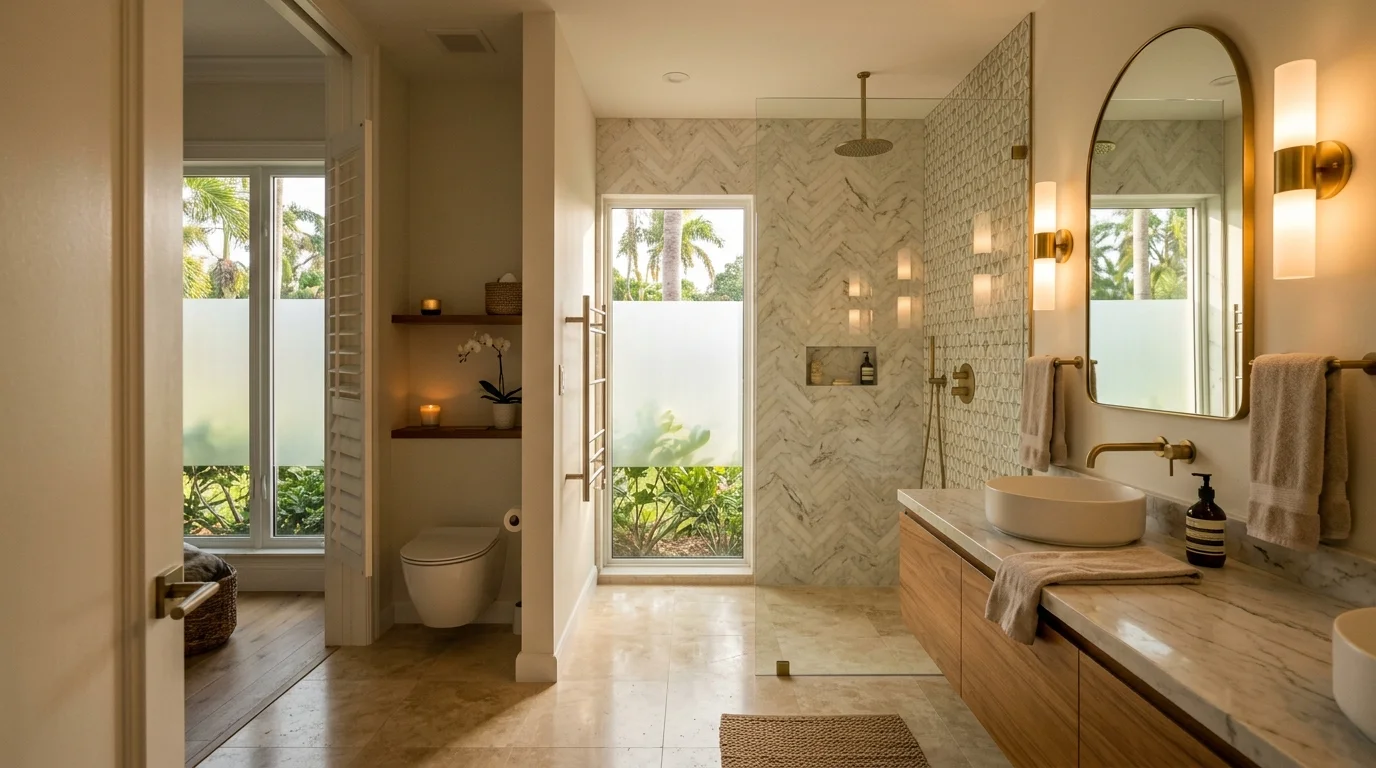
Small bathroom remodel ideas with shower rank among the most common requests we get from homeowners across Palm Beach County. If you're in a Boca Raton condo, a Wellington ranch house, a Delray Beach cottage, or a Jupiter townhome, the challenge is the same: squeeze a comfortable, functional walk-in shower into a space that wasn't designed with one in mind. The good news? A small footprint doesn't mean a compromised result. The right layout, glass, and tile decisions can make a 5×8 bathroom feel twice the size, and we've done it hundreds of times across South Florida.
Why a Walk-in Shower Works in Small Bathrooms
The old instinct was to preserve the tub in every bathroom. We push back on that. In a primary bath under 60 square feet, a standard alcove tub-shower combo eats floor space and makes the room feel cramped. Replacing it with a properly designed walk-in shower opens the visual field immediately, especially when you use frameless glass and large-format tile.
Here's the thing most homeowners don't realize: you don't need a huge footprint for a walk-in shower. A 32×48 inch shower is fully functional for daily use. A 36×48 is comfortable. Go to 36×60 and it feels genuinely generous, even in a small bathroom. Those dimensions fit in almost any existing tub alcove without moving walls or major plumbing relocation.
Removing a tub that nobody uses also solves a maintenance headache. In South Florida's humidity, the grout lines around a tub surround are a mold magnet. A well-waterproofed walk-in shower with large tile panels has fewer grout joints and is far easier to keep clean. If you're weighing whether to keep a freestanding soaker somewhere in the mix, our article on freestanding tub vs. built-in breaks down the value case from both angles.
One caution: if the bathroom being remodeled is the only full bath in the house, think carefully before eliminating the tub entirely. Resale buyers with young kids still expect a tub somewhere. For a second or primary bath, though? Go for the walk-in shower. We've never had a client regret it.
Space-Saving Shower Layouts
Layout is where small bathroom projects either succeed or fall apart. The wrong layout wastes floor space and creates awkward door clearances. Here are the approaches we recommend most often for compact South Florida bathrooms.
The corner shower is the most efficient use of a small bathroom. You're borrowing two walls that already exist, and the door swings into open floor space. A 36×36 corner shower is tight but works. A 36×48 corner unit is our go-to recommendation for primary bath conversions.
The tub-to-shower conversion in the existing alcove is the lowest-disruption option. The plumbing drain location stays the same (or shifts minimally), which keeps costs down and reduces construction time. We typically build these out at 30×60 or 32×60, which is the standard tub footprint. That gives you a long, narrow shower, excellent for a rain head setup with a handheld on the opposite wall.
The wet room is a more involved option worth considering in bathrooms that already have tile floors. Rather than a dedicated shower stall, the entire bathroom floor is waterproofed and sloped to a drain. The shower area is defined by a fixed glass panel rather than a full enclosure. It reads as ultra-modern and genuinely expands the visual space. Our wet room bathrooms guide covers the full scope of what that conversion involves.
The neo-angle shower fits into a corner but uses a diagonal front wall and door. It carves more usable interior space than a square corner unit of the same exterior footprint. We see these often in older Palm Beach County homes where corner space exists but isn't quite 36 inches deep on both walls.
Vanity placement matters just as much as shower layout. If you're converting to a walk-in shower and gaining floor space, resist the urge to upsize the vanity to fill it. A 36-inch single vanity paired with a 36×60 shower in a 5×8 bathroom will feel more open than a 48-inch vanity in the same footprint. For guidance on proportions, our bathroom vanity sizes guide walks through the standard dimensions and what works in tight layouts.
Glass Enclosures & Curbless Options
The glass decision is probably the single biggest visual lever you have in a small bathroom. Get this right and the shower disappears into the room. Get it wrong and it dominates the space in the worst way.
Our recommendation is always frameless or semi-frameless glass. The heavy aluminum framing on standard framed enclosures creates visual clutter in a small room and traps moisture in the frame channels, which is a real problem in South Florida's climate. Frameless tempered glass, typically 3/8-inch or 1/2-inch thick, reads as almost invisible. The shower tile becomes the feature, not the enclosure hardware.
Clear glass versus frosted glass is a common question. In a small bathroom, clear glass wins for spatial perception. Frosted or patterned glass cuts the room visually. The only exception: if the shower is directly visible from a bedroom and privacy matters, a strategically placed frosted panel on one section works fine without making the whole enclosure feel closed-in.
Curbless (zero-threshold) showers are worth the extra waterproofing investment for small bathrooms. A traditional curb, even a 4-inch one, acts as a visual barrier that chops the floor into two zones. A curbless shower lets the floor tile run continuously from the main bathroom into the shower, which makes the room read as one uninterrupted space. It's also the right call for aging-in-place considerations, which matters to a significant portion of our clients in 55-plus communities across Palm Beach County.
Proper waterproofing under a curbless shower is non-negotiable. The slope to drain has to be precise, typically 1/4 inch per foot, and the waterproofing membrane needs to extend well beyond the shower footprint. We follow Florida Building Code requirements for wet area waterproofing on every project, and our bathroom waterproofing guide for Florida homes covers exactly why this matters in our climate more than almost anywhere else in the country.
Shower door configuration also affects how usable the space feels. In a small bathroom where the toilet or vanity is close to the shower opening, a pivot door that swings outward can create clearance problems. Sliding bypass doors or barn-style sliding glass panels work better in tight quarters. A fixed panel with an open entry (no door at all) works beautifully in a curbless wet room setup where the layout naturally contains splash.
Tile Choices That Make Small Showers Feel Bigger
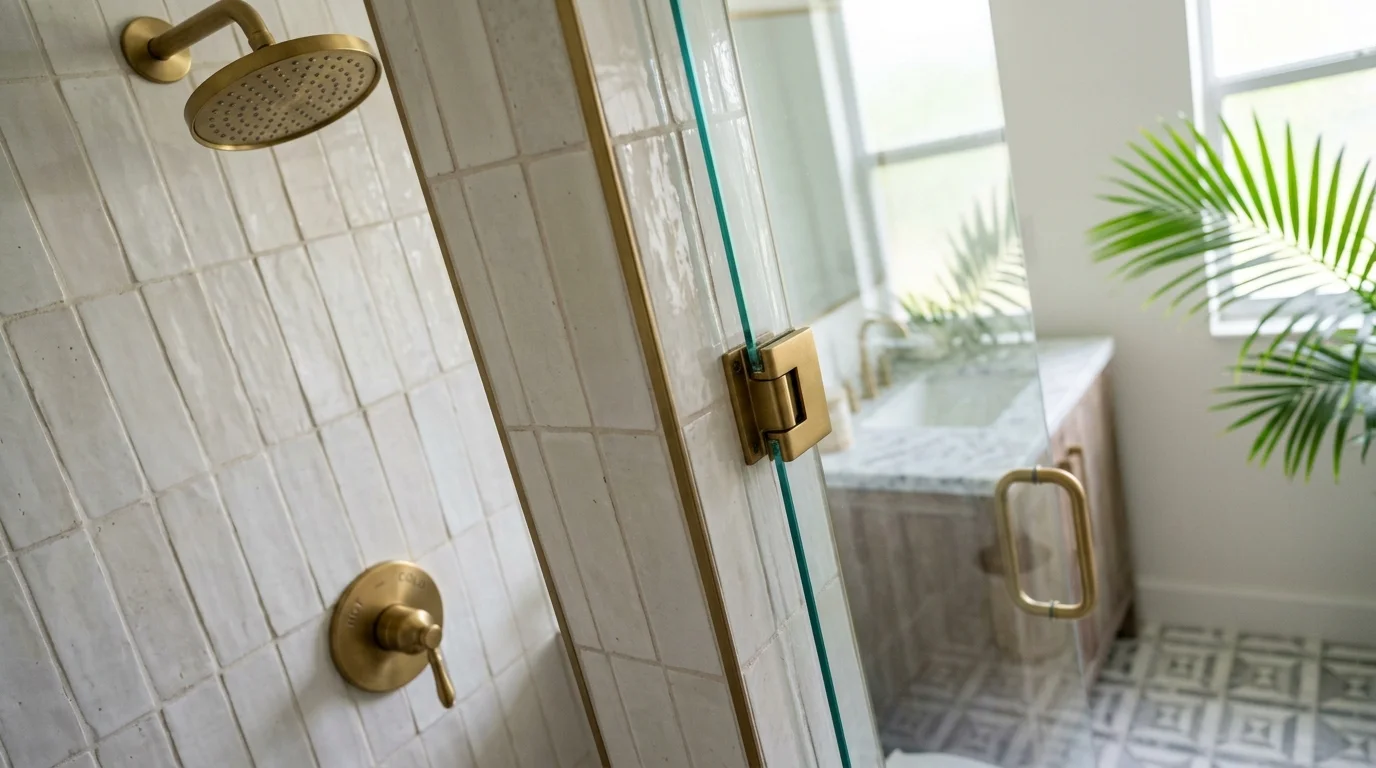
Tile choice in a small shower is about visual expansion, not just aesthetics. The wrong tile pattern and grout combination can make a compact shower feel like a phone booth. The right choices push the walls out and draw the eye upward.
Large-format tile is our strongest recommendation for small shower walls. A 12×24 or 24×48 tile laid vertically has far fewer grout joints than a 4×12 subway tile layout. Fewer grout lines mean a calmer visual field, which reads as more space. The tile appears to stretch the height of the wall. Large-format porcelain is also more practical in South Florida, fewer joints means less grout to seal, clean, and eventually regrout.
That said, large-format tile on a small shower floor is a mistake we caution against. The floor needs to be sloped, and cutting large tiles to achieve that slope creates waste and visual awkwardness. For shower floors, mosaic tile in 1×1, 2×2, or penny round format allows the necessary slope to be achieved smoothly. It also adds grip underfoot, which matters on a wet surface. For a deeper look at all the options, our bathroom shower tile ideas for South Florida homes covers what we're seeing work best across different budgets and styles.
Color and pattern strategy matters enormously. Light, neutral tiles, whites, soft grays, warm beiges, reflect more light and make the space feel open. We often run the same tile from the shower walls onto the bathroom floor (curbless layout) to create a monolithic, expansive look. For clients who want visual interest, a single accent wall with a darker tile or a different pattern is far more effective in a small shower than mixing multiple tile types throughout.
Vertical layouts beat horizontal in small showers. A vertically stacked tile pattern draws the eye upward. A horizontal stacked or offset layout draws the eye sideways, which is the last thing you want when the room is narrow. This applies to both standard subway tile and large-format panels.
Grout color is the detail most homeowners underestimate. Wide, contrasting grout lines shrink a space. Thin grout joints in a color that closely matches the tile surface make the wall read as nearly clean. In a small shower, this single decision, going from a medium gray grout on a white tile to a white or near-white grout, changes the perceived size of the shower more than you'd expect.
Built-in niches do double duty in small showers. They eliminate the need for a corner caddy or hanging organizer (both of which make a small shower feel cluttered), and a well-placed niche with a contrasting tile interior adds a design moment without taking up any floor space. Our shower niche ideas guide covers placement, sizing, and tile options in detail.
For the main bathroom floor tile, the same logic applies: larger format, lighter color, minimal grout lines. Consistent floor tile between the wet area and the dry area (in a curbless layout) is one of the most effective tricks for making a small bathroom feel significantly larger than its square footage. If you're still deciding on materials, our bathroom floor tile ideas for Palm Beach County homes breaks down the options with local climate in mind.
Cost Guide
Here's what small bathroom remodels with walk-in showers actually cost in the Palm Beach County market, Boca Raton, Delray Beach, Jupiter, Wellington, and surrounding areas. These are real numbers from our projects, not national survey averages that don't reflect South Florida labor and material costs.
A few things that affect where your project lands in these ranges: whether plumbing moves (it adds cost every time), the tile material you select, ceiling height, existing waterproofing condition behind the current tub surround, and finish selections like fixtures and glass hardware. Permits are required when projects involve relocating the drain or shower supply lines, changing electrical service for a new exhaust fan circuit, or opening walls, your general contractor handles those filings. A finish-only conversion on existing plumbing typically doesn't trigger a permit requirement, though scope always determines that. For a more detailed breakdown of what drives bathroom remodel costs in this market, our bathroom remodel cost Palm Beach County guide is a good next read.
Hidden costs to watch for: corroded shower pans, deteriorated backer board behind old tile, and outdated exhaust fans that don't meet current code for wet area ventilation. We've opened walls in Boca Raton condos and Wellington homes and found moisture damage that extended well beyond the shower footprint. Budget a contingency of 10-15% on top of your quoted price. Our article on hidden costs in bathroom remodels covers these surprises in detail so you're not caught off guard.
South Florida Considerations
Remodeling a bathroom in South Florida isn't the same as remodeling one in the Midwest or Northeast. The climate, building stock, and HOA landscape here create specific variables that affect material selection, waterproofing requirements, and project timelines.
Humidity is the biggest factor. Our showers are used year-round, often in bathrooms with limited ventilation. That puts real stress on grout, caulk, and any porous materials. We specify porcelain tile almost universally over ceramic in shower wet areas, porcelain's lower absorption rate holds up better in South Florida's conditions. If you're choosing between the two, our porcelain vs. ceramic tile guide for South Florida bathrooms explains why the density difference matters here more than in drier climates.
Condo remodels across Palm Beach County come with their own layer of complexity. Most HOAs, including the large associations in Boca Raton, Delray Beach, and along the Jupiter Intracoastal, require architectural review submissions before any shower waterproofing, tile demo, or structural work begins. Your GC submits that package; our team supplies the design drawings and material specifications needed to complete it. Work with your property manager early on to get the submission requirements before demo day.
Lead times on frameless glass are longer than most homeowners expect. Custom frameless enclosures in the Palm Beach County market typically run 3-6 weeks from template to installation. Order glass after tile work is complete and measurements are exact, not before. Rushing this step leads to panels that don't fit flush to the finished wall surface.
Exhaust fan capacity matters more here than almost anywhere. An undersized fan in a South Florida bathroom creates chronic moisture buildup, which shortens the lifespan of every finish in the room. The U.S. Department of Energy's bathroom ventilation guidance recommends at least 1 CFM per square foot of bathroom area, we often spec higher for bathrooms with curbless showers or wet room layouts where steam disperses more freely into the room.
Fixture finishes in salt air environments need thought. Polished chrome holds up well and is easy to maintain. Matte black is trending, and while we like the look, lower-quality matte black coatings can show wear faster in humid coastal conditions. Brushed nickel and brushed gold finishes from reputable manufacturers, Kohler, Moen, Delta, hold up reliably. If you're drawn to the black fixture look, our piece on black bathroom fixtures gives an honest take on what holds up and what doesn't in this climate.
Finally, lighting strategy in a small shower bathroom deserves real attention. Recessed wet-rated cans inside the shower, paired with vanity lighting at face level, makes a small bathroom feel far more polished and functional than a single ceiling fixture. If you're planning the lighting layout, our bathroom lighting ideas for Palm Beach County remodels covers placement, color temperature, and wet-rated specifications in detail.