How to Choose Kitchen Cabinet Hardware: Complete Guide
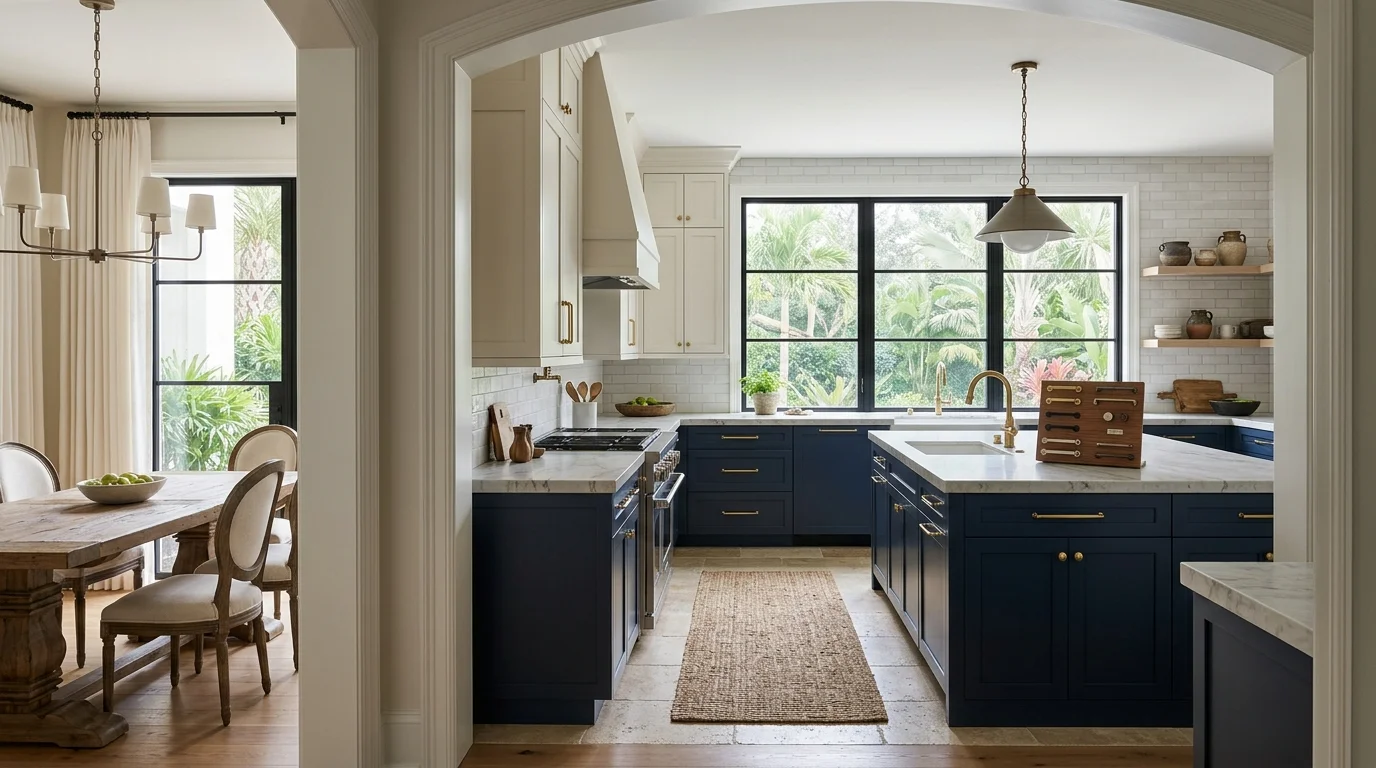
Knowing how to choose kitchen cabinet hardware sounds like a small decision. It isn't. Hardware is the handshake between your cabinets and every person who walks into that kitchen. Get it right and the whole room snaps into focus. Get it wrong and even a $40,000 cabinet job looks unfinished. Our team at South Florida Kitchen & Bath Design works through this choice with homeowners across Palm Beach County, from Boca Raton condos to Jupiter waterfront homes, and the same handful of questions come up every time. This guide answers all of them.
Why Hardware Is the Last Detail That Changes Everything
Cabinet hardware is roughly 1-2% of a kitchen remodel budget. It carries about 20% of the visual weight. That math matters. Swap out the hardware on a set of painted cabinets and you can shift the entire style from traditional to modern without touching a single door. That is how powerful this detail is.
Hardware also affects daily ergonomics. A pull that is too small on a heavy drawer feels annoying ten times a day. A knob on a wide pantry door is a workout. These are not aesthetic preferences, they are functional choices that compound over years of use.
When our crew is wrapping up a cabinet installation, the hardware selection is already locked in. It should be decided before the cabinets are even ordered, because placement holes need to match the hardware drilling template. Changing your mind after installation means patching and re-drilling, which is avoidable with a little planning upfront.
If you are still weighing the overall scope of your project, our article on the best kitchen cabinet styles for South Florida covers how door profile and hardware work together before you ever pick a finish.
Knobs vs Pulls: Which Should You Use?
This is the question we get more than any other on hardware. The short answer: pulls on drawers, your choice on doors, but we have a clear preference.
Knobs are a single-point contact. They work fine on cabinet doors where the door swings open and you only need a brief tug. They are typically cheaper per piece, easier to install, and come in an enormous range of styles. The downside is ergonomics. On a heavy drawer, a knob forces your wrist into a pinching grip. Over time, that matters, especially for older residents or anyone with hand or wrist issues. If aging-in-place is a consideration in your household, check out our guide on aging-in-place design for South Florida seniorsthe same ergonomic principles apply to kitchen hardware.
Pulls (also called bar pulls or cup pulls) distribute grip across multiple fingers. They are more comfortable on drawers, easier to grab with full hands when you are cooking, and they read as more contemporary in most South Florida design contexts. Our team recommends pulls on every drawer, full stop. On doors, you can use either, but pulls tend to look more intentional on larger cabinet doors like pantries and uppers above 18 inches wide.
The classic approach is knobs on doors and pulls on drawers. That combination has worked for decades and still works today. A more modern approach is pulls throughout, uniform hardware across every door and drawer creates a cleaner look that fits well with flat-front and slim shaker cabinet styles popular in South Florida right now. For more on mixing the two strategically, read our dedicated post on how to mix knobs and pulls on kitchen cabinets.
Cup pulls (the bin-style pulls that are recessed under the drawer front) are a strong choice for any kitchen leaning coastal, farmhouse, or transitional. They are extremely comfortable to use and add texture without being loud. We use them often in Delray Beach and Wellington homes where the design brief calls for casual but polished.
Finish Options and What Holds Up in South Florida
Finish is where most homeowners spend too little time. They pick what looks good at the showroom and skip the question of how that finish will perform in a Florida kitchen two years from now. Salt air, humidity, and UV exposure narrow the field considerably.
Here is how the most common finishes rank in our experience working across Palm Beach County:
Brushed nickel has been the workhorse finish for twenty years. It hides fingerprints reasonably well, resists humidity, and plays nicely with most cabinet colors. It is not the most exciting option in 2025, but it is dependable. If you are renovating to sell, brushed nickel is a safe choice.
Matte black exploded in popularity around 2019 and has stayed strong. It reads modern, works beautifully against white or light gray cabinets, and the matte texture hides water spots better than polished finishes. The risk with black hardware in coastal South Florida is that lower-quality pieces can show surface rust at the mounting points within 18-24 months. Spec hardware that is rated for coastal environments, look for solid brass cores with PVD (physical vapor deposition) coating rather than electroplated zinc. PVD finishes are significantly more durable. Rockler's hardware education pages cover the difference between coating processes if you want to get into the technical details.
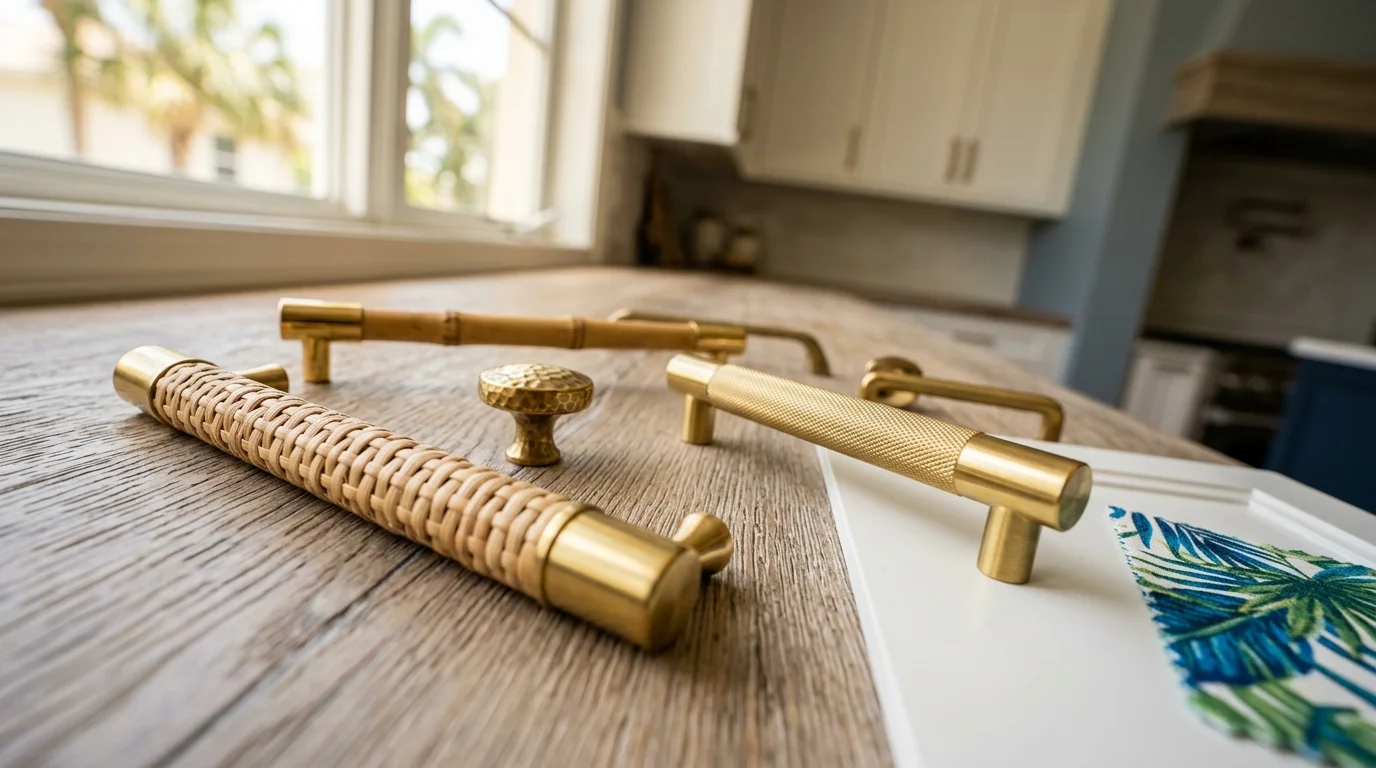
Brushed gold and unlacquered brass are having a major moment right now, especially in the Palm Beach and Boca Raton design market where warm tones and transitional styles dominate. Brushed gold (PVD-coated) is low maintenance and holds its color well. Unlacquered brass develops a patina over time, some homeowners love that lived-in quality, others find it unpredictable. We wrote an entire piece on brass cabinet hardware as the 2026 finish to watch if you want the full breakdown.
Polished chrome and polished nickel look stunning in photos and show every fingerprint and water spot in real life. In a busy South Florida kitchen, they require constant wiping. We only recommend them in low-traffic secondary kitchens or butler's pantry applications.
Satin brass sits between brushed gold and unlacquered brass, warmer than brushed nickel, more muted than high-polish gold. It pairs well with natural wood cabinets and greige tones. If you are working with natural wood cabinet doors, the satin brass family is our top recommendation.
One rule that holds across all finishes: match your hardware finish to your faucet finish. It does not have to be the same brand, but it should be the same family. Brushed gold hardware with a chrome faucet looks like a mistake, not a design choice.
Sizing Rules and Placement Guidelines
This is where DIY projects most often go wrong. Hardware sizing is not arbitrary, there are proportional rules that make a kitchen feel cohesive versus chaotic.
Pull length for drawers: The pull should be roughly one-third the width of the drawer front. A 24-inch wide drawer looks best with a 7-8 inch pull. A 36-inch drawer can carry a 12-inch pull comfortably. Going too short on a wide drawer looks like an afterthought. Going full-width (matching the drawer width exactly) is a bold design move that works in modern and contemporary kitchens, just commit to it across all drawers, not just one.
Pull length for doors: Upper cabinet doors typically work well with 3-4 inch pulls or knobs. Tall pantry and full-height doors can handle 6-8 inch pulls, or even longer architectural pulls centered on the door stile. Proportion matters, a 3-inch pull on a 42-inch pantry door looks like it got lost.
Placement on doors: On upper cabinet doors, hardware goes near the bottom corner of the door, on the side closest to the opening, about 2-3 inches from the bottom edge and 2-3 inches from the vertical edge. On lower cabinet doors, hardware goes near the top corner, same spacing. This positions your hand naturally where it wants to grab. Deviating from this rule is fine for a design statement, but the ergonomics suffer.
Placement on drawers: Pulls center both horizontally and vertically on the drawer front. Single pulls go dead center. On very wide drawers (36 inches or wider), some designers go with two pulls spaced evenly, this distributes pull force and prevents drawer racking on heavy pulls. We see this frequently in the custom kitchen projects we complete in Boca Raton and Jupiter.
Consistent spacing: Pick your placement measurements and hold them across every cabinet in the kitchen. Even a quarter-inch variance is visible to the eye when you step back and look at a full run of uppers. Our team uses drilling templates on every job to keep this consistent, it is one of those details that separates a professional installation from a weekend project.
For a deeper reference on placement standards, our complete guide to kitchen cabinet hardware placement covers specific measurements for every cabinet configuration.
Hardware selection also intersects with cabinet door style. Flat-front (slab) cabinets need hardware, without it, there is nothing to grip. Shaker doors can go either way stylistically, but hardware almost always improves the finished look. If you are deciding between those two door profiles, our article on flat front vs shaker cabinets in South Florida walks through the full comparison.
Cost Guide
Hardware costs vary more than most people expect. The range runs from under $5 per piece to over $100 per piece for designer or unlacquered brass hardware. For an average Palm Beach County kitchen with 20-30 cabinet doors and 10-15 drawers, here is what to budget:
Our recommendation: do not cheap out on hardware for a kitchen you are investing $25,000 or more in. Budget hardware on a high-end cabinet job is like putting 17-inch wheels on a luxury car. Spend $15-$25 per piece minimum on a mid-range kitchen, and go $30-$50+ on a luxury project. The difference in quality and appearance is worth every dollar.
Hardware is also one of the easiest upgrades to do after the fact if you are working with a tight budget upfront. Start with builder-grade hardware, live with it for a year, then swap it out. As long as the new hardware uses the same bore spacing (typically 3-inch or 3-75mm center-to-center for pulls), replacement is straightforward.
For context on how hardware fits into your overall kitchen budget, our kitchen remodel cost guide for Palm Beach County breaks down where every dollar goes.
South Florida Considerations
South Florida is not a normal hardware environment. Homes in coastal Boca Raton, Delray Beach, and Jupiter, especially anything within a mile of the Intracoastal or the Atlantic, face salt air corrosion that will destroy the wrong hardware finish in under two years. We have seen electroplated zinc pulls that looked like they had been underwater after one rainy season. That is not an exaggeration.
Here is what our team specifies for coastal South Florida kitchens:
Solid brass construction is non-negotiable near the coast. Brass does not rust. Zinc and steel can, and will, in humid, salt-laden air. The brass can be finished in any color (matte black, brushed nickel, satin gold) as long as the core material is solid brass. Always ask the manufacturer what the base material is, not just the finish. If the spec sheet says "zinc alloy" or "zamak," pass on it for a coastal application.
PVD coatings outperform standard lacquer and electroplating for longevity. Physical vapor deposition creates a molecular bond between the finish and the base metal that is four to five times harder than electroplating. For matte black or brushed gold in a salt air environment, PVD is the only coating we recommend. Florida's building environment standards reflect the unique demands placed on materials across the state, hardware is no exception to that principle.
Stainless steel (marine-grade 316) is another solid choice for hardware that will see heavy kitchen use and coastal exposure. It is typically more expensive than brass-based hardware and comes in fewer finish options, but the corrosion resistance is exceptional.
Keep hardware away from direct outdoor airflow. Kitchens with large sliding glass doors that open to a lanai or pool deck get significantly more salt air exposure than a fully interior kitchen. In those cases, we push clients toward PVD-coated solid brass hardware across the board, regardless of budget tier. The $5 savings per piece is not worth replacing everything in 18 months.
Style-wise, South Florida kitchens lean coastal, transitional, and contemporary. Warm metals (brushed gold, satin brass, unlacquered brass) are dominant in the Palm Beach and Boca Raton markets right now. Matte black holds strong in Delray Beach and Wellington where more modern and farmhouse aesthetics are prevalent. Brushed nickel remains popular in 55+ communities throughout Palm Beach County where classic transitional style rules. Whatever finish you choose, make sure it connects to your countertop and cabinet color, our guide on how to choose your countertop color covers the broader palette coordination that hardware needs to complement.
One last South Florida-specific note: if you are remodeling inside an HOA-governed community or a condo, exterior-visible hardware (on any doors with glass inserts facing a common area) may be subject to approval. Your HOA documents will specify this. It is rare for interior cabinet hardware to be regulated, but we have seen it in a handful of gated communities in Wellington and west Boca. Check your docs before ordering 45 pieces of custom hardware. For more on navigating community rules during a kitchen project, our article on remodeling a kitchen in a gated community in Palm Beach County covers what to watch for.