Brass Cabinet Hardware: The 2026 Finish
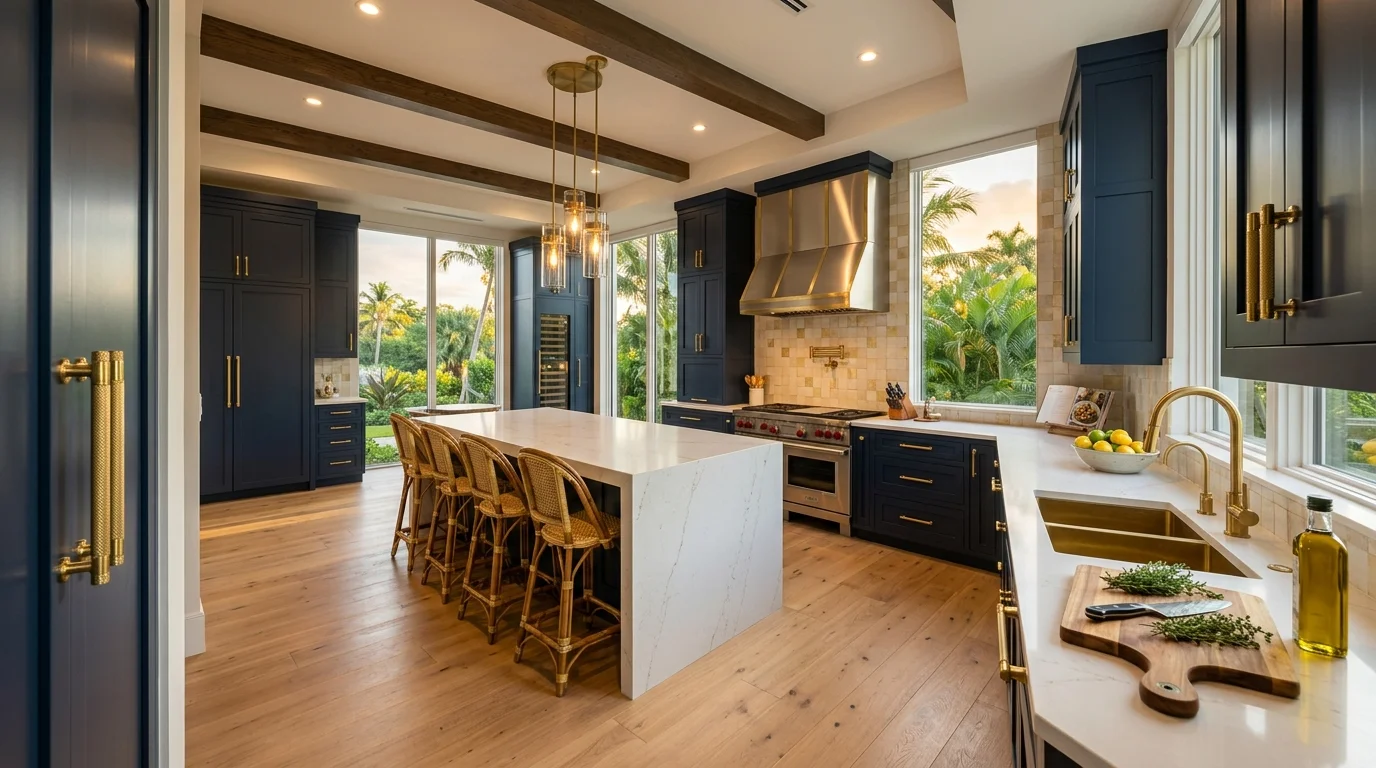
Brass cabinet hardware has been circling back for years, but 2026 is the year it stops being a trend and becomes the standard. At South Florida Kitchen & Bath Design, we're specifying brass pulls and knobs on more projects than any other finish right now, and that's across all price points, from cabinet refreshes in Delray Beach condos to full custom builds in Jupiter and Wellington. The warmth of brass works exceptionally well in South Florida's bright, sun-drenched interiors, and the newer unlacquered and satin versions solve the old problem of brassy hardware looking cheap or dated. Here's everything you need to know before you pull the trigger on this finish.
Why Brass Is Dominating 2026
The shift away from chrome and brushed nickel started quietly about four years ago. Homeowners in Boca Raton and Palm Beach County were already leaning into warmer palettes, warm white cabinets, greige walls, natural wood accents, and cool silver hardware started looking out of place. Brass filled that gap perfectly.
But the brass people wanted wasn't the lacquered, shiny stuff from the 1980s. They wanted something that looked like it belonged in a well-traveled European kitchen. Something with character. That's exactly what unlacquered and satin brass deliver.
Design-side, brass cabinet hardware anchors a room in a way chrome can't. It reads as intentional. When you put a satin brass pull on a sage green cabinet or a warm white shaker door, the combination looks considered, not accidental. We've also noticed that brass photographs better in South Florida's natural light, which matters when you're eventually selling a home in a market as visual as Palm Beach County.
The other factor driving brass adoption: it plays well with the other warm metal accents already popular in our market, champagne bronze faucets, gold pendant lighting, warm-toned appliance hardware. If you're designing a kitchen where all those elements need to coexist, brass is the connective tissue. For a full picture of where cabinet trends are heading this year, our article on kitchen cabinet trends for 2026 covers the door styles and finishes we're seeing most often.
Types of Brass Finishes Explained
Not all brass is the same. The finish you pick determines how the hardware behaves over time, how much maintenance it needs, and how it reads in the room. These are the three you'll encounter most often in our market.
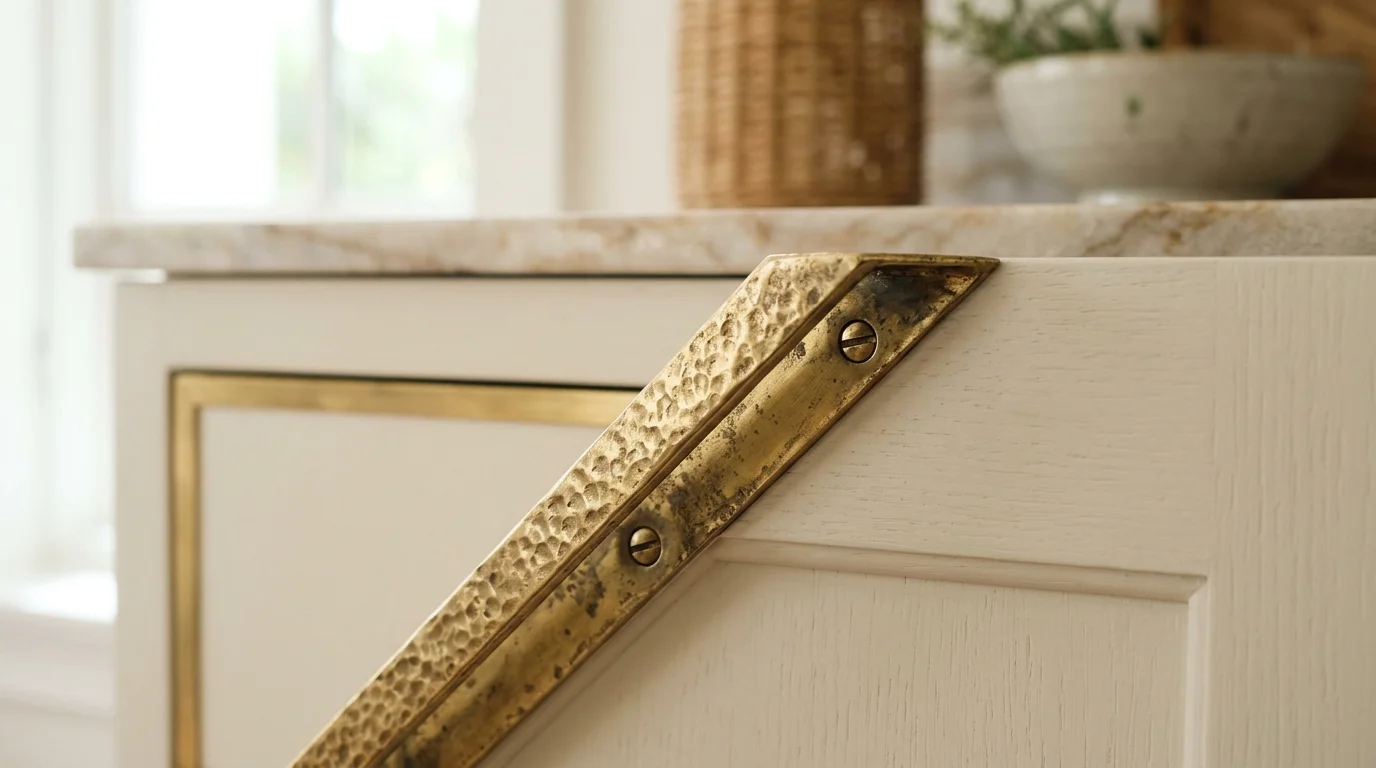
Unlacquered brass is raw brass with no protective coating. It patinas over time, meaning it darkens, develops subtle variation, and takes on an aged look that's genuinely beautiful in the right setting. We recommend unlacquered brass to homeowners who want character and aren't precious about uniformity. The patina is predictable and manageable: it deepens with contact and slows down in drier environments. In South Florida's humidity, the patina process moves a little faster than it would in, say, Denver. That's not a problem, it's a feature, but you should know going in that these pulls will look different in three years than they do on day one. Some of our clients love that. Others prefer consistency.
Satin brass is coated with a PVD (physical vapor deposition) or lacquer finish that locks in the warm golden tone without the high shine of polished brass. It keeps its look longer, requires less maintenance, and reads as refined rather than flashy. This is our most commonly specified brass finish. It's forgiving, durable, and works across traditional, transitional, and contemporary cabinet styles. Brands like Emtek offer excellent satin brass lines with solid construction that hold up in South Florida's coastal conditions.
Antique or vintage brass is a factory-applied dark brass look, already darkened, often with intentional variation baked in. It's a good middle ground for homeowners who want the character of unlacquered brass without the unpredictability. We see this finish most in Mediterranean and transitional kitchens, particularly in older Boca Raton and Delray Beach homes where the aesthetic leans traditional.
One practical note: if you're mixing knobs and pulls on your cabinet doors and drawers, which we often recommend, try to keep the finish consistent even if the shapes differ. Mixing unlacquered pulls with satin knobs on the same run of cabinets will look mismatched within a year as the unlacquered pieces age. For advice on getting that mix right, our guide on how to mix knobs and pulls on kitchen cabinets walks through the logic we use on our own projects.
Pairing Brass with Cabinet Colors
This is where the real design work happens. Brass cabinet hardware is versatile, but it has opinions. Some combinations are obvious wins. Others require more thought.
White and warm white cabinets are the easiest pairing. Brass against white reads clean and classic. Satin brass pulls on a white shaker cabinet are about as timeless as kitchen design gets right now. If you're working with a true bright white, go with a warmer satin brass tone rather than a highly polished one, it prevents the combination from reading cold. Antique brass can also work beautifully on white cabinets if the rest of the kitchen has traditional detailing.
Sage green and soft green cabinets are arguably the best canvas for brass hardware. The earthy warmth in brass pulls out the botanical quality of sage, and the two tones feel naturally connected. We've done this combination in Wellington and Jupiter homes where the design goal was relaxed, organic, and refined, and it never fails to land well. Our piece on sage green kitchen cabinets goes deeper on color and hardware pairings if that palette interests you.
Navy blue cabinets and brass are one of the strongest contrast pairings in residential kitchen design. Deep navy reads as a neutral in South Florida's light, and brass against it has a nautical-meets-sophisticated quality that works especially well in coastal and transitional kitchens near the water. We recommend satin or antique brass here rather than unlacquered, the darkening of unlacquered brass against navy can make the hardware disappear over time.
Dark charcoal, black, and deep forest green cabinets pair beautifully with brass when the goal is drama. This is a bolder move, but it photographs stunningly and feels high-end in a way few finish combinations can match. Our article on dark kitchen cabinet ideas has more on making deep cabinet colors work in South Florida's light.
Natural wood cabinets and brass need more care. Warm wood tones and brass can compete if the undertones aren't aligned. We generally recommend antique brass or a darker unlacquered brass when working with walnut or warm oak, and satin brass when the wood is lighter or more neutral. The key is making sure the warmth of the wood and the warmth of the brass feel like the same temperature.
What brass doesn't love: cool gray cabinets. Gray and brass fight each other, the warm metal makes the cool gray look washed out, and the gray makes the brass look greenish. If you have cool gray cabinets, brushed nickel or matte black will serve you better. Warm greige is a different story, that works fine with satin brass.
For a complete breakdown of the hardware placement decisions, how far from the edge, where to put knobs versus pulls, sizing relative to door width, our complete guide to kitchen cabinet hardware placement covers the rules we actually use on every job.
Cost Guide
Brass cabinet hardware sits across a wide price range. The spread reflects quality of materials, weight, finish durability, and brand. Here's how the Palm Beach County market actually breaks down as of 2026.
Our honest recommendation: don't go below the mid-grade tier. Builder-grade imported brass hardware feels light in your hand, the finish coatings are thin, and the plating on "brass-look" pieces often starts showing wear within 18 months in South Florida's humidity. Spend the money on solid brass construction with a quality PVD or lacquer coat, and it'll outlast the cabinets it's mounted on.
For most kitchens in Palm Beach County, 25 to 35 pieces of hardware across doors and drawers, the sweet spot is the $600-$1,350 range for materials. That's real money, but it's also one of the highest-return finish upgrades you can make relative to its cost. If you're budgeting a broader cabinet refresh, our article on kitchen remodel costs in Palm Beach County puts hardware in the context of the full project budget.
South Florida Considerations
Hardware in South Florida isn't the same conversation as hardware in the rest of the country. We have conditions here, heat, humidity, and for properties near the water in Jupiter, Boca Raton, and coastal Delray Beach, salt air, that accelerate finish degradation and can compromise inferior hardware in ways you won't see coming until it's too late.
Salt air is the main one. Properties within a mile or two of the Intracoastal or the Atlantic deal with chloride deposits that eat through cheap plating and accelerate patina on unlacquered metals. That's not hypothetical, we've seen inexpensive chrome hardware show pitting and corrosion within two years in coastal Palm Beach County homes. Brass, interestingly, handles salt exposure better than chrome or nickel when the underlying material is solid brass rather than brass-plated zinc. That's a critical distinction. Solid brass resists corrosion at the substrate level. Brass-plated zinc just looks like brass until the plating fails.
When we specify hardware for homes in Jupiter, Singer Island, or anywhere within a mile of saltwater, we push clients hard toward solid brass construction with a quality PVD finish. PVD coatings are harder and more resistant to salt air than standard lacquer. Emtek, Waterstone, and Rocky Mountain Hardware all offer PVD satin brass options with real performance data behind them.
Humidity is the secondary concern. South Florida's ambient humidity sits high enough to affect unlacquered brass more quickly than owners expect. If you love the patina concept, that's fine, but understand that in Boca Raton or Delray Beach, that patina will develop noticeably within the first year. It's beautiful. It's also irreversible without professional refinishing. Go in with eyes open.
For homes in gated communities in Wellington or western Palm Beach County, further from saltwater, the humidity concern is real but more manageable. Unlacquered brass is a more reasonable choice in those environments, especially if the kitchen has good ventilation. The heat still accelerates patina near the stove and dishwasher zones, which is worth knowing before you commit to unlacquered pulls on your lower cabinets.
One more thing specific to our market: HOA and ARB approval. In many Palm Beach County communities, exterior hardware and certain interior finishes require documentation for community review. This is less common for hardware than for cabinet colors or countertops, but it comes up. If you're in a managed community, your general contractor or design team, not just us, should check whether your renovation package needs any material specifications submitted. We supply the design drawings and material specs as part of our documentation; the GC coordinates submission with the building department or HOA as needed.
For homeowners in 55-plus communities across the county who are planning broader kitchen or bath updates, our piece on kitchen and bathroom remodeling in 55-plus communities covers the community-specific process in more detail.