Kitchen Crown Molding Ideas for a Polished Look
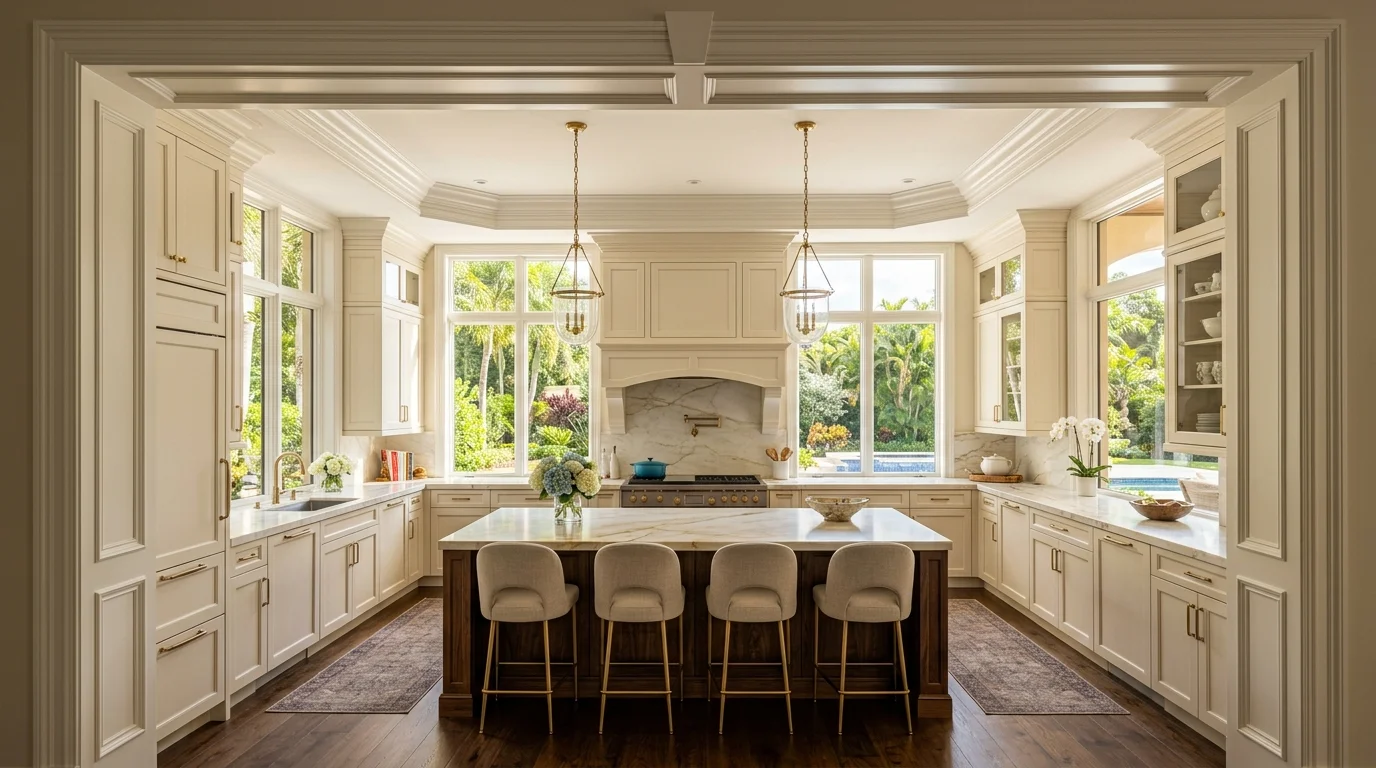
Kitchen crown molding ideas can transform your cabinets from basic builder-grade to custom millwork that looks like it belongs in a luxury home. We see the difference crown molding makes in every kitchen project across Palm Beach County, it's the finishing touch that separates amateur installations from professional results.
Crown molding bridges the gap between your upper cabinets and ceiling, creating clean lines and architectural interest. Without it, cabinets can look like they're floating in space or create an awkward visual break that makes your kitchen feel unfinished.
The right crown molding choice depends on your cabinet style, ceiling height, and overall design goals. Some homeowners want maximum storage and choose cabinets that extend all the way to the ceiling. Others prefer the traditional look of crown molding with space above the cabinets for decorative items or simply cleaner lines.
Crown Molding Styles & Profiles
Crown molding profiles range from simple cove cuts to elaborate multi-piece assemblies. We recommend choosing a profile that complements your cabinet door style rather than competing with it.
Simple Cove Crown: The most common profile features a curved transition from cabinet to ceiling. This works well with both modern and traditional kitchens because it doesn't draw attention to itself. The profile typically projects 2-3 inches from the cabinet face.
Traditional Multi-Piece Crown: Built up from multiple trim pieces, typically a crown molding, a frieze board, and sometimes a bed molding underneath. This creates a more substantial, furniture-like appearance that works well with raised panel doors and traditional design schemes.
Contemporary Flat Crown: A simple flat board with a slight bevel or no profile at all. This minimalist approach works with flat front cabinet doors and contemporary kitchens where clean lines take priority over decorative elements.
Stepped Crown: Uses multiple pieces at different depths to create a layered, architectural effect. This approach works well when you want to make standard-height cabinets appear more substantial or when working with higher ceilings.
The key is proportion. A 3-inch crown molding looks right with 8-foot ceilings, but the same molding can look stubby with 10-foot ceilings. We typically increase crown size by about an inch for every additional foot of ceiling height.
Cabinet-to-Ceiling Options
You have three basic approaches when it comes to the space above your upper cabinets: extend cabinets to the ceiling, add crown molding with open space above, or create a soffit that brings the ceiling down to cabinet height.
Cabinets to Ceiling: This maximizes storage and creates a built-in look, but it only works well if you have standard ceiling heights. With 9-foot ceilings, you end up with awkwardly proportioned upper cabinets that are too tall for comfortable daily use. The top shelves become dead space anyway.
When we do extend cabinets to the ceiling, we often split the upper cabinet into two sections: standard-height cabinets below with smaller decorative cabinets or open shelving above. This maintains usable storage while filling the vertical space.
Crown with Open Space: Traditional approach that leaves 12-18 inches between cabinet tops and ceiling. This space can display decorative items, but it also collects dust and grease in kitchen environments. We recommend this approach when you want the classic proportions of traditional kitchen design.
Soffit Construction: Building a soffit to bring the ceiling down to cabinet height creates clean lines and hides ductwork or electrical runs. Your general contractor frames this space, which we then finish to match the cabinet installation. This approach works well when you want a built-in look without oversized cabinet boxes.
Shaker vs Traditional Cabinet Styles
Crown molding choices change significantly based on your cabinet door style. Shaker cabinets call for different crown treatments than raised panel doors.
Shaker Cabinet Crown: Shaker doors feature clean lines and minimal ornamentation, so crown molding should follow the same philosophy. Simple cove profiles or flat crowns with subtle bevels work well. Avoid ornate multi-piece crown assemblies that clash with the Shaker aesthetic.
We often use a simple 1x4 or 1x6 board with a small cove or bevel cut along the bottom edge. This creates the finished look without adding unnecessary decoration. The goal is architectural completion, not ornamentation.
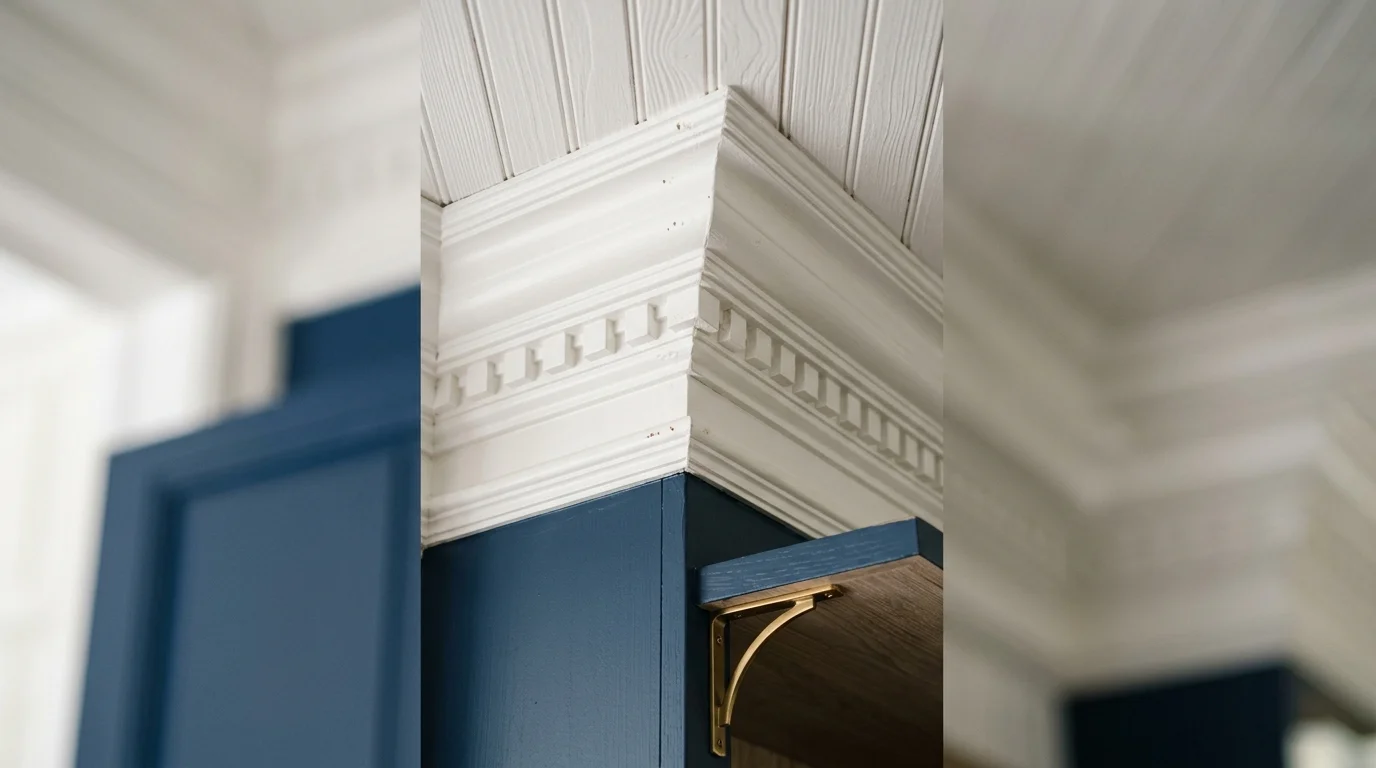
Traditional Cabinet Crown: Raised panel doors and traditional cabinet styles can handle more elaborate crown treatments. Multi-piece crown assemblies, dentil molding, and decorative corbels all work well with traditional designs.
Traditional crown often incorporates a frieze board (flat board) between the crown molding and cabinet face. This creates more visual weight and allows for additional decorative elements like applied molding or panels.
Installation Considerations
Crown molding installation requires careful attention to scribing and coping joints. Most Palm Beach County homes have some degree of ceiling irregularity, and crown molding highlights every imperfection.
Ceiling Variations: We always check ceiling level before finalizing crown molding plans. A 1/4-inch variation over 12 feet is common in older homes, and crown molding needs to follow the ceiling line rather than staying perfectly level. This sometimes means tapering the crown or using scribe molding to bridge gaps.
Cabinet Installation Sequence: Crown molding goes on after cabinet installation but before countertop installation when possible. This allows us to scribe the crown to the actual cabinet positions rather than working from plans. However, when cabinets extend to the ceiling, crown installation often happens after countertops to avoid damage during template and installation.
Electrical Considerations: Your general contractor needs to plan electrical rough-in carefully when crown molding is involved. Under-cabinet lighting wiring often runs through the crown molding space, and transformer locations need coordination with the crown design.
HVAC Integration: Air conditioning returns and supply registers sometimes conflict with crown molding installations. We work with your GC to relocate or resize registers when necessary, or incorporate them into the crown design when relocation isn't practical.
Cost Guide
Crown molding costs depend on the profile complexity, material choice, and linear footage required. Here's what to expect for crown molding additions in Palm Beach County:
Typical Kitchen Requirements: Most kitchens need 20-30 linear feet of crown molding for upper cabinets. An L-shaped kitchen typically requires about 25 linear feet, while a galley kitchen might only need 16-20 feet.
Additional Costs: Painting crown molding adds $5-8 per linear foot when done professionally. We typically prime and paint crown molding before installation, then touch up after installation for the best finish quality.
South Florida Considerations
Florida's climate and building practices create specific considerations for crown molding installations that don't apply in other regions.
Humidity and Movement: MDF crown molding performs well in Florida's humidity when properly primed and painted. Solid wood crown can experience more seasonal movement, especially in newer construction where the house is still settling. We use Florida Building Code approved installation methods that account for thermal expansion.
Hurricane Considerations: Crown molding attachment methods need to account for potential wind load and structural movement. We use appropriate fastening schedules and avoid relying solely on adhesive attachment in hurricane-prone areas.
Concrete Block Construction: Many Palm Beach County homes use concrete block construction, which affects crown molding installation when cabinets are mounted to exterior walls. Proper blocking and attachment methods ensure crown molding stays secure even with slight structural movement.
Open Floor Plans: South Florida homes often feature open kitchen designs that flow into living areas. Crown molding transitions become important design elements when kitchen cabinets are visible from multiple rooms. We plan crown molding returns and terminations that look intentional rather than abrupt.
Ceiling Fan Coordination: Many Florida kitchens include ceiling fans for additional air circulation. Crown molding installation needs to coordinate with fan mounting and clearance requirements. We often modify crown profiles or add blocking to accommodate fan installation.
Island crown molding presents special challenges in South Florida's open floor plans. Island cabinets need crown molding that looks finished from all angles, which typically requires more complex joinery and planning than perimeter crown molding.
We recommend discussing crown molding options early in the planning process, especially when working with kitchen remodel timelines. Crown molding affects electrical planning, paint schedules, and installation sequencing throughout the project.
The investment in quality crown molding pays off in both daily enjoyment and resale value. Kitchens without crown molding look unfinished to most buyers, while well-executed crown molding makes cabinets look like custom millwork regardless of the actual cabinet grade.