Mid-century modern kitchen ideas for Palm Beach County homes
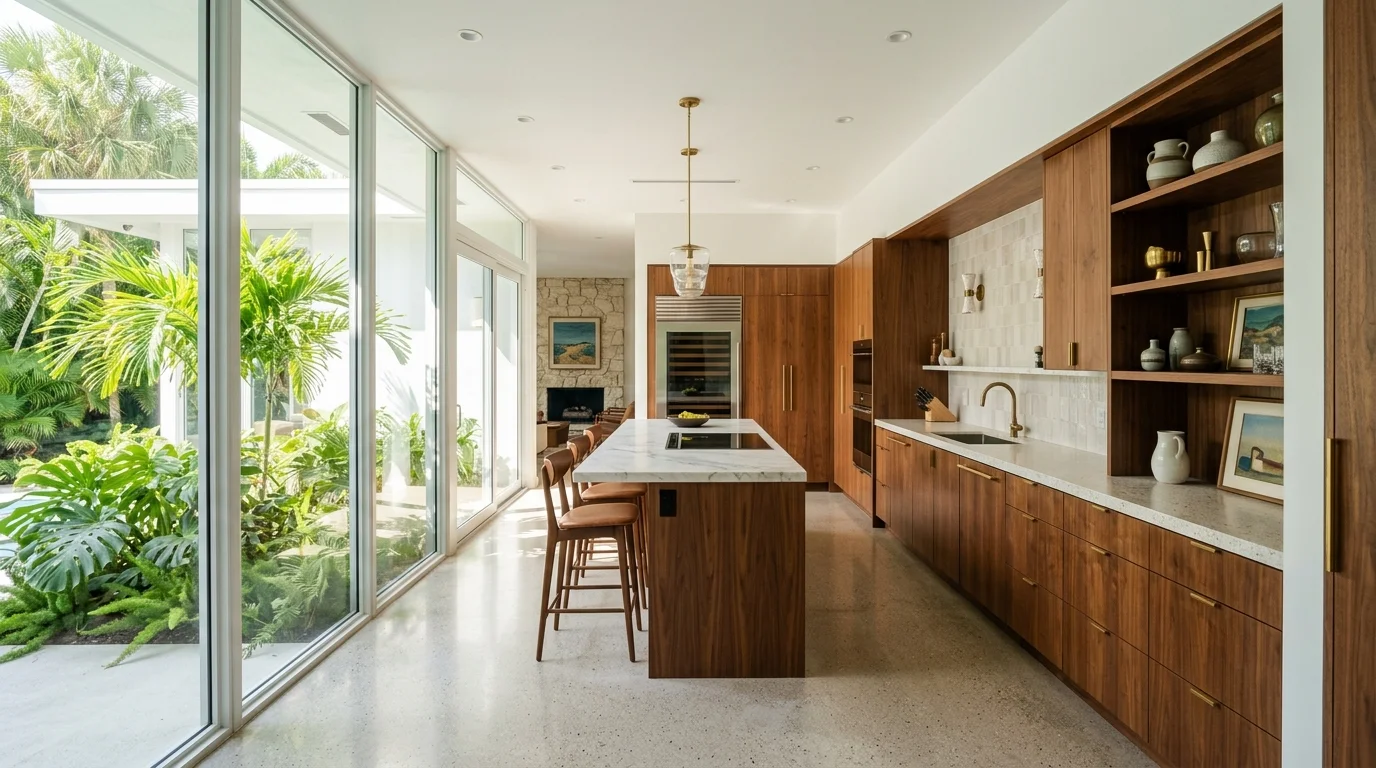
The mid-century modern kitchen remains one of the most requested styles we see in Palm Beach County homes. Clean lines, bold colors, and that perfect balance of function and form make this 1950s-born aesthetic feel surprisingly current in South Florida properties. If you're renovating a vintage Boca Raton ranch or bringing retro flair to a newer Wellington home, getting the details right makes all the difference.
Mid-century modern design celebrates simplicity without sacrificing personality. We've installed these kitchens in everything from Jupiter waterfront condos to historic Delray Beach neighborhoods, and the style adapts beautifully to Florida's indoor-outdoor lifestyle. The key lies in understanding which elements are non-negotiable and where you can bend the rules for local climate and living patterns.
Defining Mid-Century Modern Style
True mid-century modern kitchens prioritize horizontal lines, minimal ornamentation, and natural materials. Think flat panel cabinet doors rather than raised panels. Geometric patterns over flowing curves. Wood tones that show grain rather than painted surfaces that hide it.
The movement emerged when architects like Richard Neutra and Joseph Eichler were designing homes that blurred indoor and outdoor boundaries, perfect for South Florida's year-round entertaining climate. Kitchen islands stayed low-profile. Upper cabinets often stopped short of the ceiling, creating breathing room. Windows stretched wide rather than tall.
We see homeowners get tripped up trying to recreate magazine-perfect 1960s kitchens without considering how families actually cook today. Modern appliance sizes don't always play nice with vintage proportions. Counter heights have shifted. Storage needs have multiplied. The best mid-century modern kitchens honor the aesthetic while accommodating contemporary life.
Color plays a huge role in nailing the look. Original mid-century palettes leaned heavily on turquoise, orange, and avocado green, bold choices that can feel dated if not handled carefully. We typically recommend using these accent colors in smaller doses: backsplash tiles, bar stools, or small appliances rather than entire cabinet runs.
Cabinet Styles and Finishes
The cabinet door style defines your entire kitchen's personality, and flat front vs shaker cabinets becomes an easy choice in mid-century designs. Flat panel doors are essential. No raised panels, no cathedral arches, no decorative moldings. The door should read as a single, uninterrupted plane.
Wood species matter enormously. Walnut was the gold standard in the 1950s and 1960s, with its rich chocolate tones and striking grain patterns. Teak offered a lighter alternative with similar warmth. Cherry provided red undertones that complemented the era's bold accent colors. We still source these species today, though availability and cost have shifted significantly.
Many Palm Beach County clients opt for walnut-stained oak or maple to capture the look at a more accessible price point. The key lies in the stain color and grain visibility. You want enough contrast to show wood character without overwhelming the clean lines. Avoid overly busy grain patterns that compete with the minimalist aesthetic.
Two-tone approaches work beautifully in mid-century kitchens. We often design upper cabinets in a lighter wood tone or white laminate, with lower cabinets in rich walnut or teak tones. This creates visual separation while maintaining the horizontal emphasis these kitchens demand. Two tone kitchen cabinets let you introduce color and texture without overwhelming smaller spaces.
Color Palettes That Work
Mid-century modern color schemes walk a fine line between bold and tasteful. The original palette included some choices that haven't aged gracefully, harvest gold appliances, anyone? Smart updates honor the spirit while creating kitchens you'll love for decades.
Start with a neutral base and layer in personality through accents. Warm whites and soft grays provide the foundation. Add wood tones through cabinetry and perhaps a butcher block island top. Then introduce color through backsplash tiles, pendant lighting, or counter stools.
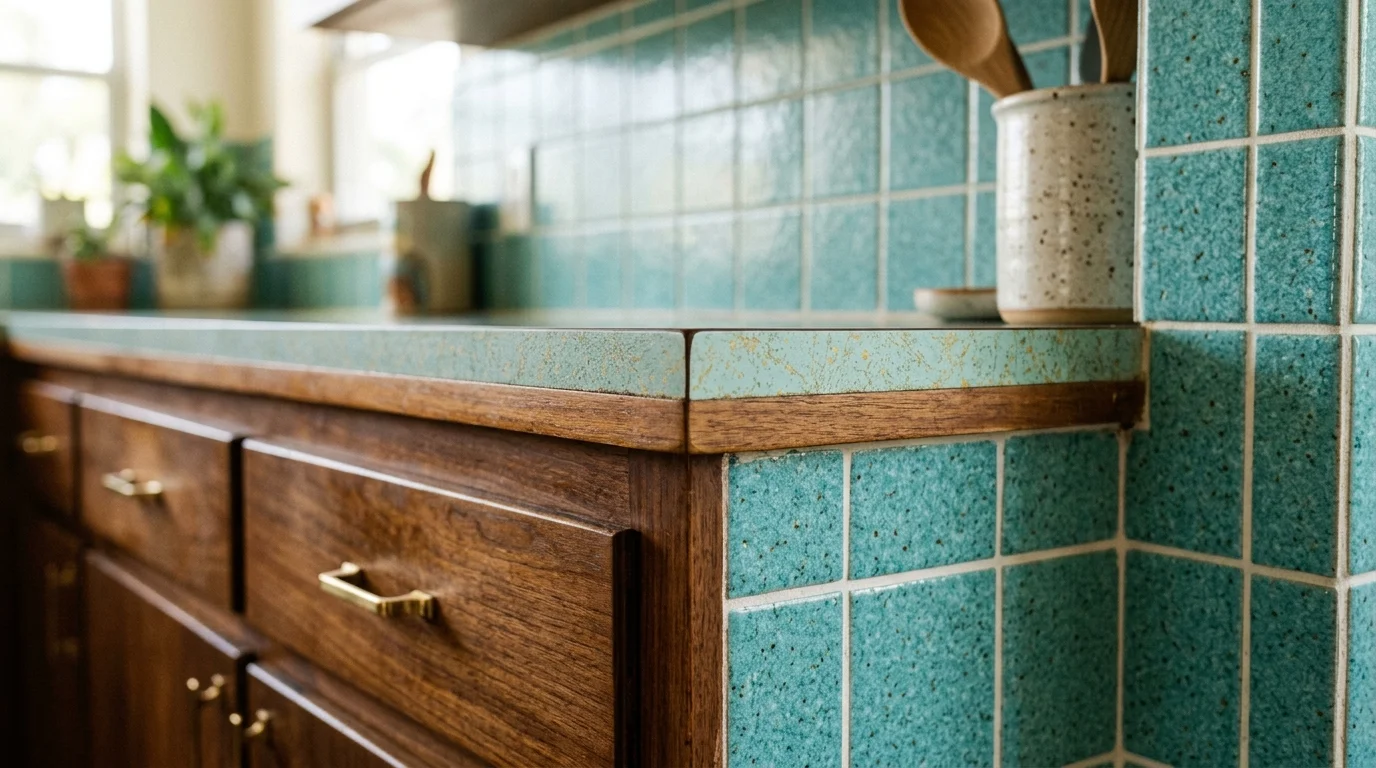
Turquoise remains one of the most successful mid-century accent colors. A turquoise tile backsplash against walnut cabinets creates instant authenticity. Orange works in smaller doses, perhaps through pendant lights or small appliances. Yellow can brighten north-facing kitchens but avoid the harsh golds that feel dated.
Black introduces sophisticated contrast in mid-century kitchens. Black hardware, black window frames, or black accent walls create visual anchors without compromising the clean aesthetic. We've installed gorgeous black quartz countertops that reference the era's love of stone and terrazzo while offering modern durability.
Green deserves special mention because it bridges mid-century authenticity with current trends. Sage green cabinets feel fresh and timeless. Forest green backsplashes complement warm wood tones beautifully. Avoid the yellow-greens that dominated 1970s kitchens, they read dated rather than retro.
Hardware and Fixtures
Cabinet hardware makes or breaks a mid-century modern kitchen. The wrong pulls can make beautiful flat panel cabinets look generic. The right ones instantly communicate the era and style you're channeling.
Brass was the dominant hardware finish in original mid-century kitchens, but not the bright, shiny brass popular in other eras. Look for warm, muted brass tones with slight patina. Unlacquered brass develops character over time, which suits the aesthetic perfectly. Brushed brass offers similar warmth with more consistency.
Pull styles should emphasize horizontal lines. Bar pulls work beautifully, especially in longer lengths that span multiple door stiles. Geometric shapes, rectangles, cylinders, angular forms, suit the aesthetic better than organic curves. We often specify custom lengths to achieve perfect proportions on specific cabinet configurations.
Integrated pulls deserve consideration in mid-century kitchens. Rather than surface-mounted hardware, these create negative space within the cabinet door itself. The result looks incredibly clean and modern while referencing design techniques popular in the 1960s. They work especially well on lower cabinets where you want uninterrupted horizontal lines.
Lighting fixtures offer another opportunity to reinforce the style. Pendant lights over islands should feature geometric shapes, cylinders, cones, angular forms rather than traditional shades. Materials like brass, wood, and glass work better than ornate crystals or fabric shades. Pendant lighting over kitchen islands requires careful attention to scale and spacing in mid-century designs.
Mixing Vintage and Modern Elements
The most successful mid-century modern kitchens blend authentic vintage pieces with contemporary functionality. This isn't about creating a museum, it's about capturing the spirit while meeting today's cooking and entertaining needs.
Start with appliances. Original 1960s ranges and refrigerators rarely meet modern performance or efficiency standards. Instead, look for contemporary appliances with mid-century styling cues. Several manufacturers offer retro-inspired lines with authentic color options and vintage proportions but current technology inside.
Countertop materials offer interesting mixing opportunities. Quartz can mimic the terrazzo and solid surface materials popular in the era while offering superior durability and stain resistance. Best countertops for Florida kitchens must handle heat and humidity, making modern materials smart choices even in vintage-styled spaces.
Authentic vintage pieces work beautifully as accents. A restored 1960s bar cart, original ceramic canisters, or period-appropriate artwork can anchor the style without compromising function. We've incorporated vintage light fixtures, restored and rewired for safety and modern electrical codes.
Backsplash materials let you have fun with authenticity. Original mid-century kitchens featured everything from painted glass to ceramic mosaics to natural stone. Modern interpretations can use subway tiles in period colors, geometric patterns in authentic materials, or contemporary takes on classic designs.
Open shelving appeared in many original mid-century kitchens, driven partly by the desire to show off colorful dishware and glassware. Open shelving in kitchens can work beautifully in South Florida homes, though you'll want to consider dust and humidity when deciding what to display.
Cost Guide
Mid-century modern kitchen costs vary significantly based on how authentic you want to get and which materials you choose. Here's what we typically see in Palm Beach County:
Budget-conscious approaches focus on getting the cabinet door style right and using stained finishes that mimic expensive wood species. Mid-range projects typically include authentic materials like walnut veneer and higher-end hardware. Luxury installations might feature solid wood construction, custom integrated appliances, and restored vintage fixtures.
The biggest cost variable comes down to wood species and construction quality. Real walnut costs significantly more than walnut-stained maple, but both can create authentic-looking results. Semi-custom vs custom cabinets becomes an important decision when achieving specific mid-century proportions and details.
South Florida Considerations
Mid-century modern kitchens adapt beautifully to South Florida's climate and lifestyle, but some details need adjustment for local conditions. Wood finishes require protection from humidity. Hardware needs corrosion resistance near the coast. Color choices should account for intense natural light.
Florida's year-round entertaining culture actually aligns perfectly with mid-century design principles. The era emphasized indoor-outdoor living, large windows, and casual entertaining spaces. Modern interpretations might include larger islands for party prep, wine storage, or café doors that open to screened porches.
Humidity affects wood finishes differently than in drier climates. We recommend high-quality topcoats on stained cabinets and proper ventilation during installation. Kitchen materials for humid climates become especially important when you're investing in premium wood cabinetry that needs protection.
Hurricane resistance doesn't typically impact kitchen design directly, but it's worth considering during major remodels. Impact windows might affect your backsplash height or upper cabinet proportions. If you're opening walls or changing structural elements, your general contractor will handle building code compliance and any required permits.
Natural light intensity in South Florida can affect color perception significantly. Colors that look perfect in showrooms might appear washed out or overly bright in homes with large south-facing windows. We always recommend looking at finish samples in your actual kitchen space before making final selections.
Many Palm Beach County communities have architectural guidelines that could affect exterior changes. If your mid-century kitchen remodel involves new windows, exterior doors, or structural changes, check with your HOA or local architectural review board early in the planning process. We provide design drawings and material samples to support any required approval packages.