Shower Bench Ideas: Built-In, Floating & Fold-Down for South Florida Bathrooms
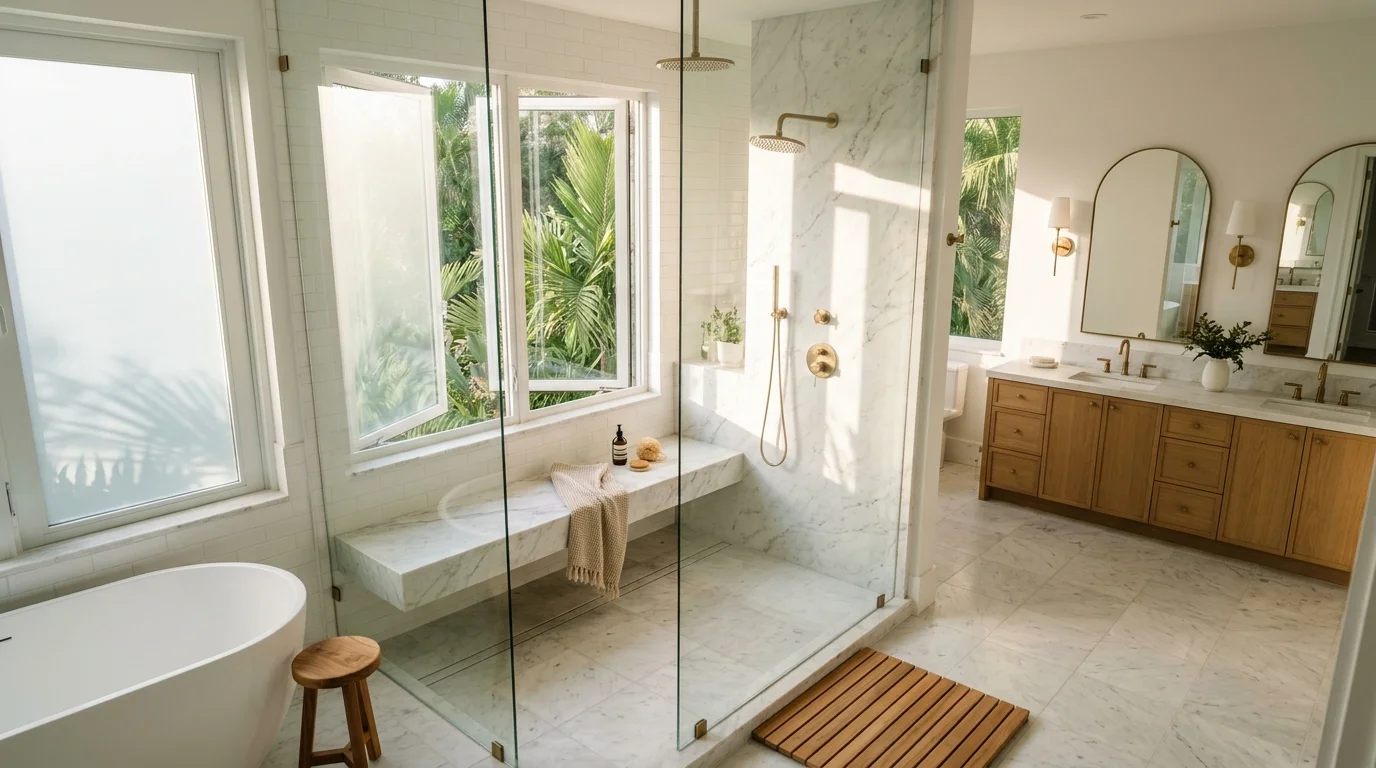
Shower bench ideas come up in almost every bathroom remodel we do across Palm Beach County. And it makes sense. Once a homeowner experiences a well-placed bench in the shower, they never want to go back. Whether you're leaning toward a built-in tiled seat, a sleek floating slab, or a compact fold-down option, the right choice depends on your shower size, your daily routine, and how long you plan to stay in the home. This guide breaks down all three types so you can make a smart decision before the tile goes up.
Why a Shower Bench Is Worth It
A lot of homeowners treat shower benches as a luxury add-on. We disagree. A bench serves real, practical functions. It gives you a stable surface to rest a foot while shaving, somewhere to set a towel or product bottle, and a spot to sit if you just need a moment. For older homeowners, it's an accessibility feature that can extend how long you comfortably live in your home without modifications down the road.
Resale matters too. Buyers touring homes in Boca Raton, Delray Beach, and Wellington consistently respond well to spa-style showers. A built-in bench signals quality and thoughtfulness in the design. It reads as a feature, not an afterthought. Our team has seen firsthand how a well-tiled bench turns a standard walk-in into something that photographs beautifully and sells faster.
If aging-in-place is on your radar, a shower bench pairs perfectly with a curbless entry and proper grab bar placement. We wrote about the full picture of aging in place bathroom design for South Florida seniors if you want to think about the broader scope.
Built-In Shower Benches
Built-in benches are the most popular option we install. They're framed into the shower wall during construction, tiled to match the floor or walls, and become a permanent architectural element of the space. Done right, they look like the shower was designed around the bench, not like something bolted on later.
The most common configuration is a corner bench. It tucks into one end of the shower, typically the wall opposite the showerhead, and runs about 36-48 inches wide with a seat height of 17-19 inches off the floor. That range aligns with standard accessibility guidelines from the ADA Design Standards, which is a useful reference even when accessibility isn't the primary goal.
Full-width benches spanning an entire shower wall are another strong option, especially in larger showers. They give you maximum usable surface and make a bold visual statement when tiled in a contrasting material or pattern. We often pair these with a large-format porcelain tile on the bench face and a different tile on the seat top for a layered look.
The tradeoff with built-ins is that they require planning before the walls go up. If you're mid-tile and decide you want a bench, you're looking at demolition and re-framing. This is a decision that has to be made at the design stage. Our crew works through every shower detail during the design phase for exactly this reason.
Built-in benches also reduce the floor area of your shower. In smaller showers, say under 36x60 inches, a built-in can feel cramped. In that case, a fold-down or floating option is worth considering instead.
Floating Shower Benches
Floating shower benches are wall-mounted with no legs touching the floor. They create a clean, modern look and make it easier to clean the shower floor since there's nothing underneath to scrub around. For homeowners chasing a spa-hotel aesthetic, floating benches are hard to beat.
The seat surface is typically a solid slab of porcelain, natural stone, or teak. Porcelain slabs cut to bench width are extremely popular right now because they can match the shower wall tile exactly, creating that seamless slab look. A 12x48 or 24x48 porcelain piece installed at the right height looks genuinely architectural.
Teak is another strong choice for a floating bench. It's naturally resistant to moisture, doesn't require a tile finish, and adds warmth to an all-porcelain shower. The wood tone breaks up what can otherwise be a cold, sterile look. We recommend marine-grade teak over cheaper tropical hardwoods because it holds up better under South Florida's humidity and daily hot shower steam.
The critical factor with floating benches is structural support. The bracket system behind the wall needs to be properly anchored into studs or blocking, and the waterproofing membrane behind the mounting point has to be done correctly. If water gets behind that wall at the bracket penetration, you'll have a mold problem inside the wall cavity. This is not a DIY project. The waterproofing matters as much as the bench itself, which is why we tie bench installation directly into our overall shower waterproofing scope.
Weight capacity is another consideration. A solid porcelain slab bench can handle the load easily. Thinner prefab options sometimes can't. We stay away from anything rated under 300 lbs. for residential use.
Fold-Down Shower Benches
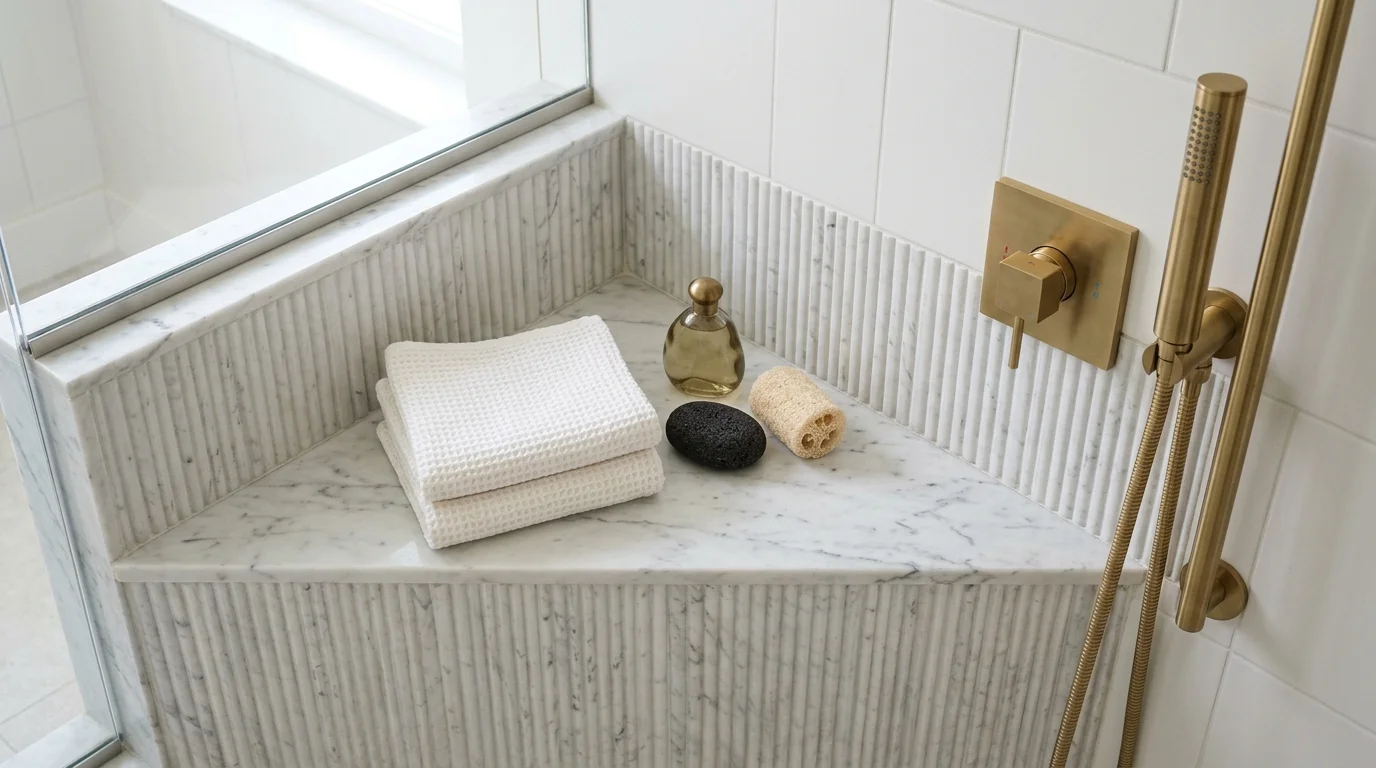
Fold-down benches are wall-mounted seats that fold flat against the wall when not in use. They're the right answer for small showers where a permanent bench would eat too much floor space. When folded up, they add maybe 2-3 inches of projection from the wall. When folded down, they give you a usable seat.
These are especially popular in guest bathrooms and smaller condo bathrooms in Jupiter and Palm Beach Gardens where every square inch matters. We also install them frequently in small bathroom remodels with walk-in showers where the homeowner wants shower bench functionality without committing the floor space.
Fold-down bench materials range from teak slats to powder-coated aluminum to solid polymer. Teak slats are the most visually appealing and drain well because of the gaps between slats. Polymer and aluminum hold up better if maintenance isn't a priority, and both are essentially impervious to moisture.
The installation process is simpler than a built-in but still requires proper blocking in the wall. Most fold-down benches mount via two or four wall brackets, and the hardware needs to be rust-proof. Stainless steel or marine-grade hardware is the right call in a humid South Florida bathroom. Standard zinc or plated screws will corrode within a year.
Weight ratings vary significantly by brand. We recommend benchmarking anything you buy against the National Association of Home Builders guidelines for accessibility hardware when durability and long-term use are priorities. For everyday use, look for a minimum 300 lb. static load rating.
One honest drawback: fold-down benches look utilitarian. They're practical first, beautiful second. If the aesthetic of your shower is a priority, a built-in or floating bench will read better visually. Fold-downs are for function in constrained spaces.
Materials, Tile & Waterproofing
Whatever bench style you choose, the material and waterproofing decisions matter just as much as the form factor. Here's how we think about it.
Porcelain tile is our default recommendation for built-in bench surfaces. It's hard, non-porous, and holds up to daily water exposure without the sealing requirements of natural stone. Large-format porcelain, specifically 24x48 or 12x24 pieces, give a bench top a clean slab look with minimal grout lines. Fewer grout lines mean less maintenance and less chance for mold to establish in the shower. For more on tile selection in wet environments, our guide to the best tile for shower walls in Florida's humid climate covers the full material comparison.
Natural stone like marble or quartzite looks incredible on a bench top but requires sealing and more careful maintenance. If the rest of your shower is already stone, matching the bench makes sense. Just understand the upkeep commitment before choosing it.
Teak works well for floating and fold-down benches as a surface material. It needs periodic oiling (once or twice a year) to maintain its color and prevent drying and cracking. Without that maintenance, it will gray out, which some homeowners actually prefer.
Waterproofing is non-negotiable on a built-in bench. The bench top needs a slope, typically 1/8 inch per foot minimum, so water drains off toward the shower floor rather than pooling. Standing water on a bench top will wick into grout and substrate over time. The substrate itself should be a cement board or foam shower panel system, never standard drywall or greenboard. Our full breakdown of bathroom waterproofing for Florida homes explains why this matters even more in our climate.
If you're tiling the bench to match your shower walls, think about the tile pattern on the bench face versus the seat. A vertical tile pattern on the bench face and a horizontal or herringbone pattern on the seat top creates visual definition. It's a small design move that elevates the finished look without adding complexity or cost.
For shower niche placement near the bench, the two elements need to be coordinated in the design phase. A niche at bench-top height works great for products you use while seated. We discuss niche placement in detail in our shower niche ideas and placement guide.
Cost Guide
Shower bench costs in Palm Beach County depend on the type, materials, and whether the bench is part of a larger shower remodel or an add-on scope. Here's a realistic breakdown based on what we see in the market today.
These figures assume the bench is installed as part of a shower tile project. If you're adding a bench to an existing finished shower, demo and waterproofing remediation will add cost. Built-in benches retrofitted into a completed shower typically run 40-60% more than when done during the original build because the existing tile work has to be removed and redone.
For full shower remodel context, our guide to shower remodel costs in Palm Beach County gives the broader picture of what a complete shower overhaul runs in this market.
South Florida Considerations
Building in Palm Beach County comes with a few specific considerations that homeowners in other parts of the country don't have to think about as carefully.
Humidity is the big one. South Florida bathrooms run warm and humid year-round, and shower steam adds to that daily. Any material that holds moisture, traps it in crevices, or is prone to mold growth in warm conditions is going to give you problems. This is why we prefer porcelain over ceramic for bench tile, and why we insist on a full waterproof membrane system under any built-in bench, not just cement board alone.
Teak holds up well here, but we tell homeowners in Delray Beach and Wellington who choose teak benches to oil them twice a year rather than once. The humidity and heat accelerate drying faster than you'd see in a northern climate.
Mold prevention is a design consideration, not just a cleaning concern. Bench tops with inadequate slope, grout joints that run perpendicular to drainage, or materials with micro-porosity will develop mold over time regardless of how often you clean. Good design prevents the problem before it starts. This connects directly to our thinking on bathroom shower tile ideas for South Florida homes, where material choices and grout selection directly affect long-term maintenance.
HOA and ARB approvals are relevant if you live in a gated community or a historic district. In most cases, an interior shower bench doesn't require HOA sign-off, but if your remodel involves changes visible from the exterior or in a common wall in a condo, your general contractor will need to confirm the scope with the association before work begins. SFKB supplies the design drawings and material samples for any required approval package. The GC submits those to the building department or association as part of their scope.
Permit requirements are scope-dependent. A standalone bench addition that doesn't move plumbing or open walls typically doesn't require a permit. If the bench is part of a larger shower remodel that relocates the drain or adds new plumbing, your GC will handle permit applications with the relevant municipality, whether that's the City of Boca Raton, Palm Beach County, or the Town of Jupiter.
Finally, the spa bathroom trend is running strong across Palm Beach County right now. Homeowners in Jupiter, North Palm Beach, and Wellington are investing in showers that feel like high-end hotel amenities. A well-designed bench is part of that picture. If you want to see the broader context of where shower design is heading, our roundup of spa-like bathroom ideas for Palm Beach County homes covers the full scope of that style.