Silestone vs Quartz: What's the Difference?
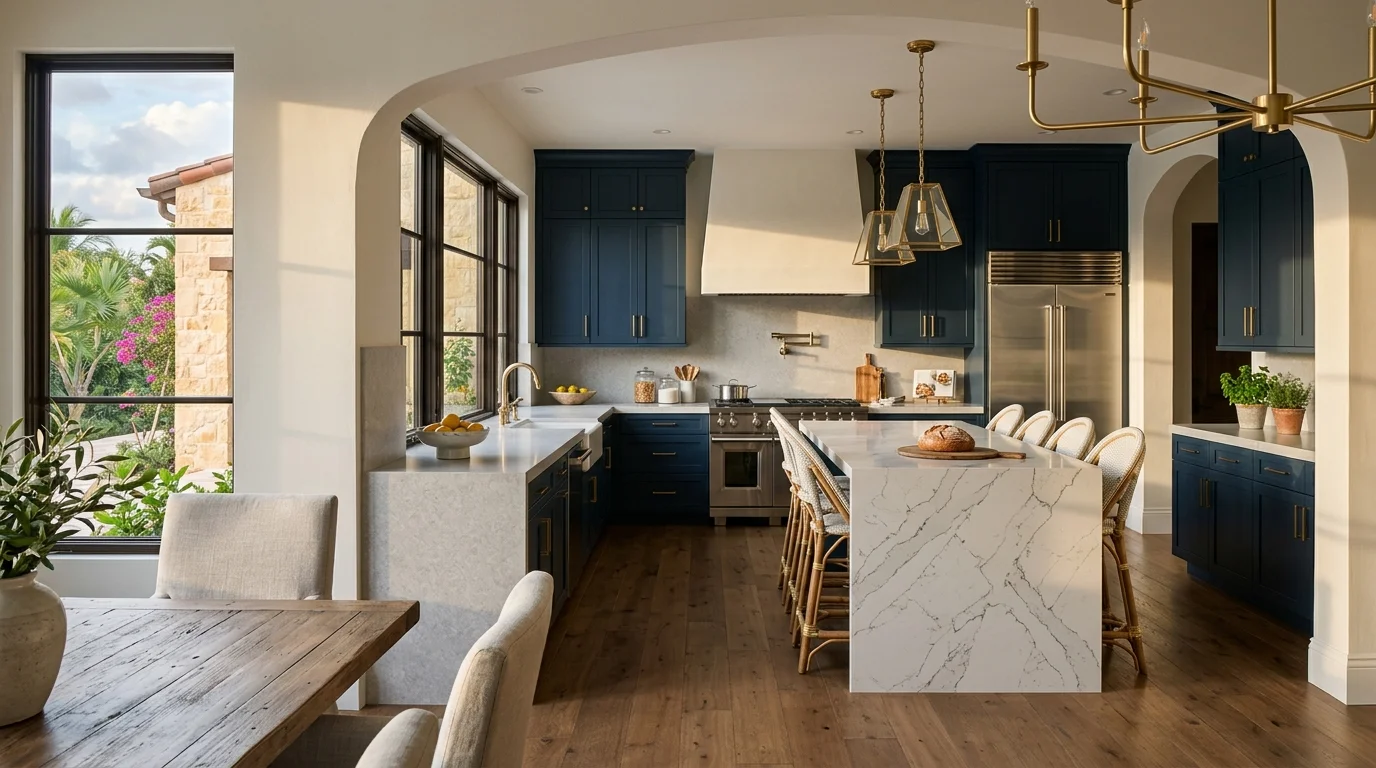
The silestone vs quartz question comes up constantly in our showroom. Homeowners walk in having done their research, and they're confused, and honestly, understandably so. Here's the short answer: Silestone is quartz. It's a brand of engineered quartz countertop made by the Spanish company Cosentino, and it's one of the most recognized names in the category. But quartz as a material covers dozens of brands, and the differences between them matter when you're spending real money on a kitchen or bathroom remodel in Palm Beach County, Boca Raton, or Wellington. This guide clears it all up.
Silestone Is Quartz, Here's Why That Matters
Engineered quartz countertops are manufactured products. They're made from roughly 90-93% ground natural quartz bound together with polymer resins, pigments, and sometimes recycled glass or mirror fragments. The result is a non-porous, consistent, highly durable surface that doesn't need sealing. Every major brand in this category, Silestone, Caesarstone, Cambria, MSI Q Premium, follows that same basic formula.
So when someone asks us "Is Silestone better than quartz?", we have to stop them. It's like asking if a Honda is better than a car. Silestone is a car. What you're actually asking is: how does Silestone compare to other quartz brands, and is it worth any premium it carries?
That's a fair question. And the answer depends on what you care about: warranty length, surface technology, color selection, or price. We work with multiple quartz suppliers across Palm Beach County and have installed thousands of slabs over the years, so we have real opinions here, not just manufacturer talking points.
If you're still deciding between quartz and other surface materials altogether, our guide on the best countertops for Florida kitchens is a good starting point before you get into brand comparisons.
What Makes Silestone Different from Other Quartz Brands
Silestone has made a few moves over the years that set it apart from the generic quartz field. Some of them are genuinely meaningful. Others are marketing.
HybriQ+ Technology. Cosentino reformulated Silestone in 2021 with what they call HybriQ+ technologyreplacing some of the traditional resin binders with a mineral-based hybrid compound and incorporating recycled glass and mirror content. The stated benefits are improved scratch and stain resistance and a lower environmental footprint. In our experience, the surface performs well. Whether it outperforms top-tier Cambria or Caesarstone in real-world daily use is honestly a toss-up, all three are excellent.
The Warranty. This is where Silestone earns its reputation. Cosentino offers a 25-year transferable warranty on Silestone products. That's among the longest in the industry. Cambria also offers a lifetime warranty, so Silestone doesn't have a monopoly on strong coverage, but 25 years transferable is a real selling point if you're planning to sell your Jupiter or Delray Beach home in the next decade.
Color Range. Silestone offers over 70 colors across multiple finishes, polished, suede, and volcano (a textured, leathered look). Their palette skews toward clean whites, soft grays, and bold dramatic options like Eternal Noir and Stellar Night. If you're building an all-white kitchen, Silestone's Lyra, White Storm, and Ethereal Glow are genuinely popular choices we spec often. For a deeper look at white kitchen design in South Florida, see our all-white kitchen design guide.
Finish Options. Most quartz brands offer polished and matte. Silestone's volcano finish is distinctive, it has a rough, almost lava-rock texture that hides fingerprints and gives a more artisanal look. It's not for everyone, but clients who want something different from the typical glossy quartz slab genuinely love it.
What Silestone Doesn't Do Differently. It still needs to be kept away from prolonged direct heat. A hot pan straight from the stove can damage the resin binders, this is true for all engineered quartz brands, Silestone included. Use trivets. It's also still susceptible to UV discoloration if used outdoors or in sun-drenched atriums over time. And it's not immune to chipping on edges, which is why edge profile choice matters. Our countertop edge profiles guide for Palm Beach County covers which profiles hold up best on engineered stone.
Silestone vs Caesarstone, Cambria & MSI Quartz
Here's how we think about the major players our clients ask about most often:
Silestone vs Caesarstone. Both are premium imported brands. Caesarstone is Israeli-made and has been in the market longer. Their Calacatta and Statuario series are strong sellers for clients who want a marble look without marble maintenance. Silestone's HybriQ formulation gives it an edge in sustainability claims, but both products are in the same performance tier. Caesarstone's warranty is 10 years, significantly shorter than Silestone's 25. That alone often tips the decision for homeowners who plan to stay in their homes long-term.
Silestone vs Cambria. Cambria is the only major quartz brand manufactured entirely in the USA (in Minnesota). They offer a true lifetime warranty and an enormous color library, over 200 designs. Cambria is harder than most competing quartz because they use a higher density of natural quartz crystal. In our experience, Cambria edges out on pure durability, but Silestone's volcano finish and unique color options give it a design edge for clients who want something beyond the standard catalog. Price is similar between the two at the slab level.
Silestone vs MSI Q Premium. MSI is more accessible. It's widely distributed, comes in at a lower price point, and the quality is solid for mid-range projects. If a client is working with a tighter budget and wants quartz without the premium brand markup, MSI is a reasonable choice. You're giving up the warranty length and some of the finish variety, but for a rental property or a budget-driven refresh in a Boca Raton condo, it gets the job done. You can see real cost comparisons in our kitchen remodel cost guide for Palm Beach County.
One thing we push back on: don't choose a quartz brand based on the name alone. Choose based on the specific slab in front of you. Two slabs from the same brand can look dramatically different. Come see samples in person, ideally against your cabinet doors and flooring, before committing. Our team helps clients do exactly that at every design appointment.
If you're weighing quartz against natural stone options entirely, our comparison of quartz vs quartzite for South Florida homes covers the key trade-offs in our climate.
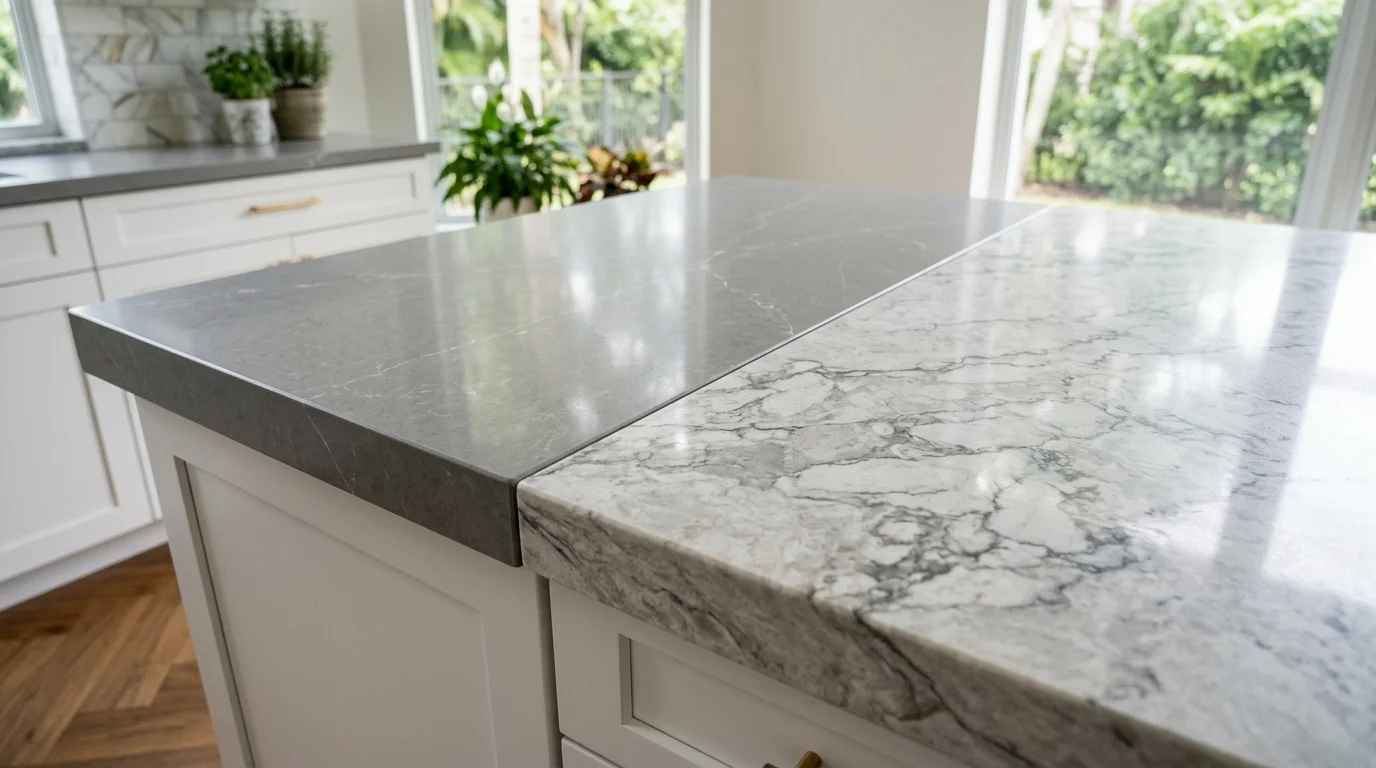
Cost Guide: Silestone vs Quartz in Palm Beach County
Countertop pricing in Palm Beach County reflects material cost, slab fabrication, edge work, and installation. The numbers below are what we see in the local market, not national averages from a website that's never ordered a slab from a Florida distributor.
Silestone typically runs at the higher end of the quartz spectrum due to brand recognition and the HybriQ formulation. But the gap between Silestone and other premium quartz brands like Cambria is often $5-$10 per square foot at most, not dramatic enough to make or break a budget decision.
Estimates above assume a standard 50-70 square foot kitchen counter run with one sink cutout and a basic eased or beveled edge. Waterfall edges, mitered seams, and specialty cutouts add cost. If you're planning a waterfall island, our waterfall countertop cost and ideas guide breaks that scope down in detail.
One thing worth noting: the countertop is rarely where a kitchen remodel budget lives or dies. If you're trying to understand where countertops fit in the bigger picture, our article on the 30 percent rule in remodeling gives useful context on how to allocate your overall budget across trades.
South Florida Considerations
Living in Palm Beach County, if you're in a Wellington estate, a Delray Beach bungalow, or a Jupiter waterfront home, means your kitchen deals with conditions that don't exist in most national design guides. Here's what we tell every client before they pick a quartz brand:
Humidity is less of a concern with quartz than with natural stone. Engineered quartz is non-porous. It doesn't absorb moisture, doesn't need sealing, and won't grow mold or harbor bacteria in the surface the way unsealed marble or granite can. This makes it a genuinely good fit for South Florida kitchens and bathrooms. For more on which surfaces hold up best in our climate, see our breakdown of the best countertop materials for Florida's humidity and heat.
UV exposure is a real issue. Silestone and all engineered quartz brands carry a warning against prolonged direct sun exposure. In a home with large impact glass windows or a sunroom kitchen, UV can cause the resin binders to yellow or the pigments to fade over years. This is especially relevant in east- or south-facing kitchens in Boca Raton or Jupiter. If your kitchen gets intense afternoon sun, consider a UV-stable porcelain slab or ask us about specific Silestone colors that have shown better light stability in our experience.
Outdoor kitchens: don't use Silestone. We see homeowners in South Florida try to run quartz countertops on their outdoor kitchens. Both Silestone and Cosentino explicitly void the warranty if the product is used outdoors. The UV and heat exposure from direct sun will damage the surface within a year or two. For outdoor applications, porcelain or sintered stone is the right call. Our guide to outdoor kitchen countertops for Florida covers the best options.
HOA and condo considerations. In some Boca Raton and Delray Beach condo buildings, material changes to countertops require ARB or HOA approval. Your general contractor handles permit submissions and building department coordination. Our team supplies the design drawings and material samples for those packages when needed, the GC takes it from there. Scope-wise, a countertop swap on the existing layout typically doesn't trigger a building permit, but if the project involves moving the sink location, that's when plumbing permits enter the picture through your GC.
Resale value. Silestone's brand recognition does carry some weight with buyers in higher-end Palm Beach County markets. In a luxury Wellington home, being able to say "Silestone with a 25-year transferable warranty" means something to a discerning buyer. In a mid-range Jupiter condo flip, an MSI or Caesarstone slab at a lower price point delivers nearly the same visual result for less spend, which improves your return. Know your market before you over-specify.