Floating Vanity Bathroom Ideas for Modern Homes
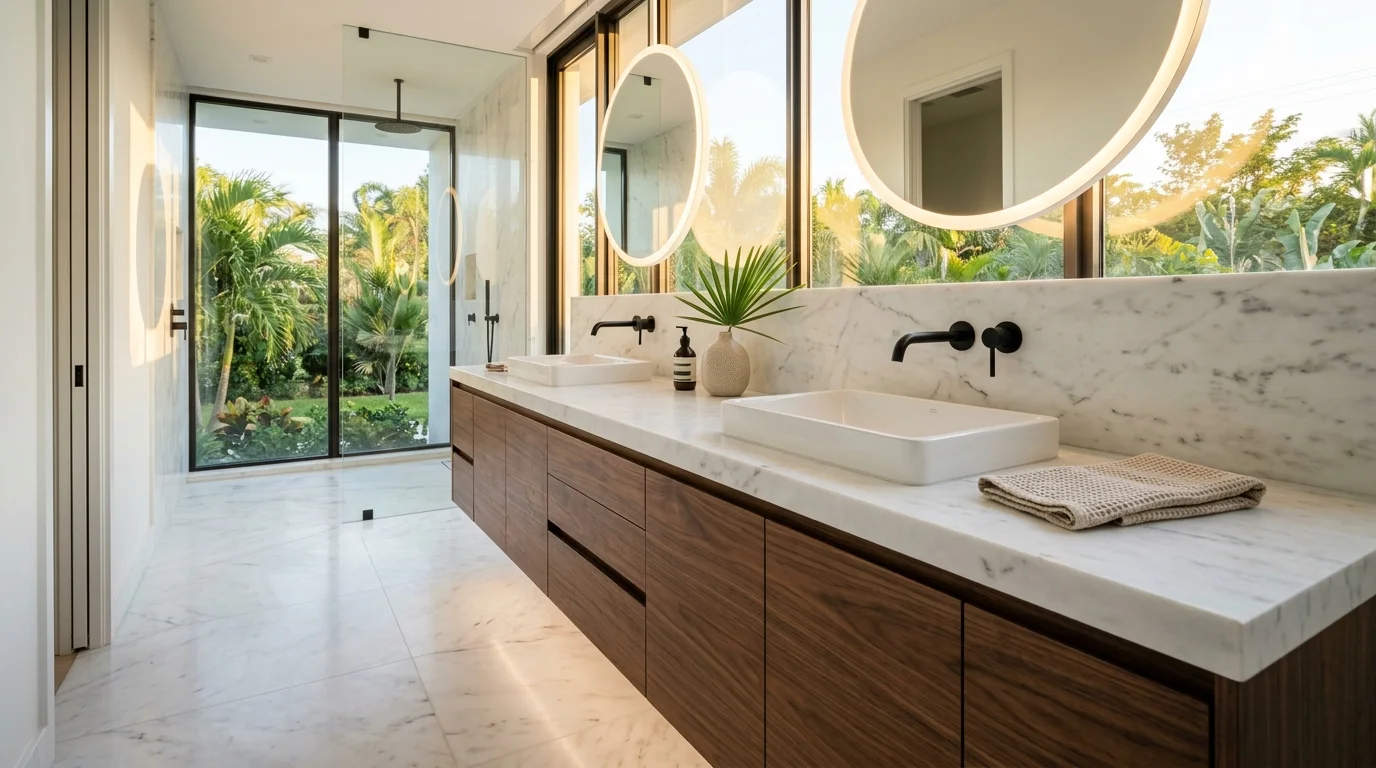
A floating vanity bathroom feels larger, cleaner, and more intentional than a traditional floor-mounted setup. That's not opinion, it's geometry. When the floor runs uninterrupted beneath the vanity, the eye reads the room as bigger. For homeowners in Palm Beach County, Boca Raton, Delray Beach, Wellington, and Jupiter who are upgrading their bathrooms in 2025 and 2026, wall-mounted vanities are showing up in nearly every mid-range and luxury remodel we work on. The look has moved well past trend status. It's become the standard for modern bathroom design.
That said, a floating vanity is not a drop-in upgrade. There are real structural, plumbing, and design decisions behind every installation. This guide covers all of it, from style options and material choices to what your general contractor needs to do before our crew shows up to set the cabinet.
Why Floating Vanities Work in Modern Bathrooms
The visual benefit is obvious. Floor space, even a few square feet, makes a small bathroom feel dramatically more open. In South Florida condos and older ranch homes where bathrooms can run as small as 50 square feet, that perceived space matters. A lot.
Beyond aesthetics, floating vanities are genuinely easier to clean around. No toe kick to mop under. No crevice where grout meets cabinet base. Just open floor. Homeowners with pets especially appreciate this. In our experience, once someone switches to a wall-mounted vanity, they rarely go back.
There's also a lighting opportunity that floor-mounted vanities can't replicate. LED strip lighting mounted under the floating cabinet creates a soft ambient glow at floor level, one of the most popular upgrades we pair with these installs. If you want to see how lighting choices shape the overall feel of a bathroom, our guide on bathroom lighting ideas for Palm Beach County remodels breaks down the layered approach we use on most projects.
Floating vanities also read younger and more contemporary than their furniture-style counterparts. If you're working toward a spa-like primary bathroom or a minimal guest bath, a wall-mounted cabinet is almost always the right call. It pairs well with frameless mirrors, large-format tile, and linear drain shower designs, all elements we see trending across South Florida right now.
There is one caveat worth naming early: floating vanities offer less storage than a comparable floor-to-ceiling furniture-style unit. If storage is the priority, you can compensate with tall linen towers, recessed wall niches, or medicine cabinets built into the wall. But if you walk into a showroom expecting a floating vanity to hold as much as a traditional 36-inch floor cabinet with full drawers, you'll be disappointed. Plan accordingly.
Styles, Materials, and Finish Combinations
The most popular floating vanity styles we install in Palm Beach County bathrooms right now break into three categories: flat-front modern, warm wood, and two-tone. Each has a different feel and pairs with different countertop and tile combinations.
Flat-front cabinetry in matte white or matte charcoal is the most requested modern look. It's clean, minimal, and works with almost any countertop material, quartz, porcelain slab, even Calacatta marble for higher-budget projects. If you're going this route, hardware choice matters more than people expect. Thin bar pulls in brushed nickel or matte black read modern. Knobs or ornate pulls undercut the whole aesthetic.
Warm wood-tone floating vanities, white oak, walnut, teak, have surged in South Florida over the past two years. The warmth balances the cool, hard surfaces of large-format tile and white walls. We recommend this direction for homeowners who want modern without sterile. One important note: in a Florida bathroom, wood veneer cabinetry needs proper ventilation and appropriate finishes. Solid wood panels can warp. We use cabinet lines built specifically for humid climates and specify moisture-resistant finishes on every wood-tone vanity we install.
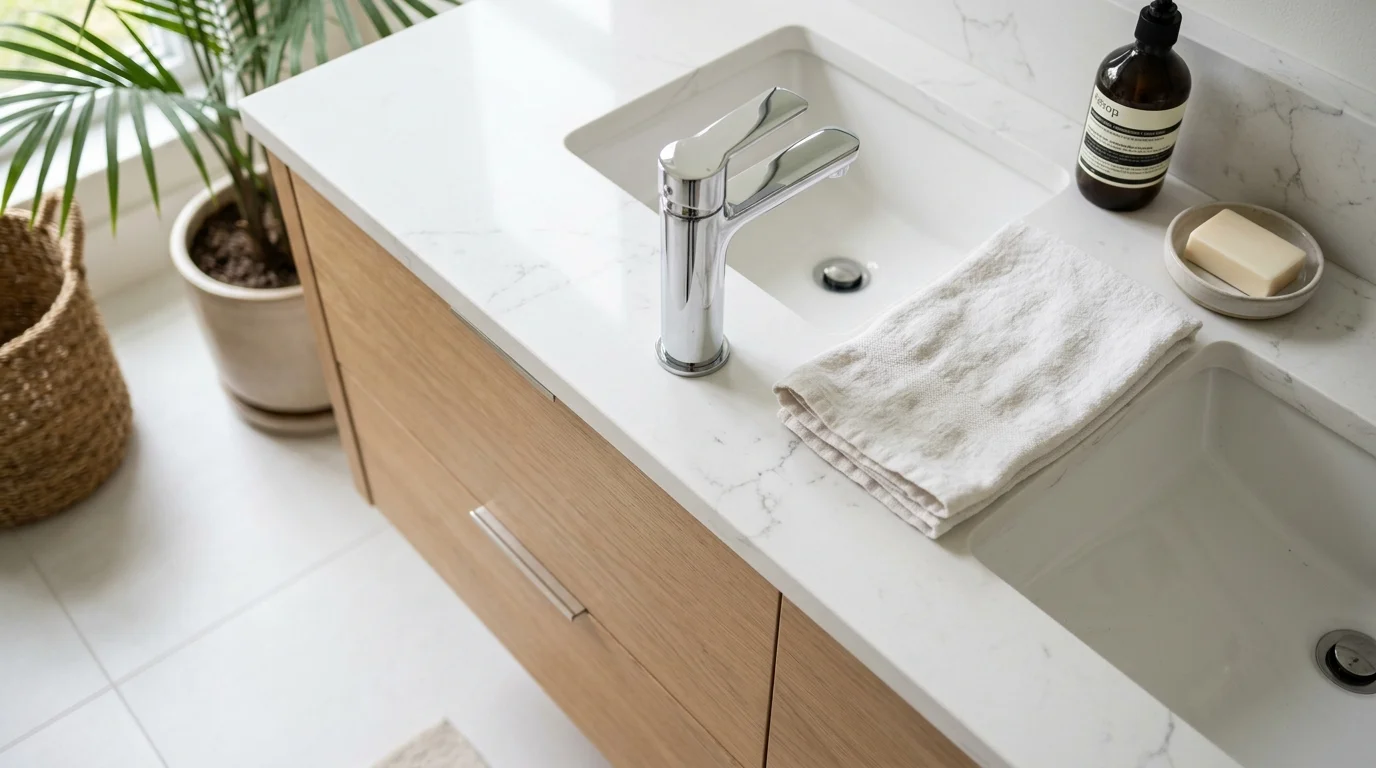
Two-tone combinations, a white upper cabinet with a darker lower or vice versa, add visual interest without going maximalist. Pair a white quartz countertop with a warm oak base floating at 20 inches off the floor and you have something that photographs well and holds up in real life. For countertop material selection, our breakdown of the best countertop materials for Florida's humidity explains why quartz and porcelain slab consistently outperform natural stone for bathroom vanity tops in our climate.
Finish combinations worth considering for South Florida homes:
- White flat-front cabinet + honed Calacatta quartz top + matte black fixtures
- Natural white oak cabinet + Taj Mahal quartzite top + brushed gold faucet
- Matte charcoal cabinet + white quartz top + polished chrome or brushed nickel
- Two-tone (white upper, navy lower) + light gray quartz + matte black hardware
On fixtures: brushed gold and matte black are both strong choices right now. Brushed gold reads warmer and more Palm Beach, it fits the coastal-luxury direction a lot of Boca Raton and Jupiter homeowners are pursuing. Matte black is sharper and cooler. We've written specifically about whether black bathroom fixtures are worth the investmentit's worth reading before you lock in a finish.
Don't overlook the tile behind and below the vanity. A large-format porcelain floor tile, 24x48 or 32x32, running under a floating vanity uninterrupted is the detail that makes the whole design land. Grout line interruptions or a switch in tile format beneath the cabinet area kills the visual. Specify your tile before your cabinet height is set so the two can be designed together. Our team always coordinates these dimensions before installation begins.
For more direction on tile selection for the floor specifically, our bathroom floor tile ideas guide for Palm Beach County homes covers format, finish, and slip resistance, all relevant considerations for a modern bathroom with a floating vanity.
Plumbing and Wall Considerations
This is where most homeowners underestimate the project scope. A floating vanity is not just a cabinet swap. The wall behind the vanity needs to support real weight, the cabinet, the countertop, and everything stored inside. A standard 48-inch floating vanity with a quartz top can weigh 200-350 pounds. That weight cannot go into drywall alone. It needs to hit studs or blocking.
Most bathroom walls are framed at 16 inches on center, which means your vanity width and mounting height need to be planned around stud locations, or your general contractor needs to open the wall and add blocking before installation. This is standard practice. Our crew sets the mount location and confirms blocking requirements before cabinet delivery. The actual blocking and wall work is handled by your GC.
Plumbing is the other major factor. In a traditional floor-mounted vanity, the drain and supply lines come up through the floor. In a floating vanity installation, those lines typically need to come through the wall at a specific height. If you're replacing a floor-mounted vanity with a floating one, your GC will need to relocate the plumbing rough-in, that's a scope addition that affects both cost and timeline. Depending on project scope, this type of plumbing relocation may require a permit from your local building department; your GC will advise on what's required for your specific situation. For Palm Beach County, the Palm Beach County Building Division outlines permit requirements by project type.
For new construction or full gut renovations, none of this is a problem, plumbing gets roughed in at the right height from the start. For remodels where you're swapping out an existing floor-mounted vanity, budget for the plumbing relocation work with your GC.
Waterproofing behind the vanity also matters more than most people realize. Florida humidity is not forgiving. Any wall surface near the sink, especially behind an undermount or vessel sink, needs proper waterproof membrane treatment before tile or the cabinet goes up. Our bathroom waterproofing guide for Florida homes covers the membrane systems and installation methods our team specifies on every wet-area bathroom project.
Mount height is a design decision too, not just a structural one. Standard floor-mounted vanities sit at 32-34 inches countertop height. Floating vanities can be set anywhere from 18 to 24 inches off the floor for the bottom of the cabinet, which typically puts the countertop at 34-36 inches. Taller households often prefer 36 inches, it's more comfortable for daily use. We recommend deciding on countertop height first, then working backward to the mount height based on your cabinet depth.
For households with older adults or anyone planning ahead for accessibility, mount height becomes even more important. Our aging-in-place bathroom design guide for South Florida seniors addresses ADA-compliant vanity heights and the reinforced blocking requirements for grab bar installation near the vanity area.
Cost Guide
Floating vanity bathroom costs in Palm Beach County vary based on cabinet quality, countertop material, whether plumbing needs to be relocated, and the overall finish level of the project. The numbers below reflect what homeowners in Boca Raton, Delray Beach, Wellington, and Jupiter are actually paying, not national averages that underestimate South Florida labor and material costs.
These ranges assume an existing bathroom footprint with no layout changes beyond the plumbing relocation noted above. Double-vanity configurations naturally run higher, plan for an additional $1,500-$4,000 in cabinet and countertop costs for the second sink position. For a full picture of what bathroom remodels cost in this market, our bathroom remodel cost guide for Palm Beach County covers the full scope breakdown by project tier.
One thing homeowners consistently underestimate: the hidden costs that surface once walls are open. Older South Florida homes, especially those built in the 1960s through 1980s in areas like Delray Beach and West Palm Beach, sometimes reveal outdated galvanized plumbing, insufficient blocking, or moisture damage behind existing vanities. Budget a contingency of 10-15% above your quoted project cost. It's not pessimism. It's just how remodeling works. For more on what surprises tend to surface, our guide on hidden costs in bathroom remodels is worth a read before you sign any contract.
South Florida Considerations
Palm Beach County bathrooms face conditions that the rest of the country doesn't. Humidity averages above 70% for most of the year. Salt air affects anything near the coast. AC systems run constantly, creating condensation cycles that stress materials. These factors should directly influence every material decision in a floating vanity bathroom remodel.
For cabinet construction, avoid MDF-core cabinetry in high-humidity bathrooms. Plywood construction with a moisture-resistant finish is the standard we specify. Thermofoil wraps that look great in dry climates will peel at corners and edges within a few years in a South Florida bathroom. We've seen it repeatedly. Painted or factory-finished plywood boxes outperform MDF and thermofoil in this climate every time.
For countertops, quartz is our most-recommended material for floating vanity tops in South Florida. It's non-porous, doesn't need sealing, and holds up to the humidity-temperature swings that natural stone can struggle with. Porcelain slab tops are a strong second choice, extremely durable and maintenance-free. Natural marble looks stunning but requires sealing and maintenance that a lot of homeowners aren't prepared for. We're not against marble, but we're honest about what it takes to keep it looking right in a Florida bathroom.
Tile choice matters too. Large-format porcelain, rectified, with tight grout joints, is what we recommend for floors in rooms with floating vanities. The fewer grout lines, the cleaner the look, and the less potential for moisture infiltration over time. For walls around the vanity, either large-format porcelain or a natural stone-look porcelain tile in a stacked or offset pattern works well. Our team can show samples across all of these at our showroom. To see the full range of tile pattern options available for South Florida bathrooms, our guide on bathroom tile patterns covers everything from herringbone to book-matched slabs.
HOA and condo considerations apply to a meaningful share of Palm Beach County homeowners. If you're in a condo in Boca Raton or one of the gated communities in Wellington or Jupiter, your association likely has rules about wet work notifications, work hour restrictions, and floor protection requirements. Your GC should be familiar with these. Our team coordinates with GCs who regularly work in HOA communities throughout the county, so this part of the process is usually straightforward.
One last thing worth naming for South Florida specifically: natural light. Many bathrooms here lack windows due to the way homes were oriented for AC efficiency decades ago. In a floating vanity bathroom, the space between the bottom of the cabinet and the floor creates an opportunity to bounce light around the room. Pair that open space with a large frameless mirror, recessed lighting overhead, and backlit LED mirror options to compensate for low natural light. The combination makes an artificially lit bathroom feel genuinely warm rather than institutional. For homeowners thinking about a broader bathroom upgrade, our luxury bathroom remodel ideas for Palm Beach County shows how these elements come together at the higher end of the design spectrum.