Leathered Granite Finish Explained
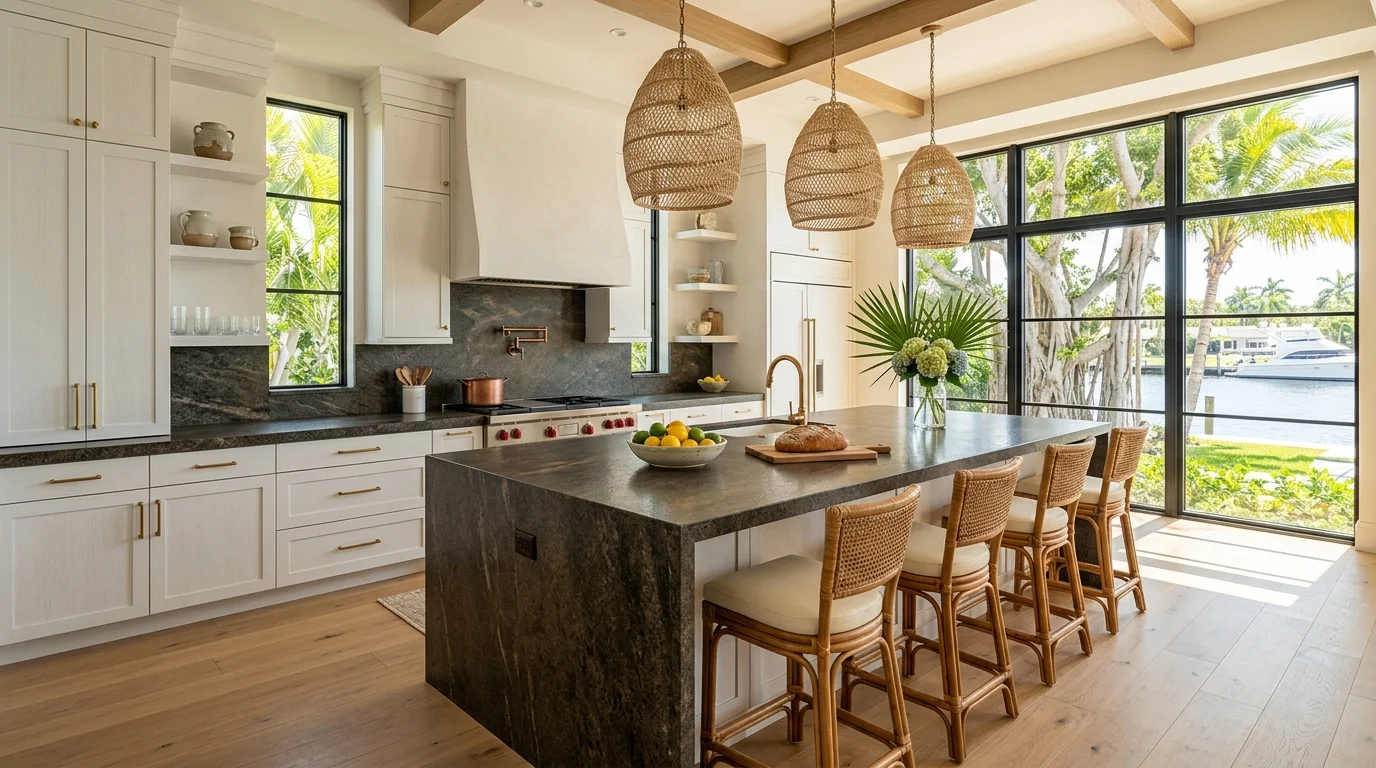
If you have been shopping for countertops in Boca Raton or Delray Beach lately, you have probably noticed leathered granite showing up in more kitchens. It is not the flashy, mirror-bright surface most people picture when they think of granite. It is softer. More tactile. And honestly, once you run your hand across a well-leathered slab, polished granite can start to feel almost too formal by comparison. Leathered granite has a low-sheen, slightly textured surface that hides fingerprints, softens veining, and holds up well in active kitchens. This guide breaks down exactly what the finish is, how it compares to honed and polished, which stone species take the process best, and what you should expect to pay in Palm Beach County.
What Is a Leathered Granite Finish?
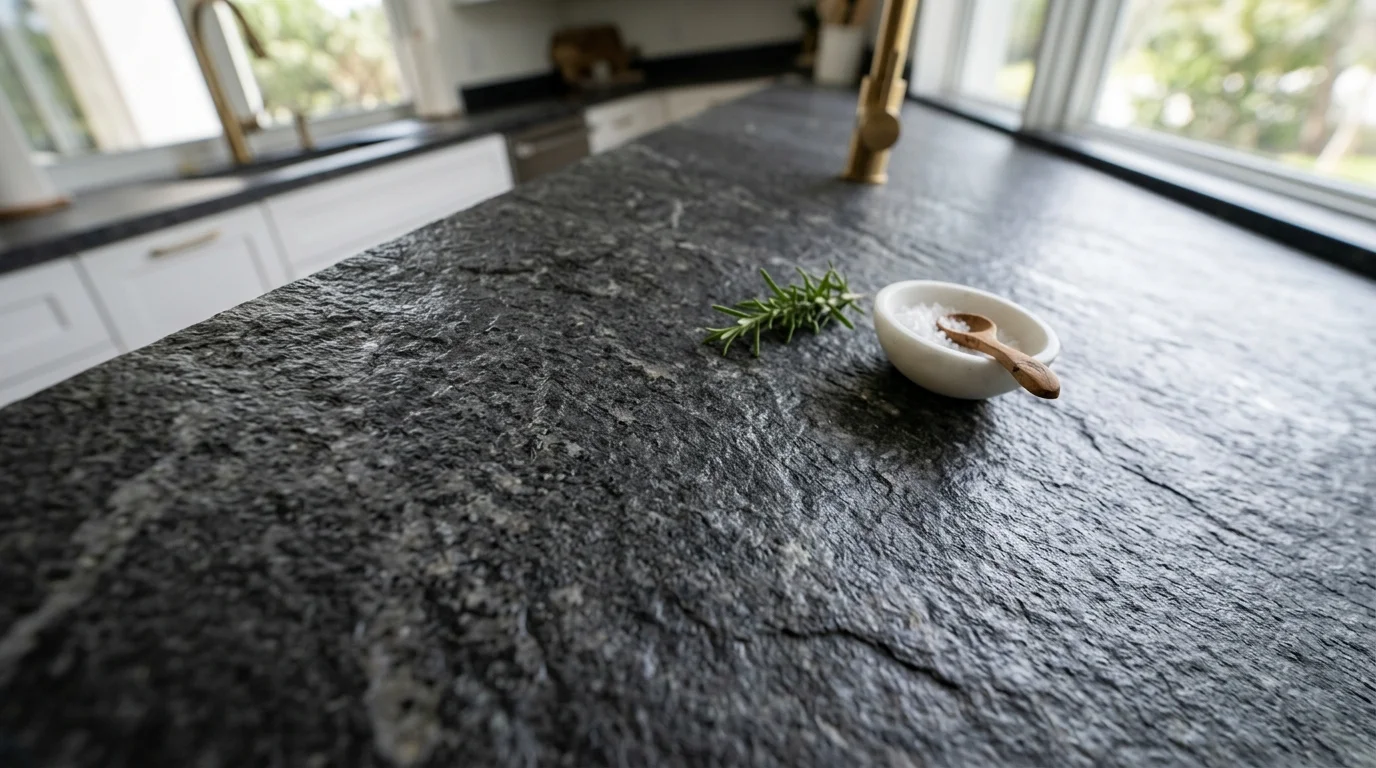
Leathering is a surface treatment applied after the slab is cut. Fabricators run diamond-tipped brushes across the raw stone face under water. The brushes knock down the sharp tips of the stone's natural crystalline texture while leaving the valleys intact. What you end up with is a surface that has slight peaks and dips you can actually feel with your fingertips. Not rough like raw stone. More like a broken-in leather jacket, which is exactly where the name comes from.
The sheen lands somewhere between matte and satin. It is not flat like honed, and it is nowhere near the reflective gloss of a polished finish. Under direct Florida sunlight, a leathered surface tends to show off the stone's color depth rather than throwing a reflection back at you. Darker stones look especially rich. The texture also does something useful: it makes micro-scratches and light abrasions far less visible than they would be on a polished surface.
One thing homeowners sometimes assume is that leathering changes the porosity of the stone. It does not. Granite is still granite. You still need to seal it on a regular schedule, same as you would with any other finish. We cover that in detail in our guide to granite countertop sealer application and timing. The leathering process itself does not add any protective coating. It is purely a surface texture choice.
Leathering is not something every fabricator offers. It requires specialized brushing equipment and adds time to the fabrication process. That is part of why you pay a premium for it, and also why slab selection matters more than usual. Not every stone species responds well to the process.
Leathered vs Honed vs Polished
These three finishes represent the main options across natural stone countertops, and they behave very differently in a working kitchen. Understanding the differences saves you from a surface you will regret inside of a year.
Polished granite is what most people picture. The surface is buffed to a high gloss using progressively finer abrasives until it reflects like glass. Polishing closes up the stone's pores slightly and makes color and veining pop. The tradeoff is that every fingerprint, water ring, and grease smear shows. In a South Florida kitchen where the humidity is real and the cooking is frequent, polished surfaces need constant wiping. They also show light scratches over time, especially on darker stones.
Honed granite skips the final buffing stage, leaving a flat, matte surface. It feels smooth but has no sheen. Honed surfaces are popular in contemporary and transitional kitchens because they look understated. The downside is that honed granite is noticeably more porous than polished granite, which means it stains more easily and needs more frequent sealing. Oil, wine, and acidic liquids can work into a honed surface faster than most homeowners expect. Our full comparison piece on honed vs polished countertops goes deeper on both if you want the full picture before deciding.
Leathered granite splits the difference in several ways. The porosity is generally closer to polished than to honed because the brushing process tends to slightly close surface pores rather than open them. Fingerprints disappear into the texture instead of sitting on top of a glossy surface. The matte character is similar to honed, but the tactile texture is unique to the leathered process. It also tends to be more forgiving of the everyday abuse a kitchen countertop takes.
Here is our honest take: for homeowners who love natural stone but hate the maintenance theater that comes with polished surfaces, leathered granite is often the right answer. It looks intentional and high-end without demanding constant attention. We recommend it over honed for most kitchen applications, specifically because the slightly reduced porosity and texture make day-to-day life easier. Honed has its place in bathrooms and lower-traffic areas where the visual softness is the priority and spills are less common.
One more thing worth knowing: leathered finishes tend to mute the stone's color slightly compared to polished. The high-gloss finish on polished stone is essentially amplifying the color by adding a reflective layer on top. When you leather the same slab, the color reads more natural and earthy. Some people prefer that. Others want the drama of a polished surface. There is no wrong answer, but go see both in person before committing. A good slab yard in the Palm Beach County area will have samples of both so you can compare side by side.
Best Stones for a Leathered Finish
Not every granite species takes the leathering process equally well. The result depends heavily on the stone's grain size, mineral composition, and hardness. Here is what we consistently see work well and what tends to disappoint.
Absolute Black and Black Galaxy granite are two of the most popular choices for leathering, and for good reason. The dense, fine-grained structure responds beautifully to the diamond brushing process. The resulting surface has a deep, velvety quality that photographs well and looks spectacular against white or natural wood cabinetry. If you are designing a kitchen with lighter cabinets and want a countertop that anchors the space, a leathered black granite is hard to beat.
Blue Bahia and Volga Blue are more exotic options that lean heavily toward the luxury end of the market. The leathered finish on these stones softens the iridescent mineral clusters just enough to keep the look from feeling overly flashy. In Wellington and Jupiter estates where the design brief calls for something truly one-of-a-kind, these are worth the conversation with your slab supplier.
Tan Brown and Giallo Ornamental are mid-range granites with larger grain patterns that leathering handles well. The texture tends to follow the natural grain in an organic way. These are practical choices for homeowners who want the leathered look without spending top dollar on exotic stone.
White and light-colored granites are where we pump the brakes a little. Leathering a light stone like Colonial White or Bianco Romano can work, but the texture tends to show dirt and dark particles more than it does on darker stones. The whole point of choosing a leathered finish is reduced maintenance visibility. On a light stone, you sometimes lose that benefit. We have seen it done beautifully, but we always encourage clients to see a sample in their actual kitchen lighting before committing.
Quartzite is worth mentioning here even though it is a separate stone category. Leathering works on many quartzite species and the results can be stunning, particularly on stones like Super White or White Macaubas. If you are open to quartzite as a material, our guide on quartzite countertops covers the full comparison with granite.
What does not work well? Very soft or heavily veined marbles, anything with significant resin filling, and stones with wide variation in mineral hardness across the slab face. The brushing process hits hard minerals differently than soft ones, which can create an uneven texture on inconsistent stone. Your fabricator should be able to flag this before committing to the process on a specific slab.
Cost Guide
Leathered granite carries a premium over standard polished fabrication. The brushing process adds time and specialized tooling to the job. In the Palm Beach County market, here is what you should expect to pay as of 2025-2026. These numbers reflect full countertop supply and fabrication. Installation by your contractor is separate.
For full kitchen remodel context including cabinetry, countertops, tile, and finish work, our detailed breakdown of countertop installation cost in Palm Beach County gives you the complete picture. Countertop costs represent one piece of a larger project budget, and the material you choose here can shift your overall spend significantly.
One thing that catches homeowners off guard: leathered slabs sometimes require a larger material order because the texture can make seams slightly more visible than on polished stone. A skilled fabricator will minimize seam placement, but budget a small buffer for material waste. Ask your fabricator to walk you through the template and seam plan before any cuts are made.
For those weighing granite against other surface options, our comparison of quartz vs granite countertops covers durability, maintenance, and value from a South Florida perspective.
South Florida Considerations
Palm Beach County kitchens deal with conditions that most of the country does not: salt air near the coast, sustained humidity, intense UV exposure through large windows, and the kind of daily foot traffic that comes with households that actually use their kitchens year-round. Leathered granite holds up well in this environment, but there are a few things specific to our market worth knowing.
Humidity and sealing. Florida humidity does not directly damage sealed granite, but it does create condensation on surfaces more frequently than in drier climates. Moisture sitting on an improperly sealed leathered surface can work into the stone over time. We recommend sealing leathered granite at installation with a penetrating impregnating sealer, then testing and resealing annually. The water bead test is simple: pour a small amount of water on the surface. If it beads up, you are good. If it absorbs within a few minutes, it is time to reseal. The Natural Stone Institute maintains technical bulletins on proper sealer selection by stone type if you want to go deeper on chemistry.
UV exposure. Some granite species experience very slight color shift over years of strong UV exposure, particularly lighter stones with feldspar content. This is not a leathered-finish-specific issue, but it is worth asking your slab supplier about if you have a kitchen with strong western or southern sun exposure. Darker stones are generally more stable in this regard, which is another point in favor of leathered black or dark brown granites in South Florida kitchens.
Coastal salt air. If your home is within a mile or so of the coast in Jupiter, Juno Beach, or on the barrier islands, salt air is a real factor for everything exposed to outdoor air. Interior countertops are largely protected, but kitchens that open to outdoor areas with pass-through windows should have their countertops sealed more frequently. Granite itself is not reactive to salt the way metals are, but the grout joints and silicone caulk around the countertop perimeter need attention.
HOA and community design standards. If you live in a gated community in Wellington or Palm Beach Gardens, your HOA may have countertop material or color restrictions. This is more common than people expect. Check your governing documents before ordering any slab. We have seen projects delayed because a homeowner fell in love with a specific stone without confirming it was approved. Your design drawings go to the HOA for review as part of any applicable approval process.
Leathered granite pairs exceptionally well with the natural materials that dominate South Florida design right now. White oak cabinetry, warm-toned tile, and rattan or cane accents all work well alongside a leathered dark granite surface. If you are building out a full kitchen vision, our piece on mixing wood and stone in a Palm Beach kitchen remodel covers how to balance these elements without the design feeling forced.
For clients who are considering where leathered granite fits within a broader countertop selection process, the countertop design trends for 2026 article covers where the market is heading on finishes, edges, and slab backsplashes. Leathered finishes feature prominently in that conversation.
Our team works with homeowners across Palm Beach County regularly on countertop selection and installation, from entry-level refreshes in Boynton Beach to full custom kitchen builds in Manalapan. The finish conversation matters more than most people realize at the start of a project. Choosing the wrong surface texture for your lifestyle is one of those decisions that is expensive to reverse. Get samples, see them in your kitchen light, and live with them for a few days before committing.