Quartzite Countertops: Pros, Cons & Cost
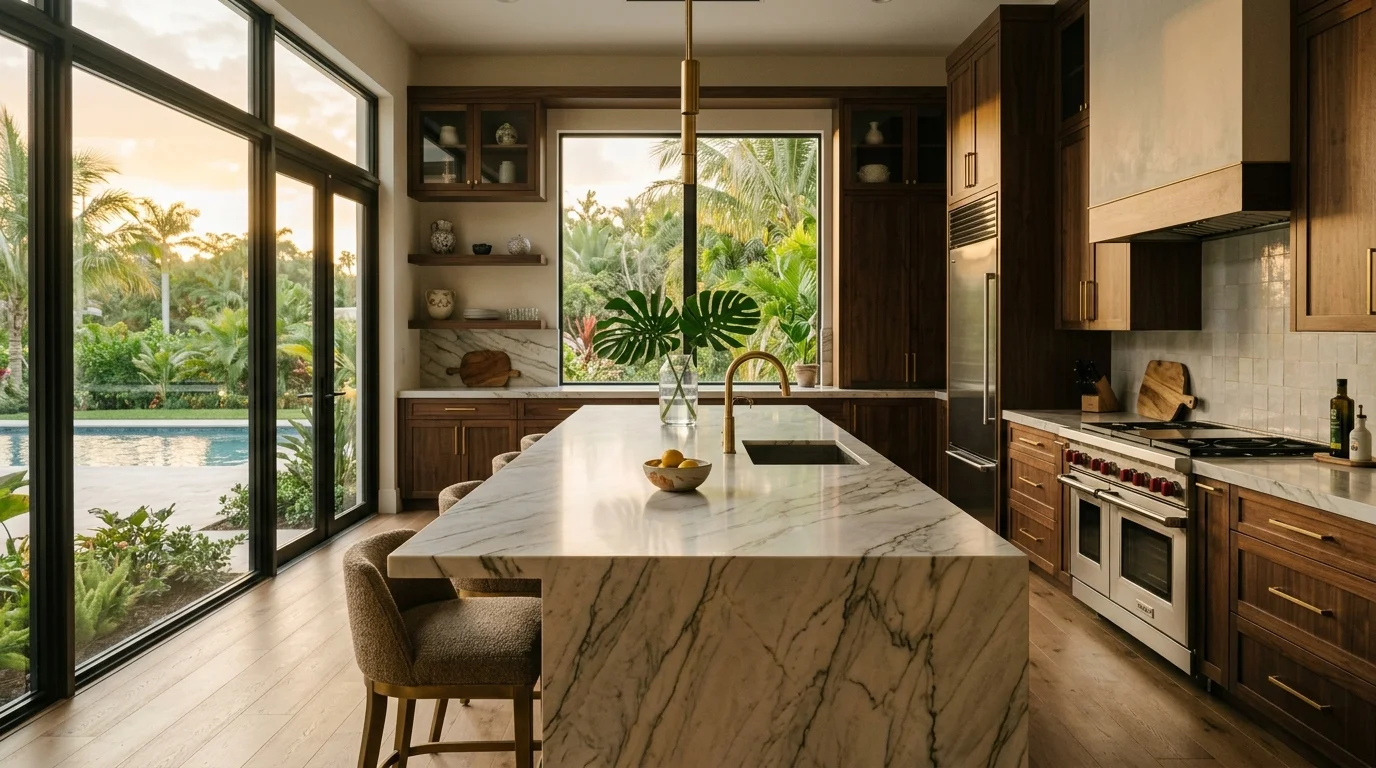
Quartzite countertops are one of the most misunderstood materials in the kitchen and bath world, and one of the most stunning when installed correctly. In Palm Beach County showrooms and in kitchens from Jupiter to Boca Raton, quartzite has been climbing in popularity fast. Homeowners love the marble-like look with better durability. But there is a catch: quartzite is a natural stone that still requires sealing, still has real maintenance demands, and still gets confused with engineered quartz daily. Before you fall in love with a slab at a stone yard in Delray Beach or Wellington, you need to understand exactly what you're buying.
What Is Quartzite, Really?
Quartzite is a naturally occurring metamorphic rock. It starts as sandstone, and over millions of years heat and pressure transform it into one of the hardest stone materials available for countertops. The result is a dense, crystalline surface that typically rates 7 on the Mohs hardness scale, harder than marble (around 3-4) and comparable to granite.
The confusion starts with the name. Quartzite sounds like quartz, but it has nothing to do with the engineered product sold under brands like Silestone or Caesarstone. Quartzite comes straight out of the earth. Quartz countertops are manufactured, ground-up quartz crystals mixed with resins and pigments. Different product, different maintenance rules, different price ceiling.
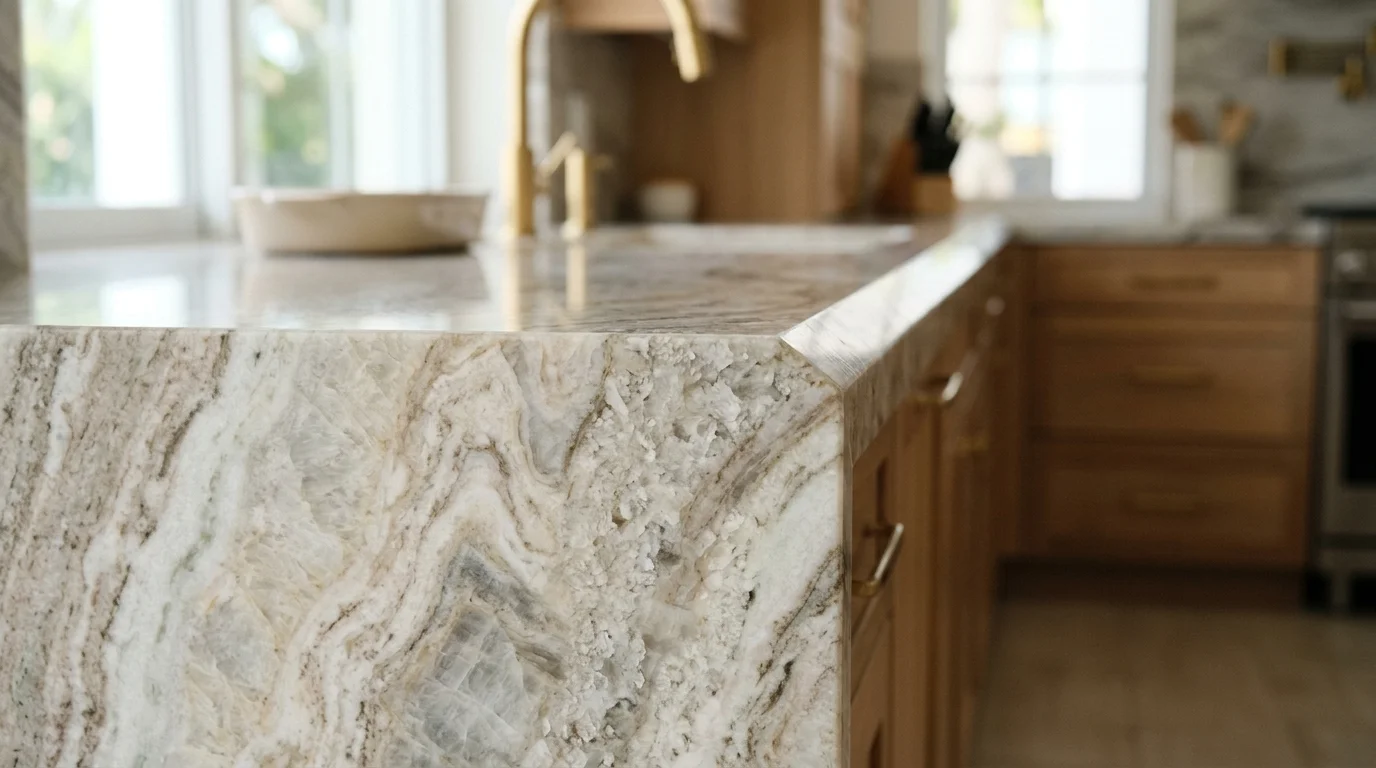
What makes quartzite so desirable is its appearance. Many slabs carry dramatic white-and-gray veining that reads like Calacatta marble. Taj Mahal quartzite, one of the most requested stones in South Florida, has a warm cream-and-gold movement that pairs beautifully with natural wood tones or painted cabinetry. If you want the look of marble without marble's notorious softness, quartzite is the honest answer. We have a full breakdown of the Taj Mahal quartzite countertop experience in Palm Beach County if that specific stone is on your radar.
One more thing worth knowing: not every stone sold as quartzite actually is. Some quartzite slabs in the market are actually softer dolomitic marble mislabeled as quartzite. A simple acid test on the back of the slab, a drop of vinegar or muriatic acid, will fizz on marble or dolomite and stay flat on true quartzite. Ask your stone supplier to perform this test before you commit.
Quartzite vs Quartz vs Granite
We get this question constantly, and it deserves a direct answer. Here is how the three materials actually compare in the areas that matter for a working kitchen.
Hardness and scratch resistance: True quartzite is harder than granite on average and dramatically harder than marble. Everyday objects, knives, ceramic dishes, keys, will not scratch a properly sealed quartzite surface under normal use. Engineered quartz sits in the same hardness range but can be damaged by high heat in ways that quartzite cannot.
Heat resistance: This is where quartzite wins clearly. As a natural stone, quartzite can handle a hot pan placed directly on the surface far better than engineered quartz, which contains resins that can discolor or crack under sudden heat. That said, we still recommend trivets as a general practice, not because the stone will fail, but because thermal cycling over years adds up.
Etching: This is quartzite's most important weakness to understand. True quartzite does not etch. Marble etches badly because calcite reacts to acids, citrus juice, wine, vinegar, and leaves dull spots. Real quartzite won't do that. But, and this is critical, if your slab is actually dolomite or a marble-quartzite hybrid (which is common in the market), it will etch. That acid test we mentioned above is not optional; it's how you protect yourself.
Maintenance vs engineered quartz: Engineered quartz requires no sealing. Quartzite does. If you want a stone that you can completely ignore from a maintenance standpoint, engineered quartz is simpler. If you want a natural stone surface that holds up better to heat and has genuinely unique character in every slab, quartzite earns its higher maintenance demand. Our article on quartz vs quartzite countertops covers the full comparison in more depth.
Aesthetics: Engineered quartz has come a long way, but the veining is still manufactured, it repeats and it looks manufactured up close. Quartzite is one of a kind. Every slab is different. For homeowners in Boca Raton and Jupiter investing in a high-end kitchen, that individuality matters.
Granite is a good reference point too. Granite is hard, requires sealing, and is widely available across Palm Beach County stone yards. Quartzite is generally more expensive than granite, typically softer-looking with more dramatic veining patterns, and harder on the Mohs scale. If you're comparing those two specifically, quartzite usually wins on aesthetics and loses on price. See our granite countertop cost guide for Palm Beach County for a direct cost comparison.
Pros and Cons of Quartzite Countertops
We'll be straight with you. Quartzite is a premium material that rewards homeowners who understand it going in. Here are the real advantages and the honest drawbacks.
The pros:
Durability is the headline. A properly sealed quartzite surface handles everyday kitchen abuse, cutting (though we still recommend a board), heavy pots, high traffic, without the fragility of marble or the resin limitations of engineered quartz. For families in Delray Beach and Wellington who actually cook, that matters.
Heat tolerance is genuine. You can set a cast iron pan on quartzite without the fear you'd have with an engineered surface. It's not immortal, but it handles heat far better than most alternatives.
The appearance is unmatched. Quartzite slabs like Taj Mahal, Sea Pearl, and White Macaubas deliver a natural elegance that photographs beautifully and holds up in person. In high-end Palm Beach County kitchens, quartzite is increasingly the material buyers expect to see.
Long-term value. Natural stone countertops tend to hold resale value better than synthetic alternatives, especially in South Florida's upper-end real estate market. If you're thinking about what adds value to a home before selling, a quartzite countertop reads as a genuine luxury upgrade to buyers.
UV stability. Unlike some engineered quartz products that can yellow or fade with prolonged sun exposure, quartzite holds its color over time. In South Florida kitchens with large windows and abundant natural light, that's a real advantage.
The cons:
Sealing is mandatory. Quartzite is porous and will stain if left unsealed. Most quartzite installations in a working kitchen need resealing once a year, sometimes every 6-8 months depending on how the stone absorbs. Our dedicated guide on whether quartzite needs to be sealed covers frequency and product recommendations in detail.
Cost. Quartzite is not a budget material. Entry-level quartzite starts higher than basic granite and most engineered quartz mid-range options. Premium slabs like Taj Mahal or Fusion push the total countertop cost significantly.
Mislabeling risk. As covered above, some stone sold as quartzite is actually softer dolomite or marble. Buying from a reputable stone yard in Palm Beach County, not a big-box store, reduces this risk substantially. Check out our guide on the best places to buy countertop slabs in Palm Beach County for supplier recommendations.
Weight. Like all natural stone, quartzite slabs are heavy. Cabinet boxes need to be structurally sound. If your cabinets are already showing signs of wear, a countertop swap is a good time to address that. Older 55+ communities across Palm Beach County sometimes have original cabinetry that wasn't built for stone loads.
Seams. Large kitchens will have visible seams. Quartzite's bold veining makes seam matching harder than with a more uniform material. A skilled fabricator matters more with quartzite than with almost any other countertop material.
Cost Guide: Quartzite Countertops in Palm Beach County
Pricing for quartzite countertops in the Palm Beach County market reflects both material grade and complexity of fabrication. These are installed costs, material, fabrication, and installation, based on what we see in the current local market. Standard kitchen countertops typically run 40-60 square feet for a mid-size kitchen; island additions add to that total.
A few things drive cost up in Palm Beach County specifically. First, premium slabs, especially Taj Mahal, have tightened in availability, and that's pushed prices higher over the past two years. Second, complex edge profiles add fabrication labor. A simple eased edge costs less than a mitered waterfall or a thick ogee. If you're deciding between edge styles, our countertop edge profiles guide for Palm Beach County breaks down what each option adds in cost and visual weight.
Waterfall countertops are popular in South Florida luxury kitchens right now, and quartzite is a statement choice for that application. The veining continuity from horizontal surface to vertical panel is dramatic when done well, and expensive when the slab requires precise bookmatching. If a waterfall edge is on your wish list, budget separately for it; it's not a minor add-on with premium quartzite.
One cost factor homeowners often miss: the countertop is only part of the project. If you're refreshing cabinets at the same time, the full scope changes your planning. Understanding the 30 percent rule in remodeling helps frame how much your countertop investment should represent relative to the total kitchen value.
South Florida Considerations
South Florida's environment adds a few specific factors to the quartzite decision that homeowners in cooler, drier climates don't face.
Humidity and sealing frequency. Palm Beach County's humidity, especially June through October, affects how quickly moisture works into a porous stone surface. We recommend sealing quartzite countertops at least once a year in South Florida, and twice a year if your kitchen gets heavy use or direct outdoor air exposure through open windows. Use an NSI-recommended penetrating impregnating sealer rated for quartzite specifically, not a topical sealer, which sits on the surface and can yellow in our heat.
UV exposure. South Florida kitchens with east or west-facing windows get significant direct sun. Quartzite handles UV far better than engineered quartz, which can fade or discolor under prolonged sun exposure. If your kitchen has floor-to-ceiling windows or a large pass-through to an outdoor area in Boca Raton or Jupiter, quartzite's UV stability is a genuine advantage over engineered alternatives.
Outdoor applications. Quartzite is one of the few countertop materials that performs reasonably well outdoors in South Florida's climate. Its density and natural composition hold up to heat, humidity, and UV better than engineered quartz or marble outdoors. That said, outdoor installations still require frequent sealing, annually at minimum, and the stone should be sheltered from direct rain when possible. If you're planning an outdoor kitchen, see our guide to outdoor kitchen countertops for Florida for the full material comparison.
Coastal homes and salt air. In waterfront communities from Jupiter Island to coastal Boca Raton, salt air is a real factor. Natural stone handles salt air better than most metals and most synthetic materials. Keep the surface sealed and clean, and quartzite won't degrade from coastal exposure the way some finishes do.
HOA and condo considerations. In gated communities and high-rise condos across Palm Beach County, material selections sometimes need to go through an architectural review board. Quartzite's weight (similar to granite) is typically a non-issue structurally in single-family homes but may require written approval for high-floor condo installations. Your general contractor handles the structural sign-off; our team provides design drawings and material samples for the review package if needed.
Cleaning in a high-humidity environment. The basics matter more here. Avoid leaving standing water at the sink area, the most common source of long-term staining on quartzite. Use pH-neutral stone cleaner, not vinegar-based products (even true quartzite can develop micro-etching from repeated acid exposure at the surface over years). Our full quartzite countertop cleaning guide covers the right products and routine for Florida conditions specifically.
Pairing quartzite with the right cabinet finish also matters in South Florida light. Quartzite's warm veining reads differently under the bright natural light we get year-round compared to how it looks in a showroom. We always recommend pulling a physical slab sample and viewing it in your actual kitchen before committing. What looks crisp and white in a Delray Beach showroom may read more cream or ivory in your home, and that changes which cabinet color works best alongside it.