Marble-Look Porcelain Tile: The Smart Alternative for South Florida Floors & Showers
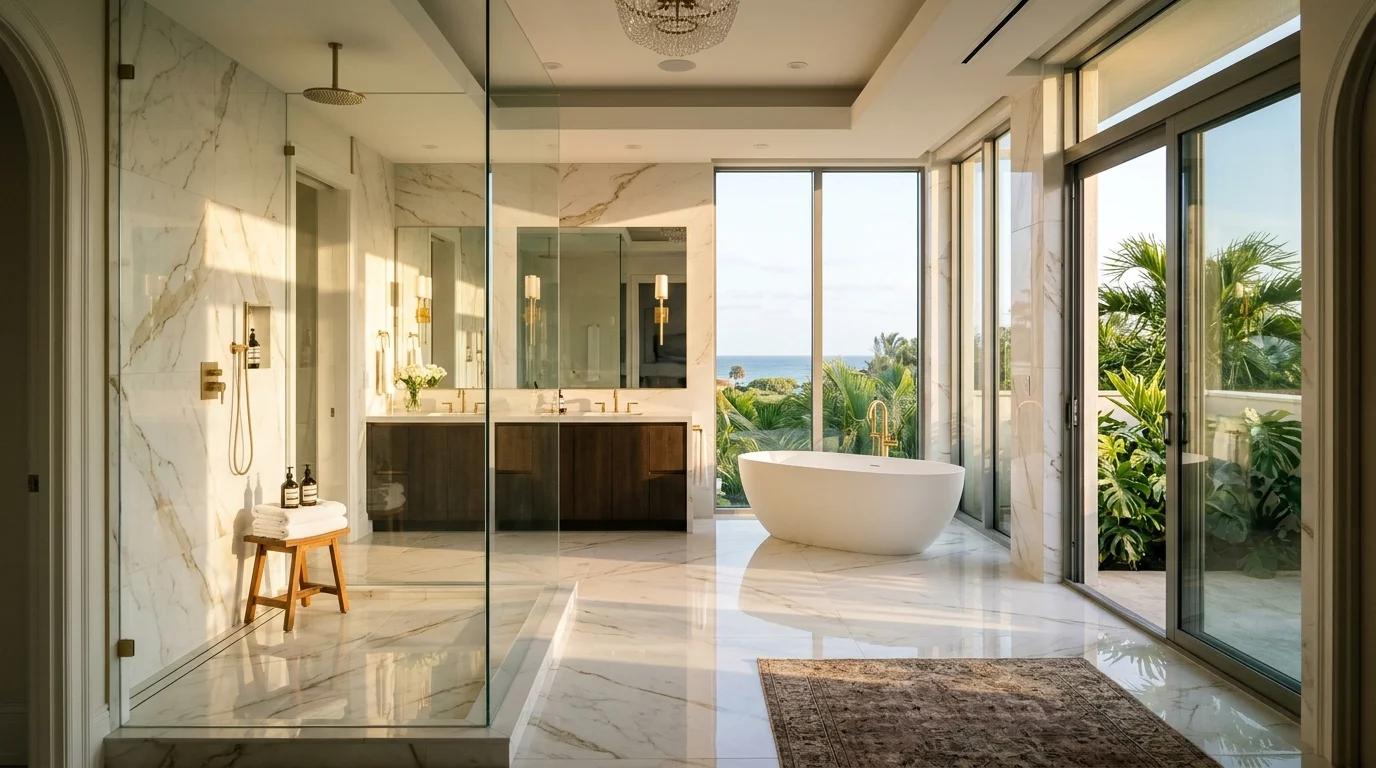
Marble look porcelain tile has become one of the most requested materials we spec at South Florida Kitchen & Bath Design. Homeowners across Palm Beach County want that classic Carrara or Calacatta aesthetic without the maintenance nightmare that comes with real marble. The good news: today's porcelain technology has gotten so close to the real thing that even designers do a double-take. We're talking high-definition inkjet printing, rectified edges, and surface textures that mimic honed or polished stone almost perfectly. If you've been on the fence about marble-look tile for your floors or shower, this guide covers everything you need to make a confident decision.
Why Marble-Look Porcelain Over Real Marble
Real marble is gorgeous. We won't pretend otherwise. But we've ripped out enough etched, stained, and cracked marble floors in Boca Raton and Delray Beach homes to know that most Florida homeowners are not prepared for what it actually demands. Marble is a calcium-based stone. Acidic liquids, like orange juice, wine, and even some Florida well water, etch the surface on contact. That's not a stain you can wipe away. That's permanent surface damage. It needs sealing every 6 to 12 months, and even then, it's not bulletproof.
Marble-look porcelain tile has none of those problems. Porcelain is fired at extremely high temperatures, which makes it virtually non-porous. No sealing required. No etching from acids. No staining from grout cleaning products. The hardness rating (measured on the Mohs scale) puts most porcelain at a 6 to 7, compared to marble's 3 to 4. That matters a lot on floors with heavy foot traffic or in a shower where cleaning products are used daily.
We also hear the cost argument from homeowners who assume real marble is the budget-friendly choice. It isn't. Genuine Calacatta marble slabs or tiles can run $25-$50 per square foot for material alone, before installation. Quality marble-look porcelain sits at $4-$18 per square foot for tile. The savings are real, and you're getting a more durable product. If you want real stone countertops but a marble-look surface underfoot, check out how marble-look quartzite compares as a countertop option alongside a porcelain tile floor.
One area where real marble still wins: uniqueness. Every slab of natural marble is one of a kind. Porcelain tiles repeat their pattern across a production run. That said, premium porcelain manufacturers like Florim now produce large-format slabs with randomized digital printing that minimizes repetition significantly. When you're tiling a 500 square foot open-plan floor in Wellington, that matters.
Best Applications: Floors, Showers & Beyond
Marble-look porcelain works in more places than most homeowners realize. Here's where we consistently see the best results, and where we sometimes steer clients toward other materials.
Shower walls and floors: This is probably the best application for marble-look porcelain, full stop. Real marble in a shower is high-risk. The constant moisture, the pH-variable cleaning products, the daily foot traffic on wet surfaces. Porcelain handles all of it without complaint. For shower floors specifically, we recommend a tile size of 4x4 inches up to 12x24 inches depending on the shower footprint, and always with a slip-resistant surface rating of R10 or higher. For shower walls, larger format tiles (24x48 or even 48x96 slab-style panels) look spectacular and have fewer grout lines to clean. Our full guide on the best tile for shower walls in Florida's humid climate goes deeper on this if you're planning a shower remodel.
Bathroom floors: Large-format marble-look porcelain on a bathroom floor is one of the fastest ways to transform a dated space into something that looks like a renovation budget twice the size. A 24x24 tile with a polished or satin finish and a matching grout color reads as nearly continuous stone. It's a favorite in master baths and guest baths across Jupiter and North Palm Beach.
Kitchen floors: Porcelain is fully appropriate for kitchen floors. It handles dropped items better than real marble, cleans up easily, and pairs well with almost any cabinet color. The only hesitation we sometimes have is on larger tile formats in kitchens with complex layouts, where more cuts mean more waste and higher installation labor. But for straightforward galley or L-shaped kitchens, it's a strong choice.
Backsplashes: Marble-look porcelain in a 3x12 or 4x12 format makes a clean, elegant backsplash. We tend to recommend it most when the countertop is a solid dark surface or a neutral quartz, where the veining in the tile can stand out rather than compete. For more backsplash ideas, our guide on kitchen backsplash ideas for Palm Beach County homes has plenty of direction.
Feature walls and niches: A single shower niche or a bathroom accent wall in a large-format marble-look slab looks stunning without the full commitment of tiling every surface. It's one of our favorite cost-conscious design moves for mid-range bathroom remodels.
Tile Formats, Patterns & Finish Options
Choosing the right format and pattern for marble-look porcelain tile is where the design gets interesting. The wrong choice can make a small bathroom feel chopped up. The right one makes a room feel twice as large.
Large format tiles (24x24, 24x48, 32x32) are our default recommendation for most bathroom floors and shower walls in Palm Beach County homes. Fewer grout lines mean less visual clutter and easier maintenance. For small powder rooms, we sometimes go the other direction and use a smaller mosaic or hexagon format for visual interest.
Polished finishes reflect light and read very close to genuine polished marble. They're stunning in master baths. The trade-off is that polished porcelain shows water spots and footprints more readily on floors. Honed or matte finishes hide everyday use better and work particularly well on floors where wet feet are the norm. Lappato (semi-polished) is a middle ground that many of our clients in Boca Raton and Delray Beach prefer. It has some sheen without the full mirror effect.
Pattern matters as much as size. A straight stack layout reads modern and clean. A brick offset (1/3 or 1/2 offset) adds movement. Herringbone with large-format marble-look tile is dramatic but requires more cuts and skilled installation, so budget for the higher labor cost. Our bathroom tile patterns guide breaks down each layout with real examples from South Florida projects.
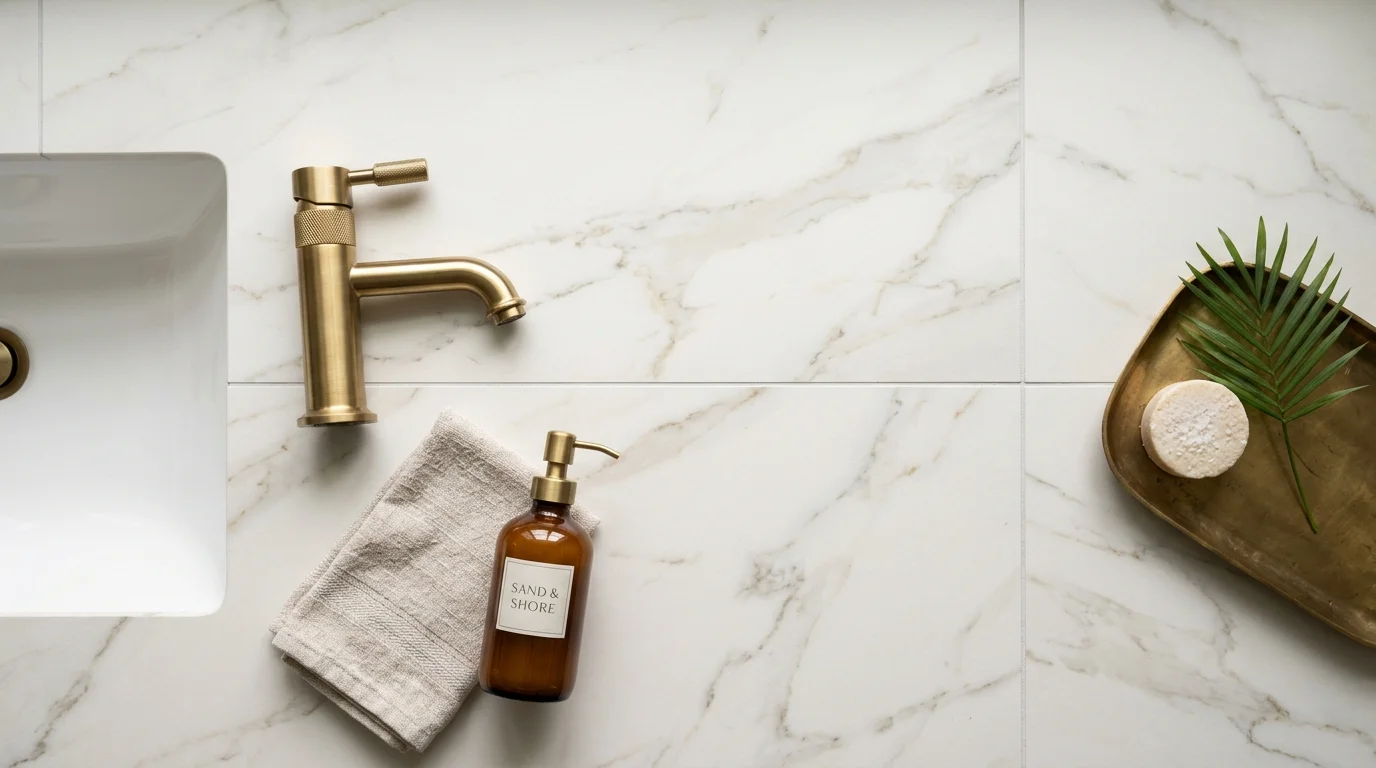
Grout color is a decision that often gets made too late. For a near-seamless marble look, choose a grout that closely matches the lightest tone in the tile. Bright white grout with a heavily veined marble-look tile reads busy. A warm greige or light gray grout disappears into the tile and lets the veining carry the visual weight. Read our grout color guide before you lock in your tile selection, because the two decisions are inseparable.
For the tile itself, we consistently source from manufacturers who offer full-body porcelain, meaning the color and texture run through the entire thickness of the tile, not just the surface. That matters for chip visibility at edges and corners over time.
Cost Guide
Pricing for marble-look porcelain tile projects in Palm Beach County varies by tile grade, format, pattern complexity, and whether the substrate needs prep work. Here's a realistic breakdown based on what we see in the market right now. These are installed costs, meaning tile material plus labor, using a qualified tile setter.
Substrate prep is a cost variable that surprises many homeowners. If the existing floor or shower substrate isn't flat or properly waterproofed, that work has to happen before a single tile goes down. Bathroom waterproofing in particular is non-negotiable in Florida. Our bathroom waterproofing guide for Florida homes explains what proper prep looks like and why cutting that corner causes expensive failures. Depending on the scope of your overall bathroom project, it's worth reviewing bathroom remodel costs across Palm Beach County to understand how tile fits into the bigger budget picture.
South Florida Considerations
Palm Beach County has its own set of demands that influence tile selection. Humidity, UV exposure, salt air, and the prevalence of open-plan indoor-outdoor living all factor into what performs well here versus what looks great in a magazine but fails in a Florida climate.
Moisture and humidity are the first concerns. South Florida bathrooms see sustained humidity levels that many northern homes never experience. That's exactly why porcelain outperforms real marble here. The near-zero porosity of quality porcelain means moisture doesn't penetrate and cause issues with the substrate below. We consistently specify porcelain with a water absorption rate of 0.5% or less, which meets Class Ia standards under ANSI A137.1. Real marble absorbs moisture and can harbor mold at the tile-substrate interface when grout lines crack over time.
Thermal performance matters outdoors and in spaces that transition to lanais or pool decks. Porcelain tiles rated for exterior use handle Florida's freeze-thaw cycle (which is essentially no freeze, but intense UV and heat) well. For true outdoor applications, check that the tile carries a COF (coefficient of friction) rating appropriate for wet bare feet, specifically 0.60 or higher for pool decks and outdoor showers per the Florida Building Code.
HOA and ARB approvals come up regularly in gated communities across Wellington, Palm Beach Gardens, and Boca Raton. If you're in a community with an Architectural Review Board, your design drawings and material samples go to your general contractor or HOA-designated process for submission. We supply detailed design drawings and material specs to support that package, but the submission and approval process runs through your GC and HOA.
Large-format tile and Florida slab construction is a combination that requires attention. Concrete slab floors in South Florida homes can have minor variations in flatness from settling or construction tolerances. Large-format tiles (anything 24 inches or longer on one side) require a flatter substrate than smaller tiles do. ANSI A108.02 recommends no more than a 1/8-inch variation over 10 feet for large-format tile. If your slab needs leveling, that's prep work factored into the project scope before tile installation begins.
Pairing marble-look porcelain with the right bathroom fixtures makes a big difference in the finished look. In our experience, polished nickel, brushed gold, and matte black all complement the warm-veined and cool-veined marble looks respectively. If you're deciding on hardware finishes alongside your tile, our guide on bathroom vanity ideas for Palm Beach County remodels covers how to coordinate those elements. And if you're thinking about shower design more broadly, our walk-in shower design ideas for South Florida bathrooms will give you a solid starting point for the full scope.