Accent & Mosaic Tile Ideas: Design That Does the Work
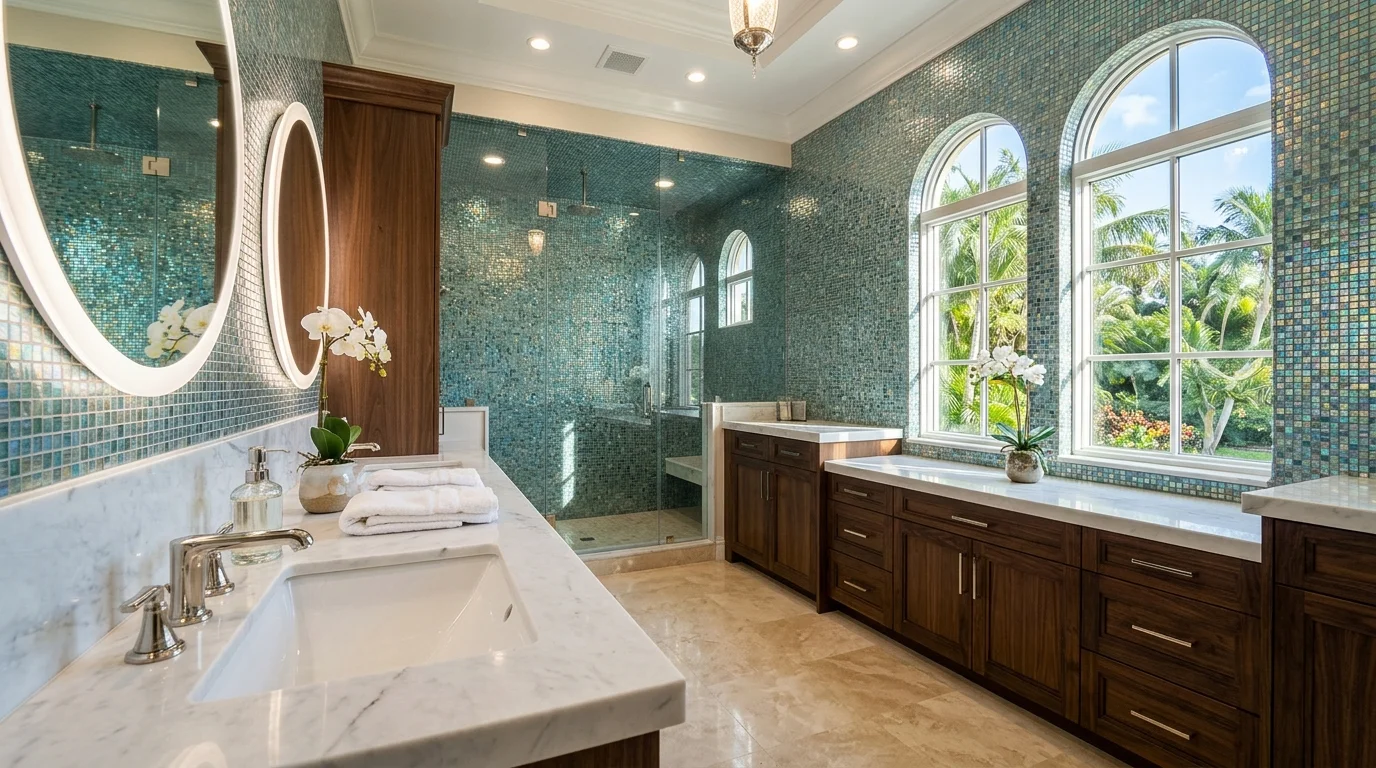
Mosaic tile ideas tend to generate the most excitement in our design consultations, and for good reason. A well-placed mosaic can completely redefine a bathroom or kitchen without touching a single cabinet or countertop. We work with homeowners across Palm Beach County, from Boca Raton to Jupiter to Wellington, and the same pattern holds: clients who invest in thoughtful tile accents walk away happier than those who played it completely safe. This guide covers our real-world approach to shower niches, accent strips, and feature walls, with honest cost ranges from the South Florida market.
Why Mosaic Tile Still Wins
Mosaic tile has been around for centuries. That is not an accident. Small-format tile, whether it is 1-inch glass squares, penny rounds, or handmade Zellige pieces, creates visual texture that large-format slabs simply cannot replicate. In a bathroom or kitchen with otherwise clean, minimal surfaces, a single mosaic moment draws the eye and anchors the whole design.
What we see working consistently in South Florida homes right now: natural stone mosaics in soft travertine and limestone tones, glass tile blends that pick up the blues and greens of coastal design, and Zellige tile making a serious statement on backsplashes and shower walls. The handmade surface variation in Zellige is especially compelling under South Florida natural light.
We recommend mosaic tile for applications where large tile would look clunky or where you need the tile to flex around curves and contours. Shower floors are a perfect example. A 24x48 slab looks beautiful on a shower wall but would require heavy cutting and grout management on a floor with a linear drain. A 2x2 or penny-round mosaic sheet flows naturally and provides grip. That is a functional win, not just an aesthetic one.
One thing we push back on: using mosaic everywhere. The design only works when it contrasts with something simpler. If the entire shower is a mosaic pattern, nothing stands out. Pick your moment, commit to it, and let the larger field tile do the supporting work.
Shower Niches: Where Mosaic Belongs
The shower niche is probably the single best application for mosaic tile in a residential bathroom. It is a contained box, typically 12-16 inches wide and 24-28 inches tall, recessed into the wall between studs. That framed, gallery-like quality makes it a natural place for a material that would feel overwhelming at full scale.
Our approach at South Florida Kitchen & Bath Design: we set the niche tile in a contrasting material or color from the surrounding shower wall. If the main shower wall is a 12x24 matte porcelain in a warm white, the niche might be a 1x2 marble herringbone mosaic or a glossy glass blend in sage green. The contrast does not have to be dramatic. Even a subtle shift in texture, like going from matte field tile to a polished stone mosaic, reads clearly enough to feel intentional.
Placement matters more than most homeowners realize. We see niches dropped too low, right at hip height, where they catch the most water spray and create a maintenance headache. We prefer positioning at shoulder height or higher, ideally accessible without bending. For a detailed breakdown of niche placement, dimensions, and waterproofing requirements, our shower niche ideas guide covers the full scope.
Grout color in a niche mosaic is a decision that deserves more attention than it usually gets. A white grout with a white glass mosaic gives a clean, spa-like feel. A dark charcoal or black grout with a natural stone mosaic adds drama and hides soap residue better. We consistently recommend matching grout to the darker tone in the mosaic blend. It reads cleaner over time. For a full breakdown of grout choices, see our grout color guide.
Waterproofing behind the niche is non-negotiable. A niche cuts into the wall cavity, which means you are working around the waterproofing membrane that protects your studs and drywall. Your GC needs to properly flash and waterproof the niche box before any tile goes in. Skipping this step is one of the most common and costly bathroom renovation mistakes we hear about from homeowners who worked with less experienced contractors. The Florida Building Code sets specific requirements for shower waterproofing in wet areas, and those requirements apply to niches just as they do to the main shower walls and floor.
Accent Strips, Listels & Border Tiles
Accent strips are horizontal bands of decorative tile inserted within a larger field. A listellos is a narrow version, often 1-3 inches tall, featuring stone, glass, or metal elements. Done well, they give a bathroom a finished, designed quality. Done poorly, they look like an afterthought from 2003.
The rule we follow: one accent strip per visual plane. In a full-height shower wall, that strip should sit at a logical break point, usually at eye level or at the transition between two tile zones. Running it all the way around the shower at chair-rail height works. Running it three-quarters of the way up one wall and stopping arbitrarily does not.
Material combinations we like right now for South Florida bathrooms: a 3/4-inch polished brass metal strip flanked by thin lines of black matte tile, a 2-inch mosaic band of Calacatta marble chips set against large-format gray porcelain, or a single row of handpainted ceramic border tile for homes leaning into a Mediterranean or coastal aesthetic. That last option works especially well in older Boca Raton and Delray Beach homes where the architecture already has character.
Accent strips in kitchens are less common than they were fifteen years ago, but we still use them in the right context. A glass mosaic border between a full-height backsplash and the bottom of upper cabinets can define the transition cleanly. If you are deciding between a 4-inch and full-height backsplash and thinking about how to add interest without going full mosaic, our article on 4-inch vs full-height backsplash walks through those tradeoffs.
One product category worth considering: specialty tile retailers carry metal and glass liner strips that install in a single row and require no special setting tools beyond your standard tile adhesive. These are budget-friendly and high-impact when used with restraint.
Feature Walls That Make a Statement
A feature wall means one surface in the room gets a dramatically different tile treatment than everything else. In a bathroom, that is usually the wall behind a freestanding tub, the back wall of a walk-in shower, or the wall behind a double vanity. In a kitchen, it is the backsplash behind the range or, increasingly, a slab-to-ceiling statement behind the cooktop.
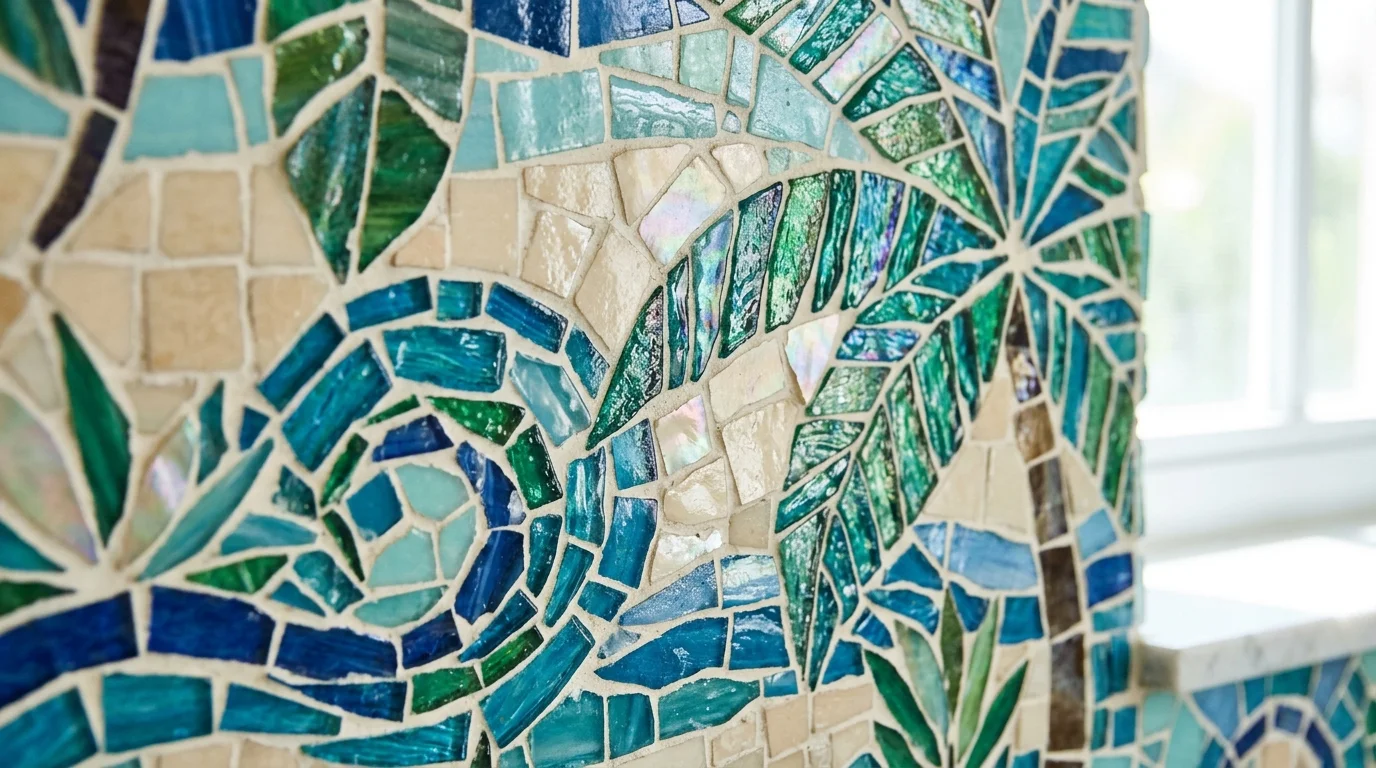
Mosaic works beautifully on feature walls when the pattern has enough movement to hold attention across a large surface. Plain 1-inch glass squares set in a grid get monotonous fast. What holds up: a mixed-material mosaic with stone, glass, and metal in varying sizes, a handmade tile like Zellige where every piece has slight variation in glaze and surface, or a geometric pattern like herringbone tile that creates a directional energy across the full wall.
Scale matters. A small mosaic pattern on a large wall can look busy and hard to clean mentally. We often recommend moving to a medium-format tile, like a 3x6 or 4x4, with a distinctive finish or texture, rather than a 1-inch mosaic that could read as cluttered. If the room has strong light, as most South Florida bathrooms do with their larger windows and skylights, the texture and depth of a stone mosaic will show up brilliantly. That same tile in a dim northern climate might look flat.
Behind freestanding tubs, we lean toward a large-format stone-look porcelain for the main field with a mosaic border or accent inset. Behind a double vanity, a floor-to-ceiling mosaic can work, but we pair it with simple, frameless mirrors and minimal vanity hardware so the tile remains the focal point. See our thoughts on mirror selection in our bathroom mirror ideas guide.
For feature walls in coastal-inspired bathrooms, we consistently recommend pulling colors from the South Florida environment: soft aquas, sandy taupes, weathered whites. These tones read naturally in homes in Jupiter, North Palm Beach, and along the Intracoastal in Delray Beach. A vivid cobalt mosaic looks striking in a showroom but can fight against the light and surrounding architecture in an actual home.
Maintenance is a real consideration on feature walls. The more grout joints a surface has, the more maintenance it requires over time. Sealing the grout properly at installation is a start, but we also recommend an epoxy grout or grout additive for steam showers and high-humidity environments. Florida bathrooms run humid year-round, and grout that is not properly sealed becomes a mold risk within two or three years. Our bathroom waterproofing guide explains what to expect from your GC on that front.
Cost Guide
Tile costs in Palm Beach County vary considerably depending on material, complexity, and installation scope. The ranges below reflect what homeowners actually pay with our team for supply and installation in this market. These are not national averages.
These figures include material, setting materials, grout, and labor. They do not include waterproofing membrane work, niche framing, or demolition of existing tile, which are separate line items. If you are planning a full bathroom remodel alongside your tile work, our bathroom remodel cost guide for Palm Beach County will give you the complete picture.
South Florida Considerations
Designing with mosaic tile in South Florida is not the same as designing for a bathroom in a drier climate. Humidity runs high year-round across Palm Beach County, Boca Raton, Delray Beach, Wellington, and Jupiter. That affects material choice, grout selection, and long-term maintenance in real ways.
Glass tile holds up well here because it is non-porous. It does not absorb moisture or stain. The main downside is that glossy glass shows water spots and soap scum more than matte materials. In a shower that gets daily use, that means more wiping down. If your household is not big on squeegee habits, a matte or satin-finish mosaic will be more forgiving.
Natural stone mosaics, travertine, marble, and limestone especially, need sealing at installation and resealing every one to two years. In a Florida bathroom without great ventilation, porous stone can absorb moisture between the grout lines and start to show discoloration. This is not a reason to avoid stone, it is a reason to seal it properly and pair it with a solid exhaust fan. Our bathroom exhaust fan guide covers the CFM requirements for South Florida bathrooms, which tend to run larger than national recommendations because of our humidity levels.
HOA and ARB restrictions affect tile choices more than most homeowners expect, particularly in Wellington equestrian communities, gated communities along PGA Boulevard, and older neighborhoods in Boca Raton with covenant restrictions. Some associations have rules about exterior-visible materials. If your project involves any exterior tile or if your bathroom remodel is part of a larger renovation that requires association approval, your GC will need to submit design drawings to the ARB. Our team supplies the design documents and material samples for that package.
Permits are scope-dependent. A straight tile swap in an existing shower, same footprint, no plumbing moves, no wall demo, usually does not require a permit in Palm Beach County. If your project involves relocating a showerhead or valve, moving a drain, or opening walls, your GC will need to pull the appropriate permits through the county. We handle the tile and finish design; your GC manages the permit process.
One final point: South Florida light is intense and directional. Tile that looks one way under a showroom's diffused LED lighting will read completely differently under the natural light pouring through a Florida bathroom window at 10 a.m. We always recommend getting physical tile samples and living with them in the actual space for a few days before committing. It is one of those small steps that prevents expensive regrets. For more on how tile patterns interact with South Florida interiors, our bathroom shower tile ideas article covers pattern choices in depth.