Navy Blue Kitchen Cabinets: Design Ideas for 2026
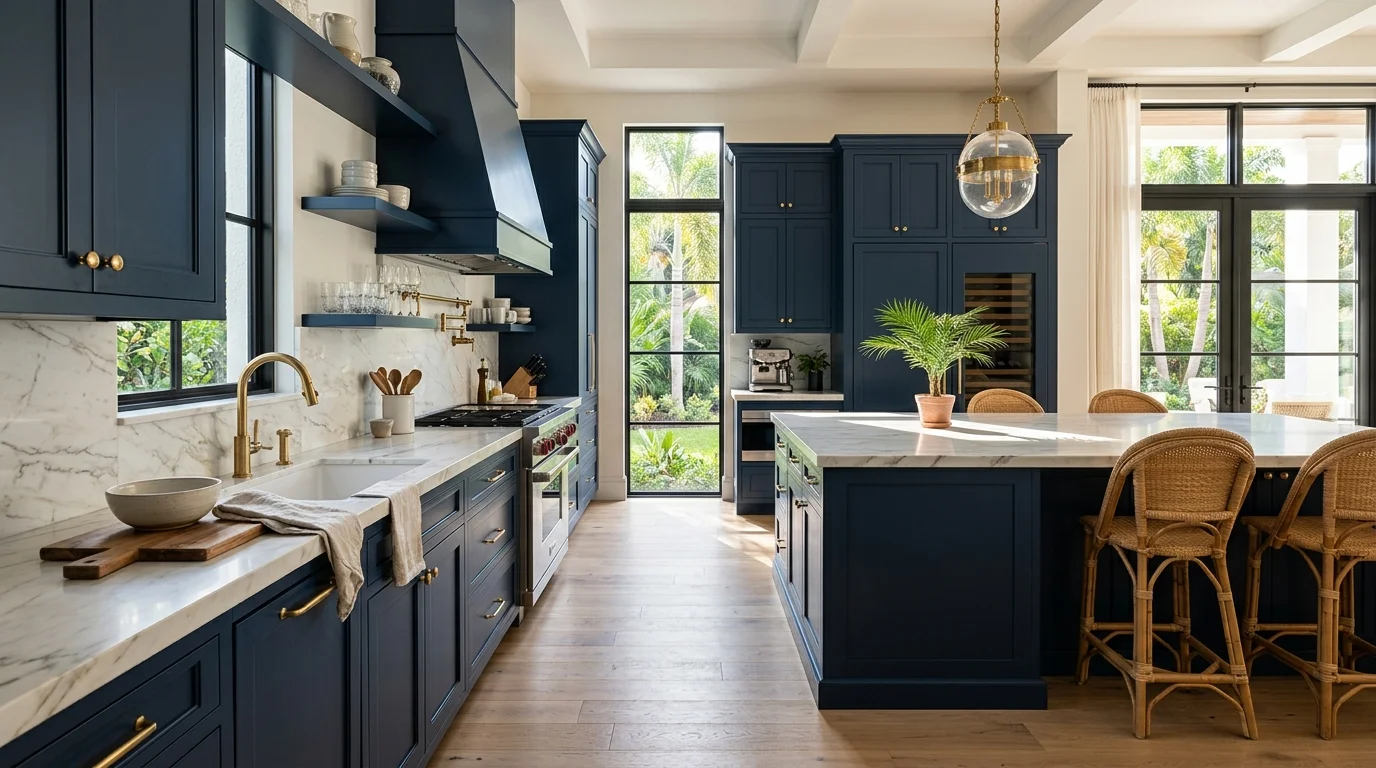
Navy blue kitchen cabinets are having their moment in 2026, and we think the trend has serious staying power. Unlike the passing fads we've seen come and go, navy brings depth and sophistication that works beautifully in South Florida's bright, coastal homes. Our team has installed dozens of navy cabinet projects across Palm Beach County this year, from Boca Raton waterfront condos to Jupiter family homes, and the results consistently wow our clients.
What makes navy different from other bold cabinet colors? It's grounded enough to feel timeless but rich enough to make a statement. Navy pairs exceptionally well with the natural light that floods Florida kitchens, creating beautiful contrast without feeling heavy or dated.
Why Navy Blue Cabinets Are Trending in 2026
The shift toward navy reflects homeowners' desire for something more interesting than white but less risky than black. We recommend navy over trendy greens or blues because it photographs beautifully (important for resale) and complements both warm and cool accent colors.
Navy works particularly well in South Florida because it echoes our coastal surroundings without being literal. Unlike ocean blues that can feel theme-heavy, navy feels sophisticated and grounded. It's also forgiving with our intense sunlight, darker colors don't show the bleaching effects we sometimes see with lighter painted finishes.
From a practical standpoint, navy hides fingerprints and daily wear better than lighter colors. For busy families in Wellington or Delray Beach, that translates to kitchens that look cleaner longer.
According to the National Kitchen & Bath Association, deep jewel tones like navy blue represent a significant trend shift toward more personalized, sophisticated color choices. This professional authority confirms what we're seeing in South Florida homes, homeowners are moving beyond safe neutrals toward colors that make a statement while maintaining timeless appeal.
Full Navy vs. Island Accent Approaches
We typically present clients with two paths: full navy perimeter cabinets or navy island with complementary perimeter colors. Each approach creates a different mood and works better in certain layouts.
Full Navy Perimeter
This approach works best in kitchens with abundant natural light and white or light countertops. We pair full navy cabinets with white quartz or light granite to prevent the space from feeling too dark. The key is balancing the navy with enough light elements, white backsplash, light hardware, and plenty of under-cabinet lighting.
In larger kitchens (300+ square feet), full navy perimeter creates a cocoon-like sophistication that feels luxurious rather than cramped. We've installed full navy setups in several Delray Beach and Jupiter homes with dramatic results. The key is ensuring adequate task lighting and using reflective materials like polished chrome fixtures or mirrored backsplash accents to bounce light around the space.
Navy Island Focus
The navy island approach gives you the color impact without overwhelming the space. We often combine this with white or light gray perimeter cabinets. This works particularly well in open-concept homes where the kitchen flows into living areas, the navy island becomes a beautiful focal point without dominating the entire space.
For smaller kitchens (under 200 square feet), we lean toward the accent approach. Full navy can make compact spaces feel closed in, while a navy island adds personality without sacrificing the sense of openness. We've seen this work beautifully in Boca Raton condos and West Palm Beach townhomes.
Color Pairing Strategies That Work
Navy + White: The Classic
This pairing never fails. White countertops, white or light backsplash, and white upper cabinets (if doing a two-tone approach) create crisp contrast. We recommend warm white rather than stark white to prevent the combination from feeling too clinical.
The 70/30 rule works well here, 70% navy (lower cabinets and island) with 30% white (uppers, countertops, backsplash). This creates visual interest without overwhelming the space. In a recent West Palm Beach project, we used navy lowers with white marble-look quartz countertops and white subway tile backsplash. The result felt both timeless and current.
Navy + Natural Wood
Navy cabinets with wood countertops or wood accents create warmth and texture. Walnut, white oak, or teak work beautifully. This combination feels more casual and works well in homes with natural wood flooring or exposed beams.
We recommend limiting wood to 20-25% of the total kitchen materials to avoid visual competition. A walnut island top with navy base cabinets, or floating walnut shelves against navy walls, adds warmth without overwhelming the sophisticated navy foundation.
Navy + Gold Accents
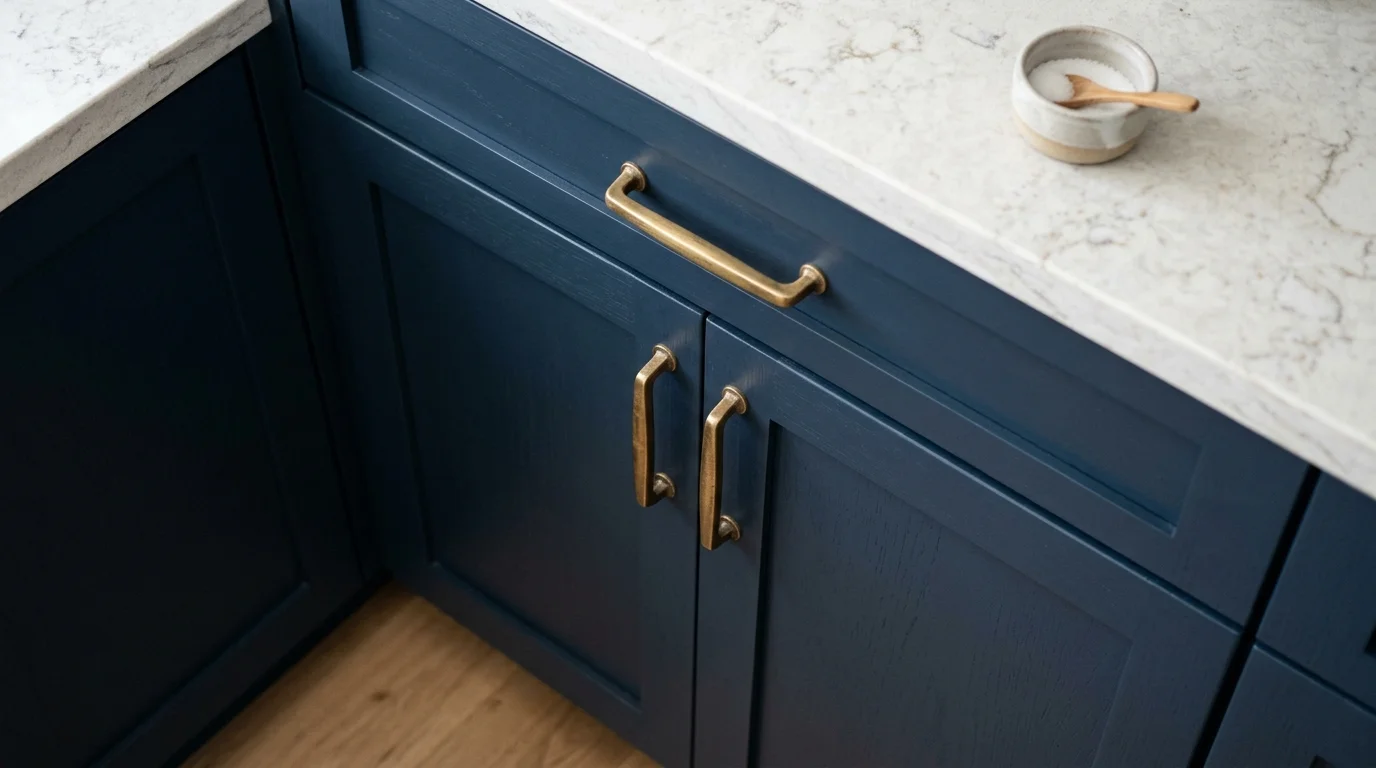
Gold hardware transforms navy from casual to luxurious. We use brushed gold or champagne bronze rather than shiny brass, the matte finishes feel more current and are more forgiving in our humid climate.
The key is restraint. Gold cabinet pulls, a gold-framed mirror, or gold pendant lights provide enough luxury accent without going overboard. We typically limit gold to hardware and lighting fixtures, using it as jewelry for the space rather than a primary color.
Navy + Cream or Warm Gray
For clients who find white too stark, cream or warm gray creates softer contrast with navy. This combination feels more collected and works well in traditional or transitional homes.
Cream-colored quartz countertops or warm gray upper cabinets soften the navy's intensity while maintaining sophistication. This approach works particularly well in homes with warm undertones in flooring or existing finishes.
Hardware and Finishes for Navy Cabinets
Hardware selection makes or breaks navy cabinets. The wrong finish can make navy look muddy or dated, while the right choice improves the entire kitchen.
Best Hardware Finishes:
- Brushed Gold/Champagne Bronze: Our top recommendation. Creates luxury without being flashy. Works beautifully against navy's rich depth.
- Polished Chrome: Clean and crisp, works well in modern or transitional kitchens. Creates high contrast that feels fresh and contemporary.
- Matte Black Hardware: Creates dramatic contrast, but use sparingly, can feel heavy. Best for modern or industrial-style kitchens.
- Brushed Nickel: Safe choice that works, though less distinctive than gold or chrome. Good for budget-conscious projects.
We steer clients away from oil-rubbed bronze with navy, the combination can feel too dark and dated. For hardware placement, standard rules apply, but we're seeing more clients choose longer pulls (5-6 inches) on navy cabinets for a more contemporary look.
Cabinet door style matters too. Shaker doors work beautifully with navy, the simple lines let the color be the star. Flat-panel doors create a more modern look, while raised-panel doors can feel too traditional with such a bold color.
Paint Quality and Finish
Navy blue shows imperfections more than lighter colors, so paint quality is crucial. We use high-end paint lines like Benjamin Moore Advance or Sherwin Williams ProClassic for kitchen cabinets. Semi-gloss or satin finishes work best, they're durable and easy to clean while hiding minor imperfections.
Popular navy shades we recommend include Benjamin Moore Hale Navy, Naval, and Gentleman's Gray (which reads as a navy-charcoal). Sherwin Williams Naval and In the Navy are also excellent choices. The key is testing samples in your actual kitchen lighting, navy can shift dramatically under different light conditions.
Cost Guide
Navy cabinet costs depend on if you're painting existing cabinets, refacing, or installing new custom cabinetry. Here's what our clients typically invest:
The higher end of these ranges reflects factors like kitchen size, cabinet complexity, and finish quality. Navy requires more prep work and higher-quality paint than lighter colors, which affects labor costs.
Cost Factors to Consider:
- Paint Quality: High-end paint adds $300-600 to the project but lasts significantly longer in Florida's climate
- Prep Work: Navy shows imperfections, so thorough sanding and priming is essential
- Hardware Upgrades: Quality brushed gold pulls can add $10-25 per cabinet door/drawer
- Professional Installation: Navy paint requires professional application for best results
South Florida Considerations
Humidity and Paint Performance
Navy cabinets need high-quality finishes to perform well in Florida's humidity. We use marine-grade paints and conversion varnish finishes that resist moisture and temperature swings. Cheaper paints can fade or yellow over time, particularly problematic with dark colors like navy.
In coastal areas like Jupiter and Delray Beach, salt air can accelerate paint degradation. We recommend annual touch-ups and deep cleaning to maintain navy's rich appearance. Proper ventilation is crucial, exhaust fans should run during and after cooking to prevent moisture buildup that can damage any cabinet finish.
Light Balance
South Florida's intense sunlight can wash out some paint colors, but navy holds up beautifully. However, you'll want to balance the dark cabinets with plenty of light elements. Consider under-cabinet LED lighting to prevent work surfaces from feeling dark.
Natural light direction matters too. Kitchens with north-facing windows maintain navy's richness throughout the day, while south-facing exposures can make navy appear lighter and more blue. We factor in light exposure when helping clients choose the perfect navy shade.
Coastal Style Integration
Navy works naturally in coastal kitchen designs without feeling thematic. Pair with natural textures, rattan bar stools, jute rugs, or natural wood accents, to create sophisticated coastal style.
Avoid overtly nautical elements like rope details or anchor hardware with navy cabinets. Instead, let the navy echo the ocean while keeping other design elements sophisticated and timeless. Natural stone countertops, woven light fixtures, and organic shapes feel coastal without being literal.
Resale Considerations
Navy is bold enough to be memorable but classic enough for broad appeal. Based on our experience with pre-sale kitchen updates, navy cabinets typically enhance rather than hurt resale value, particularly when balanced with neutral countertops and backsplash.
For maximum resale appeal, we recommend keeping countertops and backsplash neutral (white, cream, or light gray) so future buyers can easily personalize with accessories and accents. Navy cabinets provide personality while remaining sophisticated enough for broad market appeal.
HOA and Architectural Review
Most Palm Beach County communities don't regulate interior cabinet colors, but if you're in a high-end gated community, check your architectural guidelines. We haven't encountered restrictions on interior cabinet colors, but it's worth confirming before proceeding.
Some luxury communities in Boca Raton and Jupiter do review kitchen renovations for structural changes or appliance modifications that might affect exterior appearance. Interior paint colors typically fall outside architectural review scope, but it's better to confirm than discover restrictions mid-project.
Maintenance in Tropical Climate
Navy cabinets in South Florida require slightly more maintenance than lighter colors. High humidity can cause paint to expand and contract, potentially leading to minor cracking at joints. We recommend:
- Annual inspection of paint condition, especially around sink and dishwasher areas
- Immediate touch-ups for any chips or scratches to prevent moisture infiltration
- Regular cleaning with gentle, non-abrasive cleaners to maintain color richness
- Professional refinishing every 8-12 years depending on usage and care