Outdoor & Lanai Tile for Florida: What Actually Holds Up
Choosing outdoor tile in Florida is not the same exercise as picking tile for a bathroom or kitchen. The variables hit harder here. Intense UV exposure bleaches color and degrades certain materials within a few seasons. Daily afternoon thunderstorms leave standing water on flat surfaces. Pool splash zones stay wet for hours. And a tile that feels fine on a cool morning in October can become dangerously slick when wet at noon in July. At South Florida Kitchen and Bath Design, our crews have installed lanai and outdoor tile across Palm Beach County for years, in everything from Boca Raton townhomes to sprawling Wellington equestrian estates. This guide covers what actually works, what to skip, and what to budget.
Why Outdoor Tile in Florida Is Different
Most of the country worries about freeze-thaw cycles cracking tile. Florida's challenge is the opposite. The combination of relentless sun, high humidity, and near-daily rain creates a stress cycle that punishes the wrong materials fast.
UV radiation is the first culprit. Glazed ceramic tiles, natural stone with certain sealers, and some composite products fade noticeably after two or three South Florida summers. The second issue is heat absorption. Dark-colored tiles on a south-facing lanai in Delray Beach or Jupiter can hit surface temperatures above 150 degrees Fahrenheit on a cloudless July afternoon. That's uncomfortable underfoot and creates thermal expansion stress in the substrate if the wrong adhesive or grout was used. The third issue is moisture. Florida's humidity never really drops, and outdoor surfaces that don't drain properly stay damp, which accelerates algae and mold growth, making already-risky surfaces slicker.
The fix for all three problems comes down to material selection and proper installation, specifically the right mortar, the right grout, and correctly spaced movement joints. Skip any of those and you'll be re-tiling sooner than you planned.
One more thing worth mentioning before we get into materials: if your lanai project involves structural changes, new drainage lines, or electrical work for lighting, those elements fall under your general contractor's scope. Permits may be required depending on the work. Our crews handle the tile design and installation side. For permit guidance specific to Palm Beach County, the Palm Beach County Building Division is the right starting point.
Slip Resistance: The Number You Must Know
This is the section most homeowners skip. Don't. Slip resistance is the single most important spec for any outdoor tile in Florida, and it's measured by the Dynamic Coefficient of Friction, or DCOF. The DCOF AcuTest is the current industry standard. For wet, level residential floors, the minimum acceptable rating is 0.42 DCOF. For pool surrounds and areas that see heavy water exposure, we strongly recommend going higher, aiming for 0.60 or above.
The old COF ratings you'll still see on some tile spec sheets are not the same as DCOF. They're not directly comparable. When you're shopping tile for a lanai or pool deck, ask specifically for the DCOF AcuTest value. If the tile supplier can't provide it, that's a red flag.
Texture matters as much as the number. Tiles marketed as "slip-resistant" sometimes achieve that rating through a heavy surface texture that traps dirt, algae, and pool chemicals in the grooves, making them harder to clean and ironically less safe over time. The sweet spot is a tile with a matte or lightly textured surface finish, not a deeply ridged one, combined with a naturally high DCOF rating. Most quality porcelain pavers in the 20x20 and larger format hit this target well.
Grout joint width also plays a role. Wider joints give water somewhere to go, reducing the sheet of water that forms on a smooth surface during heavy rain. We typically specify 3/16-inch to 1/4-inch joints for outdoor porcelain paver installations in Palm Beach County, filled with a sanded, polymer-modified grout rated for exterior use. Standard non-sanded grout has no business being on a Florida lanai.
Best Tile Types for Florida Lanais and Pool Decks
Not all tile is created equal for outdoor use. Here's how the main options stack up in a South Florida climate.
Porcelain Pavers (our top recommendation)
Porcelain pavers are what we specify for the vast majority of outdoor projects in Palm Beach County. Full-body porcelain with water absorption under 0.5 percent is essentially impervious to Florida's moisture cycle. UV stable pigments mean the color won't bleach out after a few seasons the way some natural stone finishes do. Large-format pavers, 24x24 up to 24x48, are extremely popular right now in Boca Raton and North Palm Beach, and they photograph beautifully alongside pools. The thicker 20mm pavers can be installed on a pedestal system for rooftop terraces or over existing surfaces, which saves demolition cost. For more on how porcelain performs specifically as a countertop surface, see our piece on porcelain countertops, since the material science carries over.
Travertine
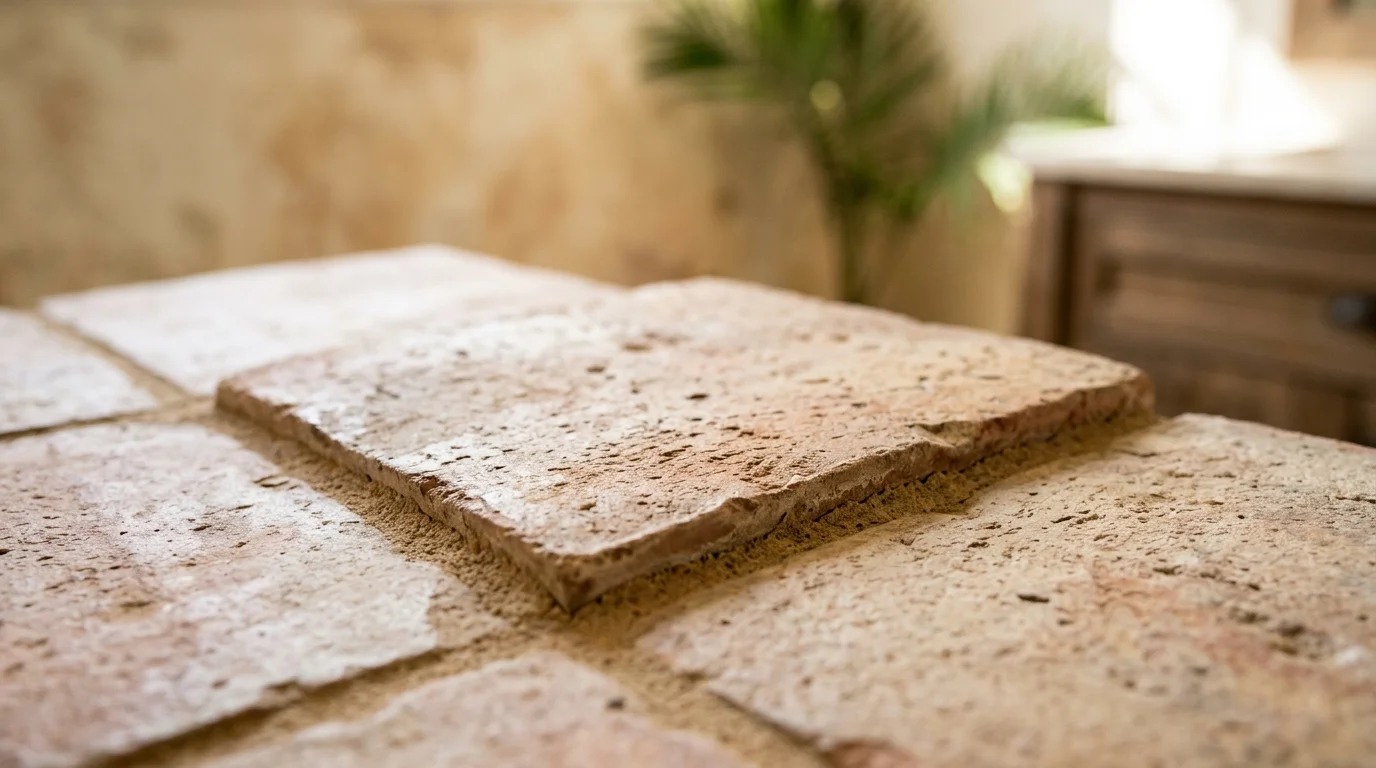
Travertine is everywhere in older Palm Beach County homes and you'll still see it on plenty of lanais in Delray Beach and Wellington. It stays cooler underfoot than most porcelain tiles, which is a real benefit in direct sun. The problem is maintenance. Natural travertine is porous, needs sealing every one to two years in a Florida climate, and the filled holes eventually come loose in outdoor applications, trapping water and biological growth. Unfilled travertine in the tumbled finish gives better slip resistance but is even harder to keep clean. We'll install travertine if a client insists, but we're honest about the upkeep commitment.
Ceramic Tile
Standard glazed ceramic is not appropriate for Florida outdoor use. The glaze is slick when wet, it fades under UV exposure, and most ceramic tile has water absorption rates too high for a continuously wet environment. If you see ceramic on a lanai that's held up well, it's likely because it's under a deep-covered roof and rarely gets wet. For uncovered or partially covered outdoor areas, skip it.
Natural Slate and Quartzite
Both offer good natural slip resistance and handle UV exposure well without fading. Quartzite in particular is durable enough for outdoor South Florida conditions. The challenge is consistency. Natural stone varies slab to slab, and outdoor installation requires careful material selection to avoid overly porous pieces. Slate can delaminate in high-moisture environments if lower grades are used. If you're already interested in quartzite as a material, our guide on quartzite countertops explains the density and sealing characteristics that apply equally outdoors. For natural stone tile care once installed, our natural stone tile care guide is worth bookmarking.
Concrete Pavers (not tile, but worth addressing)
Concrete pavers are common in Jupiter and Wellington landscapes. They're durable and affordable but tend to absorb staining from tannins, algae, and pool chemicals. They're not tile, so they're outside our installation scope, but homeowners often ask us to compare them. For a finished lanai that connects visually to an interior tile or outdoor kitchen space, porcelain pavers win on aesthetics and longevity.
Speaking of outdoor kitchens, if you're planning to tile a full outdoor kitchen area alongside your lanai, our outdoor kitchen ideas for South Florida guide covers layout and material integration, and our outdoor kitchen countertops article helps you match the right surface to the right application.
Cost Guide
Outdoor tile costs in Palm Beach County vary based on material, square footage, substrate condition, and whether the existing surface needs to be removed. The ranges below reflect what homeowners actually pay when working with our crews in this market, not national averages pulled from a database.
One thing that moves the number fast is substrate prep. If your existing lanai slab has cracks, low spots, or drainage issues, those have to be addressed before a single tile goes down. Skipping that step is one of the most common reasons outdoor tile fails prematurely. The cost of proper prep is always worth it.
These ranges assume a standard residential lanai with reasonable access and no major structural repairs. Projects in gated communities in Boca Raton or Palm Beach Gardens sometimes carry additional coordination time for HOA approvals and delivery scheduling, which your general contractor will factor into the overall project timeline.
One budget principle worth keeping in mind: spending more on the right tile now is almost always cheaper than re-tiling in five years because the wrong material was chosen. For a broader look at how to apply this kind of thinking to renovation decisions, the 30 percent rule in remodeling is a useful framework.
South Florida Considerations
Palm Beach County's climate creates a few specific installation requirements that contractors cutting corners will skip. These are not optional.
Movement joints are non-negotiable outdoors. Exterior slabs expand and contract with temperature swings, and without control joints filled with a flexible sealant rather than grout, your tile will crack. We see re-tile jobs constantly where the previous installer grouted every joint solid. It looked fine for a year. Then the Florida summer did its work. The Tile Council of North America (TCNA) handbook specifies movement joint placement for exterior applications, and we follow those guidelines on every outdoor job.
Drainage slope is another area where shortcuts hurt. Florida lanais should slope a minimum of 1/8 inch per foot away from the structure to move water off the surface quickly. Many existing slabs don't meet this standard. When we're installing over an existing slab that drains poorly, we use a self-leveling mortar bed to build in the correct pitch before any tile goes down.
Direct sunlight and heat load affect your color choice more than aesthetics. Very dark tiles on an uncovered south-facing lanai in Delray Beach absorb enormous heat. Light to medium tones, especially in a matte finish, are more practical. Light-colored large-format porcelain pavers are dominant in Jupiter and North Palm Beach new construction right now for exactly this reason. They stay cooler, they look clean against pool water, and they photograph well for resale listings.
HOA and ARB requirements are real in this market. Boca Raton and Wellington gated communities often require approval of exterior material samples and sometimes product specifications before work starts. Our design team prepares material boards and specification sheets that homeowners can submit as part of their ARB package. Actual permit applications are handled by your general contractor.
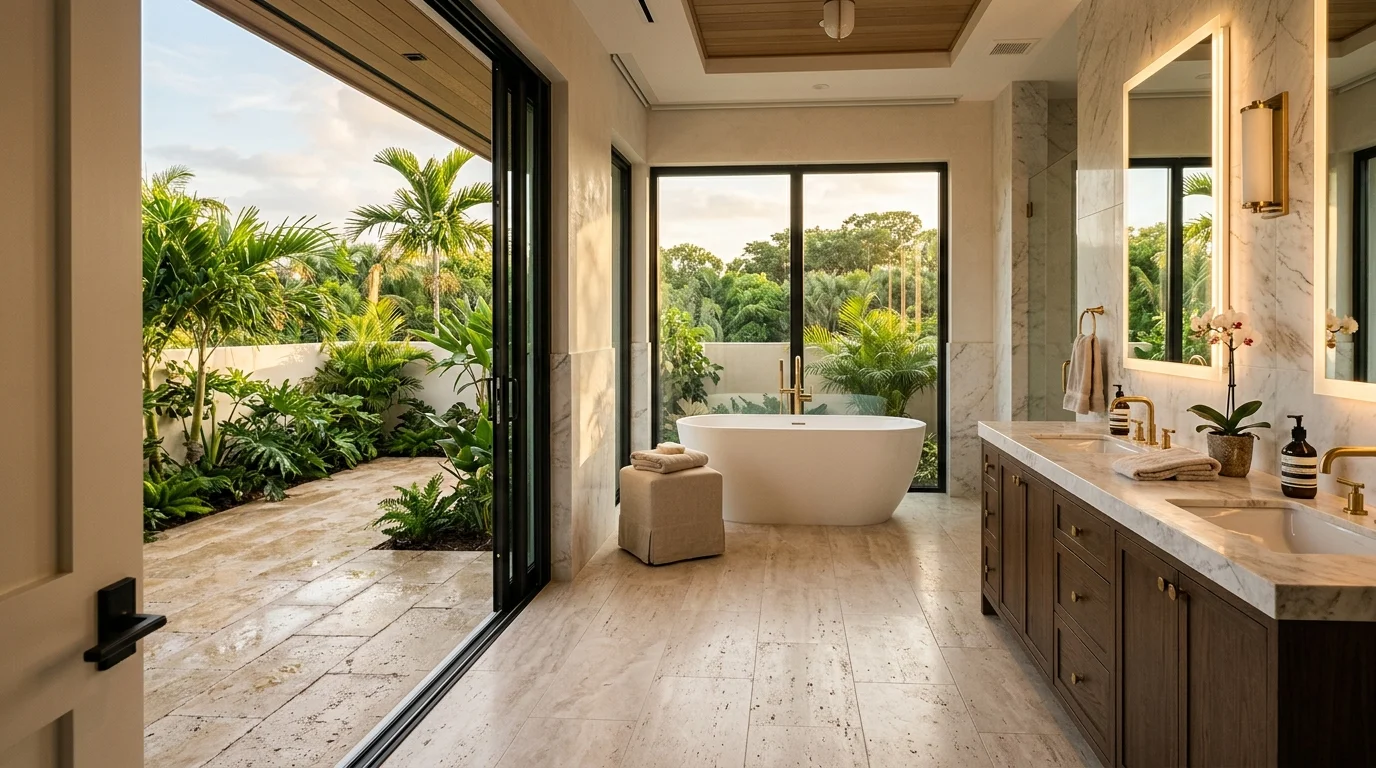
Connecting indoor and outdoor tile is a design question we get often. The trend in Palm Beach County right now is extending the same large-format tile from the indoor living space through the sliding glass doors and onto the lanai, creating a visual flow that makes both spaces feel larger. This works well when the indoor tile is a porcelain product that also carries a suitable exterior rating. If your interior tile is a material that can't handle outdoor exposure, we can specify a very close visual match for the lanai that reads as continuous from inside. If you're rethinking your bathroom floors at the same time, our bathroom floor tile ideas for Palm Beach County homes shows how the indoor tile selection connects to the broader design story. For tile pattern inspiration that translates well to outdoor spaces too, our bathroom tile patterns guide covers layout approaches like herringbone and large-format stacked that work beautifully on lanais.
Salt air is a factor near the coast. Properties in Jupiter Inlet, Juno Beach, and waterfront Delray Beach homes deal with airborne salt that accelerates the breakdown of certain sealers and grout. We specify grout with a higher polymer content and low-maintenance porcelain that doesn't require annual sealing for those coastal installations. It's a small specification change that makes a meaningful difference over ten years.
Finally, if this lanai project is part of a larger outdoor living build that includes a kitchen structure, refer to our outdoor kitchen cost guide for Florida to understand how the tile budget fits into the total project picture. Coordinating the tile selection across the lanai floor, outdoor kitchen backsplash, and any pool coping at the same time saves money on delivery and keeps the visual design cohesive.