How to Clean Natural Stone Tile: The Right Way

Knowing how to clean natural stone tile properly is what separates a floor or wall that looks stunning for 30 years from one that etches, stains, and dulls out within five. We work with marble, travertine, quartzite, limestone, and slate across homes in Boca Raton, Delray Beach, Wellington, Jupiter, and throughout Palm Beach County. The number one thing homeowners get wrong is treating stone like it's ceramic. It isn't. Stone is porous, acid-sensitive, and responds badly to the cleaning products sitting under most kitchen sinks. This guide will walk you through everything you need to know, including sealing schedules, product choices, and the mistakes that cause permanent damage.
Why Natural Stone Needs Special Care
Ceramic and porcelain tile are dense, fired materials with a hard glaze protecting the surface. Natural stone has no such protective layer when it comes off the slab. Marble, travertine, and limestone are calcium-based, which means acids attack them on contact. That includes vinegar, lemon juice, most bathroom cleaners, and anything labeled "all-purpose." The reaction is called etching, and it leaves a dull, rough patch on a polished surface. No amount of cleaning removes an etch. You need a professional re-polish or honing to fix it.
Travertine has an additional challenge. It's a pitted stone, meaning it comes with natural voids that are either left open (unfilled) or filled with grout or epoxy filler. Those pits trap moisture, cleaning product residue, and soap scum if you're not careful. Open-vein travertine in a shower floor needs consistent attention or those voids become mold reservoirs, which is a serious problem in South Florida's humidity.
Granite sits on the more forgiving end of the spectrum. It's silica-based rather than calcium-based, so acids won't etch it the same way. But it's still porous and still needs sealing. If you're dealing specifically with granite surfaces, our guide on how to clean granite countertops properly covers that material in detail. For quartzite, which many homeowners confuse with quartz (a manufactured product), we have a separate breakdown of how to clean quartzite countertops as well.
The key point: every natural stone species has different porosity, hardness, and acid sensitivity. Marble and travertine are the most demanding. Quartzite and granite give you a little more room for error. Slate is in its own category because it's a layered stone that can flake if you use the wrong products. Know what you have before you pick up a cleaning bottle.
How to Clean Natural Stone Tile
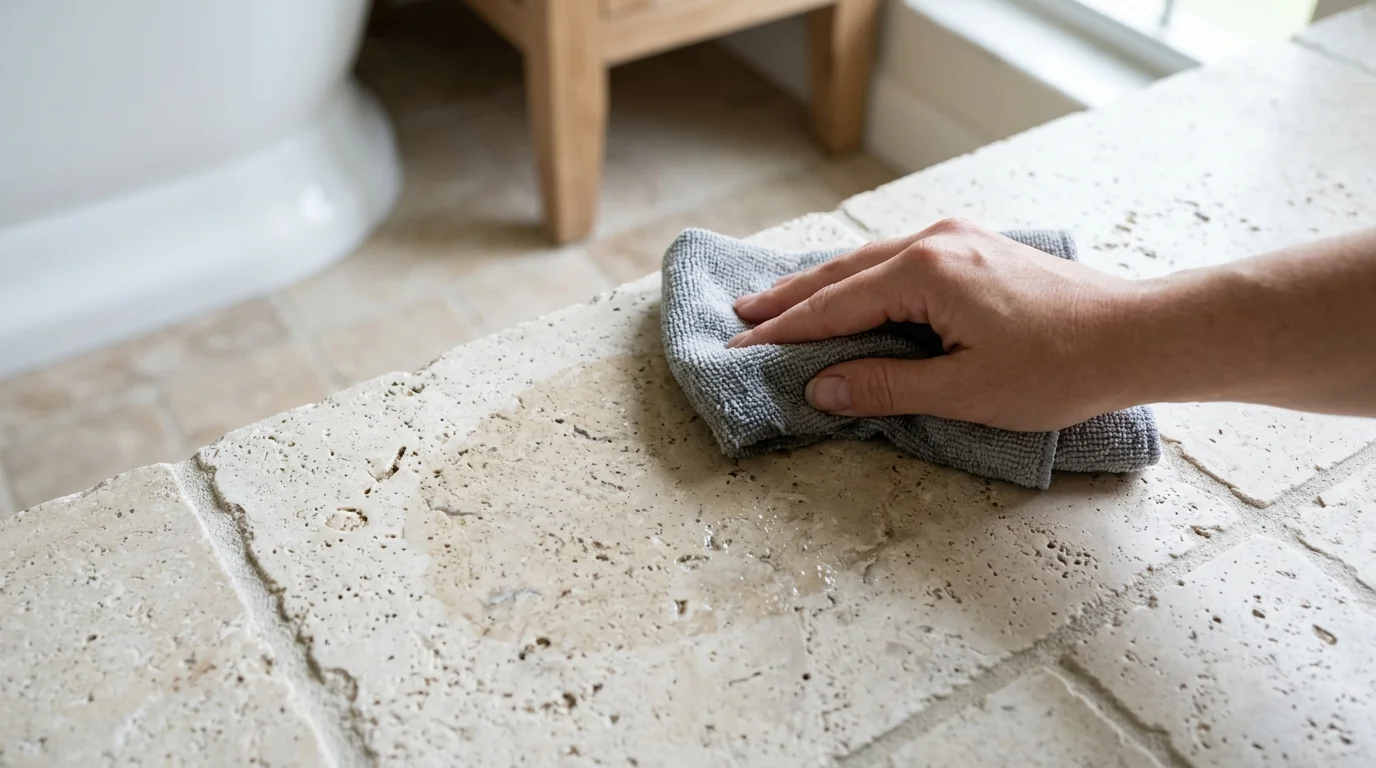
Daily cleaning is simple. Use warm water and a few drops of a pH-neutral stone soap. Products like StonePro's line of stone cleaners are formulated specifically for this. Mop or wipe the surface, rinse with clean water, and dry it. That last step matters more in a bathroom or shower than most people think. Standing water on an unsealed or under-sealed stone surface will penetrate the pores over time and cause staining from minerals in the water.
Here's the actual process we recommend for routine cleaning:
- Sweep or vacuum dry debris first. Grit dragged across polished marble with a wet mop scratches the finish.
- Mix a small amount of pH-neutral stone cleaner with warm water in a bucket. The ratio matters. More is not better. Excess cleaner leaves residue that dulls the surface.
- Mop or wipe in the direction of the veining on marble. It doesn't prevent damage, but it shows less streaking.
- Rinse the surface with plain clean water. This step gets skipped constantly, and it causes buildup over time.
- Dry with a clean microfiber cloth or let the HVAC dry it quickly. In South Florida humidity, air-drying alone can leave water spots on polished surfaces.
For showers and wet areas, squeegee the walls and floor after every use. This single habit reduces soap scum and hard water deposit buildup by roughly 80%. It's not glamorous advice, but it works.
Spills need to be blotted immediately. Don't wipe them. Wiping spreads the liquid into more stone. Blot from the outside of the spill toward the center. For anything acidic, like wine, coffee, or citrus juice, follow up with a damp cloth and a neutral cleaner. If you catch the spill within a minute or two on a well-sealed surface, odds are good you'll avoid an etch. If the stone is poorly sealed, you're likely looking at a stain or etch regardless of how fast you act. That's why sealing matters so much.
Sealing Marble, Travertine & Other Stone
Sealing is not optional on marble or travertine. It's the difference between a surface that resists everyday spills and one that absorbs them. We tell every homeowner we work with: seal your stone before it's ever used, reseal on schedule, and don't use penetrating sealers as a substitute for being careful with acids.
The right product is a penetrating (impregnating) sealer, not a topical coating. Topical coatings sit on top of the stone, change the appearance, and peel or wear off unevenly. Penetrating sealers soak into the pores and repel water and oil from within. They preserve the natural look of the stone while providing real protection. Brands like Miracle Sealants, Aqua Mix, and StoneTech Professional make products widely available in Palm Beach County. Use one rated for the specific stone type. A product labeled for granite is not necessarily optimized for marble.
How often to seal depends on the stone, the finish, and the usage:
- Polished marble countertops or floors in a kitchen: every 6-12 months.
- Honed marble (the matte finish): every 3-6 months. Honed surfaces are more porous and absorb liquids faster.
- Travertine floors in a bathroom or wet area: every 6-12 months, potentially more often if the floor gets heavy daily use.
- Granite countertops: every 1-3 years depending on color and porosity. Darker granites tend to need less frequent sealing than lighter ones.
- Quartzite: annually at minimum, and more often for softer quartzite varieties.
The water test tells you when it's time. Pour a small amount of water on the stone surface and watch it. If the water beads up and sits on the surface for a few minutes without darkening the stone, your sealer is holding. If the stone darkens within 30 seconds to a few minutes, the sealer has worn through and you need to reseal now.
Application is straightforward. Clean the surface thoroughly and let it dry completely, 24-48 hours in humid South Florida conditions. Apply the sealer evenly with a clean cloth or applicator pad. Let it penetrate for the time listed on the product directions, usually 5-20 minutes. Wipe off the excess before it hazes. Some products recommend a second coat after the first has cured. Follow the manufacturer's instructions exactly. Skipping the "wipe off excess" step leaves a hazy residue that's difficult to remove.
One thing worth knowing: sealing does not make stone acid-proof. It buys you time. A sealed surface gives you a window to blot up an acidic spill before it etches. It does not eliminate the risk. This is a point that gets glossed over in a lot of stone care marketing. If you want a surface that truly doesn't react to acids, natural stone is not the right material. Engineered quartz is. We've written about the pros and cons of marble countertops in detail for anyone weighing that decision before committing to stone.
The Do's and Don'ts of Stone Care
We see the same mistakes over and over. These aren't minor issues. Some of them cause permanent damage that requires professional restoration to fix, and professional stone restoration in Palm Beach County runs $200-$600 per session for a typical bathroom floor.
Do:
- Use pH-neutral cleaners specifically formulated for stone. If the bottle doesn't say "safe for natural stone" or "pH neutral," assume it isn't.
- Use felt pads under decorative objects, candles, and anything metal that sits on stone surfaces. Metal canisters and vases leave rust rings that are difficult to remove.
- Blot spills immediately. Every time. This is the most important daily habit for marble and travertine.
- Use coasters under glasses and cups in kitchens with marble countertops. Wine glasses, coffee mugs, and glasses of citrus juice are all etch risks.
- Reseal on schedule. Mark it on a calendar. Don't wait for a stain to remind you.
- Use a stone-safe grout sealer on the grout lines too. Unsealed grout in a stone tile floor absorbs dirt and moisture at a faster rate than the stone itself.
Don't:
- Use vinegar. Ever. We hear "but it's natural" constantly. Vinegar is acetic acid. It etches marble and travertine on contact. The same goes for lemon juice and any citrus-based cleaner.
- Use bleach on marble or travertine. It won't etch the stone the way acid does, but it weakens the sealer and can discolor certain stones over time, particularly travertine with filled voids.
- Use abrasive scrubbers or steel wool. Even on a "tough" stain. You'll scratch the finish and create micro-grooves that trap dirt and moisture.
- Use multi-surface bathroom sprays. Almost every common brand, including popular spray cleaners, contains acids, bleach, or abrasive agents. Read every label.
- Steam clean marble or travertine. The heat and moisture penetrate the pores aggressively and can loosen filler in travertine voids and degrade sealers.
- Let wet bath mats sit on stone floors for days at a time. The trapped moisture beneath a bath mat will cause dark staining and can eventually contribute to mold growth under the tile.
Grout care is part of natural stone tile care. If you're deciding on grout color for a stone tile floor or shower, the choice affects long-term maintenance significantly. Lighter grout shows staining more and requires more consistent sealing. Our grout color guide walks through how to make that decision based on both aesthetics and practicality.
For showers specifically, the right tile choice matters as much as the cleaning routine. If you're planning a shower remodel, our breakdown of the best tile for shower walls in Florida's humid climate gives an honest look at how natural stone compares to porcelain and large-format options in a wet environment.
Stone Tile Care: Cost Guide
Most of the ongoing cost of natural stone tile care is in products and professional maintenance intervals. Here's what homeowners in Palm Beach County should budget for.
DIY sealing is the most cost-effective approach for most homeowners. The products are widely available and the application process is not difficult if you follow the steps carefully. Where professional service makes sense is in deep cleaning after years of product buildup, etch removal that requires mechanical polishing, or large-scale sealing jobs like a travertine-floored home where square footage makes a pro service worth the hourly efficiency.
The bigger cost risk is deferred maintenance. A bathroom floor that hasn't been sealed in four years and shows heavy staining and etch damage may require $600-$1,200 in professional restoration before it looks good again. Compare that to $30 in sealer applied every 12 months. The math strongly favors staying on top of it.
If you're evaluating whether the long-term maintenance cost of natural stone is worth it compared to engineered alternatives, our article on the best countertop materials for Florida's humidity and heat compares stone to quartz, quartzite, and porcelain from a practical standpoint.
South Florida Considerations
Palm Beach County's climate creates specific challenges for natural stone tile that homeowners in drier parts of the country don't deal with. Humidity runs high year-round. Mold and mildew pressure is real. Hard water from municipal systems in Boca Raton, Delray Beach, and West Palm Beach leaves mineral deposits that show up as white haze on polished stone surfaces. And seasonal thunderstorms mean bathrooms and laundry areas that see heavy water exposure for months at a time.
Hard water deposits are one of the most common complaints we hear from homeowners with marble or travertine in their bathrooms. The temptation is to reach for a limescale remover or a bathroom spray that promises to dissolve calcium buildup. Those products almost always contain acid or chelating agents that will etch calcium-based stone. The safe approach is a specially formulated hard water remover for natural stone, applied carefully and rinsed thoroughly. Some homeowners in Jupiter and North Palm Beach install whole-house water softeners specifically to protect their stone tile. That's not excessive. It's smart.
Mold and mildew in grout joints and around travertine voids is a legitimate concern in South Florida showers. Proper ventilation is part of the solution. We always recommend pairing a natural stone shower installation with a correctly sized exhaust fan. Our bathroom exhaust fan guide covers sizing and placement for Palm Beach County bathrooms. The other half of the solution is consistent squeegeeing and drying after each shower use, plus regular grout sealing.
Outdoor natural stone deserves its own mention. Travertine pavers around pools and on covered lanais are extremely common in South Florida, and they come with their own maintenance demands. Pool chemicals, chlorine splash, and direct sun exposure stress the sealer faster than interior applications. Outdoor travertine typically needs sealing every 12-18 months. Algae and mold growth on outdoor stone requires specific stone-safe biocide treatments, not bleach.
One more South Florida-specific note: if you're using natural stone tile in a bathroom remodel and want to understand how the material fits into the full scope of your project budget, the bathroom floor tile ideas for Palm Beach County homes article covers material comparisons and what tile choices look like at different price points. For anyone planning a shower renovation and considering stone tile for the walls, our guide on bathroom shower tile ideas for South Florida homes is worth reading before you finalize your selections.
The bottom line on natural stone in South Florida: it's a beautiful material that holds its value and looks stunning in both kitchens and bathrooms. The homeowners who love their stone 15 years later are the ones who sealed it properly from day one, stayed away from the wrong cleaning products, and kept a maintenance schedule. The ones who regret it are the ones who treated it like tile from a hardware store. Know what you have. Take care of it correctly. The investment pays off.