Calacatta Quartz: Marble Look, Quartz Durability
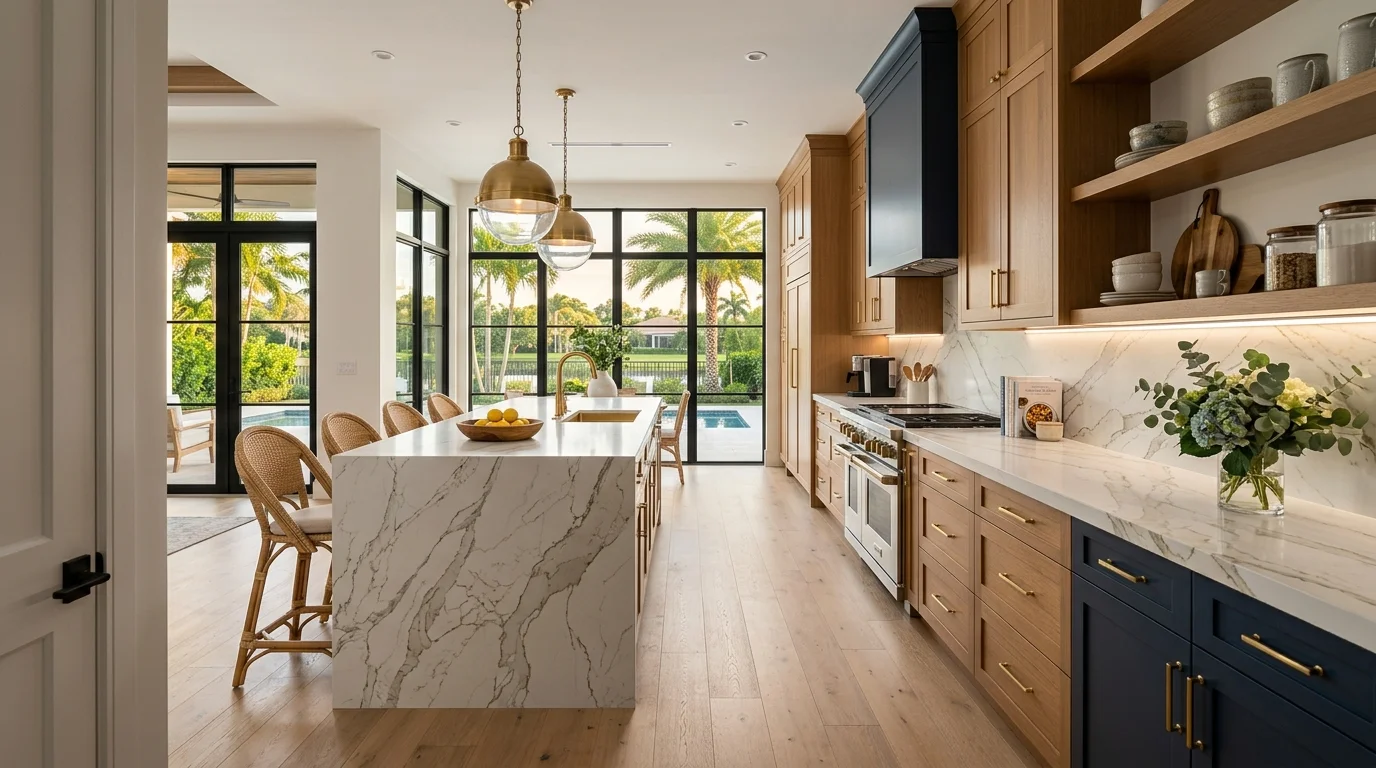
Calacatta quartz is the countertop material Palm Beach County homeowners keep asking about, and for good reason. It delivers the dramatic white-and-gold veining of Italian Calacatta marble without the sealing, etching, or anxiety that comes with the real stone. We install it in kitchens from Boca Raton to Jupiter, and heading into 2026 it shows no sign of slowing down. If you want the look of marble with the performance of engineered quartz, calacatta quartz is the answer. This guide covers what it actually is, how it stacks up against real marble, which slabs we recommend, what it costs locally, and what South Florida homeowners specifically need to know before they buy.
What Is Calacatta Quartz?
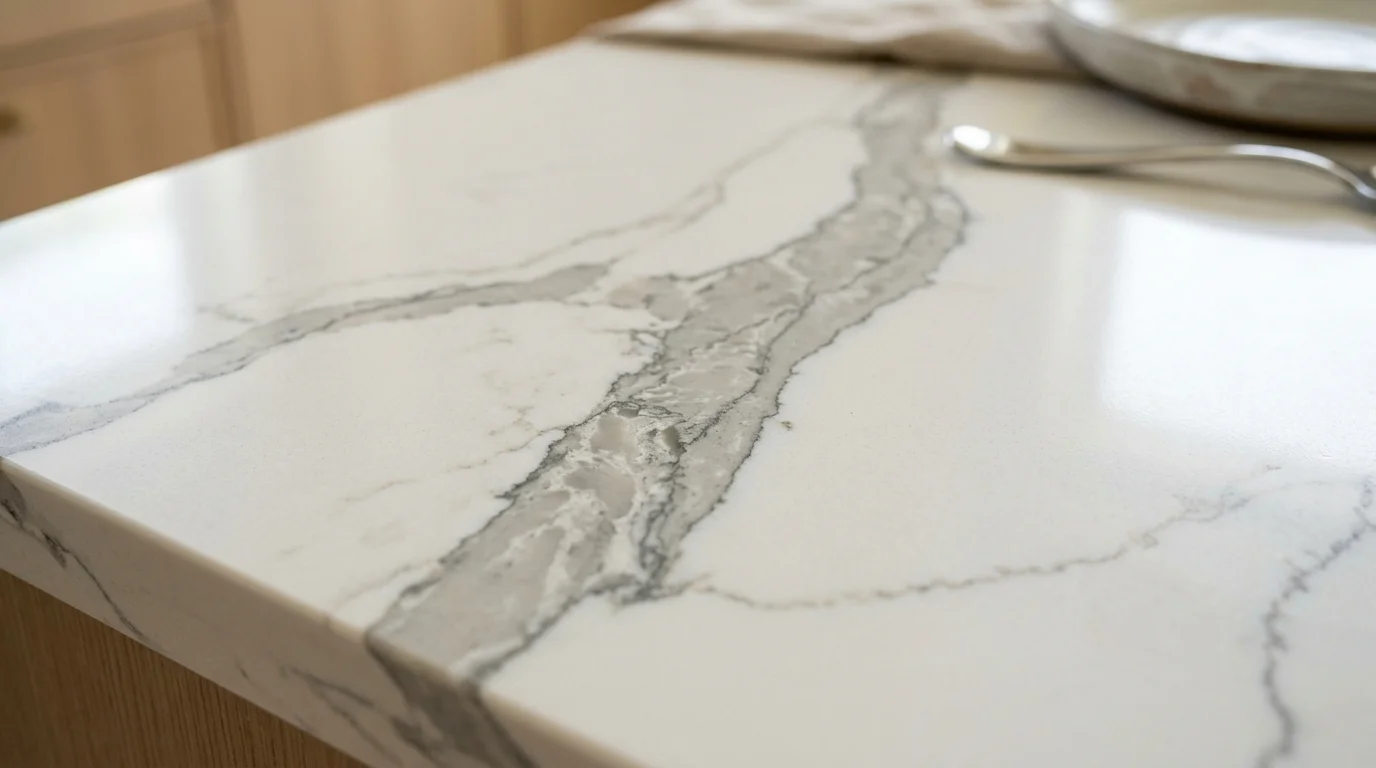
Quartz countertops are engineered stone, roughly 90-95% ground natural quartz bound with polymer resins and pigments. The manufacturing process lets producers control the exact pattern, vein color, and background tone with precision that nature simply cannot replicate on demand. Calacatta quartz specifically mimics the look of Calacatta marble: a bright white or warm white background with bold, often gold or warm-gray veining that runs dramatically across the slab.
The name "Calacatta" comes from the Calacatta region of Carrara, Italy, where some of the world's most prized marble is quarried. Real Calacatta marble is rarer and more expensive than standard Carrara marble, and far more variable. Two slabs pulled from the same block can look completely different. Calacatta quartz solves that problem. You can order matched slabs for a kitchen island and perimeter counters and know they will coordinate consistently.
This is not a knock-off product. Today's high-end calacatta quartz from brands like Cambria, Silestone, MSI, and Caesarstone uses advanced printing and layering technology to replicate the depth, translucency, and organic movement of genuine marble veining. When we show clients a current-generation calacatta quartz slab next to a real marble sample, most are genuinely surprised how close it looks, especially once it's installed under kitchen lighting.
For a broader look at how quartz compares to other countertop materials for Florida's climate, our guide on the best countertop materials for Florida's humidity and heat covers the full landscape of options worth considering.
Calacatta Quartz vs. Real Marble
This is the comparison homeowners obsess over, and we have strong opinions on it. Real Calacatta marble is genuinely beautiful. It has a warmth and depth that even the best engineered quartz doesn't perfectly replicate when you study it up close. That said, marble is a high-maintenance material in a way that catches most homeowners off guard.
Marble is calcium carbonate. Acidic liquids, lemon juice, tomato sauce, wine, even sparkling water, will etch the surface. Etching isn't a stain you can clean off. It's a physical change to the stone, a dull spot where the acid has dissolved the polished surface. You can hone marble to minimize the appearance of etching, but then you give up the polished look. It's a trade-off. On top of that, marble needs to be sealed regularly to resist staining, and even with proper sealing it will absorb oil and pigments over time. For a detailed breakdown of what marble ownership really looks like, read our article on marble countertops pros and cons for Florida kitchens.
Calacatta quartz doesn't etch. It doesn't need sealing. It resists stains, bacteria, and moisture at a level marble simply cannot match. In South Florida's kitchen environment, where humidity is high, cooking happens often, and families spend serious time at the island, that durability matters. A lot.
Here's where we land on this: if you're a design enthusiast who loves natural stone, understands the maintenance commitment, and is willing to treat your countertop like a fine piece of furniture, real Calacatta marble can be worth it. But for the majority of homeowners in Wellington, Delray Beach, and Boca Raton who want a beautiful kitchen they can actually use without stress, calacatta quartz is the smarter call. The performance gap is real. The visual gap, with today's manufacturing technology, is minimal.
One practical note: quartz countertops are non-porous, which means quartz countertops don't need to be sealedever. That alone saves time, money, and hassle compared to natural stone.
There's one area where real marble still wins: heat tolerance. Both materials can be damaged by extreme direct heat, but quartz's polymer resin binder is actually more vulnerable to thermal shock than marble. Always use trivets. Never put a hot pan directly on calacatta quartz. That's a non-negotiable rule with this material.
Top Slabs and Brands for 2026
Not all calacatta quartz is equal. The difference between a budget-tier product and a premium slab is visible, in the depth of the veining, the variation across the slab, and how convincingly it reads as natural stone from a distance and up close. Here are the brands and specific slabs our team recommends most often for Palm Beach County projects.
Cambria Brittanicca and Brittanicca Warm. Cambria is made in the USA and uses a thicker slab (1.25" standard) with exceptional vein depth. Brittanicca has a bright white background with gray and gold veining. Brittanicca Warm shifts the background to a softer cream, our pick for homes with warm wood cabinetry. Cambria's website shows the full collection with realistic slab photography. Our full Cambria breakdown is worth reading if you're seriously considering the brand: Cambria countertops: pros, cons, and cost.
Caesarstone Calacatta Nuvo. One of the most popular calacatta-pattern slabs in South Florida for several years running. It has a clean white background with soft gold and gray veining. The veining is slightly more subtle than Brittanicca, which some homeowners prefer, it reads as elegant rather than dramatic. Priced a touch below Cambria, which matters when you're covering a large kitchen.
Silestone Calacatta Gold. Silestone is owned by Cosentino and uses their HybriQ technology, which incorporates recycled materials. The Calacatta Gold pattern has warm ivory-white tones with bold gold veining. It pairs exceptionally well with white shaker cabinets and brass hardware, a combination we're doing constantly in Jupiter and Palm Beach Gardens right now. See our Silestone vs. quartz comparison for more on how it stacks up against other brands.
MSI Calacatta Laza and Calacatta Miraggio Gold. MSI offers calacatta patterns at multiple price points. Miraggio Gold is their premium line with a genuinely convincing marble look, bold gold veining on a bright white field. Laza is a cleaner, more minimal vein pattern. MSI slabs are widely available through local stone distributors in Palm Beach County, which keeps lead times short.
Dekton Kelya. Technically not quartz, Dekton is an ultra-compact sintered surface, but it deserves mention because it achieves a calacatta look with even greater heat and UV resistance than standard quartz. Worth considering for outdoor kitchen applications or south-facing kitchen counters that get direct sun exposure. Our Dekton countertops guide covers the full picture.
When you're choosing between these, go see the full slab in person. Sample chips don't show you how the veining moves across a 10-foot island. Most local stone yards in Palm Beach County carry at least two or three of these brands. Our article on where to buy countertop slabs in Palm Beach County can point you to the right yards.
Cost Guide: Palm Beach County Pricing
Calacatta quartz pricing in Palm Beach County depends on the brand, slab grade, edge profile, and scope of the project. Here's what we see in the local market heading into 2026. These ranges reflect material and fabrication/installation, countertops only, not cabinetry or other work.
A few things drive cost beyond the material itself. Edge profiles add to the fabrication bill, a simple eased or mitered edge costs less than a full ogee or thick waterfall mitered edge. Cutouts for sinks and cooktops are charged separately, typically $150-$350 each depending on complexity. If you're doing a slab backsplash to match the countertop, budget that as its own line item. For a full picture of what quartz countertops cost locally, see our quartz countertops cost guide for Palm Beach County.
On the cabinet side: calacatta quartz pairs naturally with white shaker cabinets, warm white painted cabinets, and natural wood tones. The countertop cost above is separate from any cabinet work. If you're planning a full kitchen, our kitchen remodel cost guide for Palm Beach County breaks down the full project picture.
South Florida Considerations
There are a handful of things that are specific to buying calacatta quartz in Palm Beach County and the surrounding area, things you won't read in a national buying guide.
UV exposure is real. Quartz manufacturers generally recommend against prolonged direct sunlight on quartz surfaces because the resin binders can yellow or discolor over time. In South Florida, where south- and west-facing kitchens get intense sun through large windows and sliding doors, this matters more than it does in Ohio. If your kitchen gets a lot of direct sun on the countertops, talk to your fabricator about UV-stable product options. Dekton (mentioned above) handles UV significantly better than standard quartz. For outdoor kitchen countertops, quartz is not the right call at all, check our guide on outdoor kitchen countertops for Florida for what actually works out there.
HOA and condo considerations. If you're remodeling a condo in Boca Raton, Delray Beach, or one of the gated communities in Wellington, your HOA or building management may require design approval before work starts. We provide design drawings and material samples so your general contractor or building manager can submit what's needed for their approval process. Our team handles this kind of project regularly, read more in our condo kitchen remodel and HOA guide for Palm Beach County.
Slab availability and lead times. Palm Beach County has strong stone distributor relationships, and most calacatta quartz patterns from major brands are in stock locally. That said, premium slabs, especially specific lots of Cambria Brittanicca Warm or MSI Miraggio Gold, can sell out between your selection appointment and your fabrication date. Once you pick your slab, ask your fabricator to hold it. Don't rely on "they'll have it when we need it." Get the lot number reserved.
Matching across phases. If you're remodeling in stages, kitchen now, then adding a butler's pantry or laundry countertop later, buy extra material from the same production lot now. Calacatta quartz patterns vary between lots, and matching exactly six months later is often impossible. Plan ahead.
Pairing with the right backsplash. Calacatta quartz on its own is striking, but the backsplash decision can make or break the whole look. A full-height slab backsplash in the same calacatta quartz material is our top recommendation for a cohesive, high-end result. If you want tile instead, a soft zellige, large-format porcelain, or a simple white subway keeps the focus on the countertop. See our article on backsplash ideas with white cabinets for Florida kitchens for specific pairings that work in South Florida light.
Permits for countertop-only work. Swapping countertops, even full slab replacements including a new sink cutout, generally does not require a permit in Palm Beach County as long as the sink location isn't moving and no new plumbing rough-in is involved. If your project is countertops and cabinets only on an existing layout, you typically won't be dealing with the building department at all. Permits become scope-dependent when the project involves moving a sink, relocating appliances, or opening walls. Your general contractor can advise on what your specific project requires based on Florida Building Code requirements.
Why calacatta quartz is the 2026 choice. Design trends in Palm Beach County are moving toward warm whites, natural wood tones, and statement stone, all of which calacatta quartz anchors perfectly. It works in a coastal kitchen, a modern farmhouse, a traditional Palm Beach home, and a contemporary condo. It photographs well. It holds its value. And it performs in a real kitchen without the stress of natural marble. That combination is hard to beat.