In Cabinet Lighting: Puck Lights, LED Strips & Glass Cabinet Glow
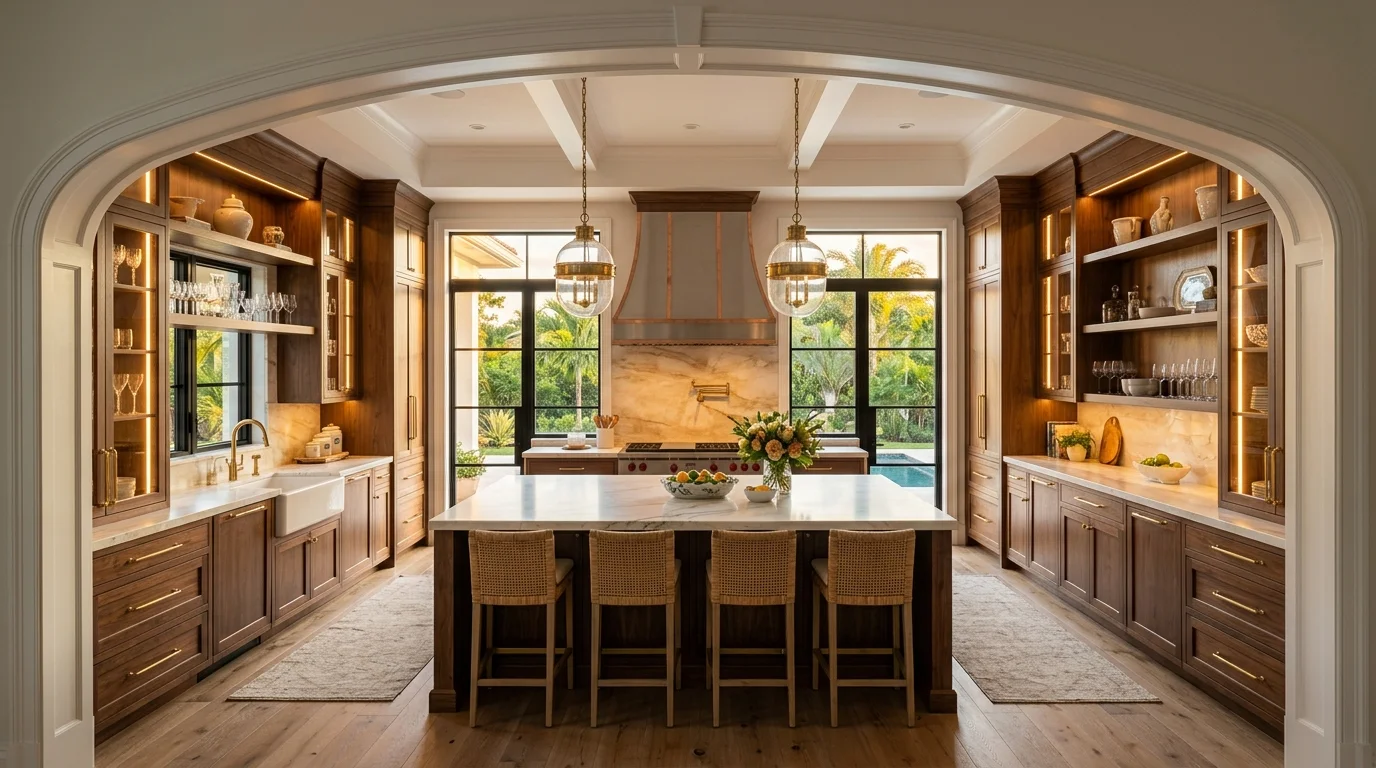
In cabinet lighting is one of the highest-impact, lowest-cost upgrades you can add to a kitchen remodel. For glass-front cabinets especially, the right interior light transforms a basic storage unit into a display feature that catches the eye from across the room. At South Florida Kitchen & Bath Design, our crews install interior cabinet lighting across Palm Beach County homes in Boca Raton, Delray Beach, Wellington, and Jupiter. We plan it during the cabinet design phase, and the results speak for themselves. This guide covers every option, what it actually costs in the Palm Beach County market, and what we recommend and why.
Why Interior Cabinet Lighting Matters
Most homeowners plan their kitchen lighting from the ceiling down. Recessed cans, pendants over the island, under-cabinet strips for the countertop workspace. That covers the big zones. But the interior of your cabinets is left in the dark, literally, and that matters more than people realize.
Open a glass-front cabinet at night with no interior lighting and you see a dim box with shapes in it. Add a puck light or a low-profile LED strip, and suddenly you see your dishes, your barware, your collected pieces. The cabinet becomes part of the kitchen design instead of just a storage wall.
There is also a practical side. If you have a deep pantry cabinet, corner unit, or a tall upper that goes to the ceiling, interior lighting makes it usable. You stop guessing what is on the back shelf. That matters every day.
We recommend planning in cabinet lighting at the same time you select your glass-front cabinet doors and hardware. Retrofitting is possible but always more work. Wiring channels, drilling for puck mounts, routing cords, it is all cleaner when it is part of the original build.
For reference on how the broader kitchen lighting picture comes together, our guide on recessed lighting layout for your kitchen remodel covers ceiling-level planning in detail. Interior cabinet lighting layers on top of that foundation.
Types of In Cabinet Lighting
There are three main options for in cabinet lighting: puck lights, LED strip lights, and linear bar lights. Each has a different look and a different installation requirement. Here is how we think about each one.
Puck lights are round disc-shaped fixtures, typically 2 to 3 inches in diameter, that mount to the underside of a shelf or the top interior of a cabinet. They throw a focused, circular pool of light. That is great for displaying objects, not as good for illuminating a full shelf evenly. Pucks work best in glass-front cabinets where you are spotlighting glassware, dishware, or decorative pieces. They create a deliberate, almost gallery-quality glow. We recommend hardwired puck lights over battery-operated ones every time. Battery pucks fade, die at inconvenient moments, and look cheap. Hardwired units from brands like Häfele are designed for cabinetry and carry the right certifications for enclosed spaces.
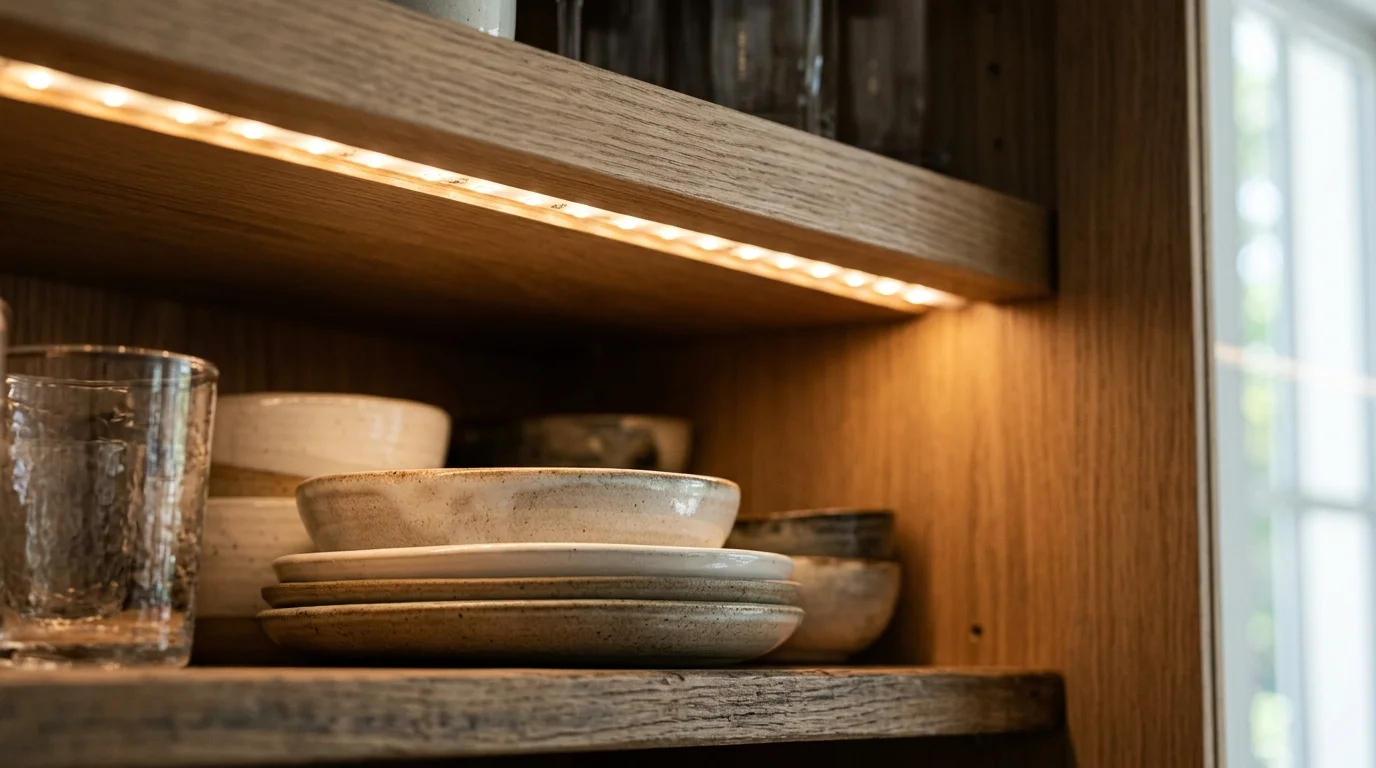
LED strip lights are flexible tape-style strips with surface-mounted diodes. They install along the interior perimeter of a cabinet, typically behind a thin reveal or routed channel so the strip itself is hidden and only the light is visible. Strip lights give more even coverage across a shelf than pucks. For a full-height pantry cabinet or a display cabinet with multiple shelves, strips are usually the better call. Color temperature matters here more than people expect. Warm white (2700K to 3000K) reads natural and flattering in South Florida kitchens. Cool white (4000K and above) looks clinical inside a wood cabinet and ages poorly as a design choice.
Linear bar lights are the premium version of the strip. They are rigid aluminum housings with an integrated LED board, usually surface-mounted or recessed into a routed channel. Bar lights give the cleanest look, the most consistent beam, and the longest lifespan. They cost more and are harder to retrofit, but for a luxury kitchen they are worth the investment.
Dimmer compatibility is something our team always flags early. Not every LED strip or puck light is dimmable. If you want the ability to dial the mood, you need to specify dimmable drivers and compatible wall switches from the start. This is not complicated, but it is easy to miss if you are purchasing components separately without a plan.
Motion-activated options are worth considering for pantry cabinets and lower cabinets. A small PIR sensor wired to the LED circuit turns lights on when the door opens and off when it closes. Clean, functional, and a nice detail that homeowners love after a few weeks of use.
Glass Cabinets and Lighting
Glass-front cabinets and interior lighting are a package deal. One without the other is a missed opportunity. Solid-door cabinets can benefit from interior lighting too, especially for pantry and corner units, but the visual payoff is dramatically higher when light can pass through glass.
The glass type you choose affects the lighting result. Clear glass with puck lights creates a sharp, defined glow. Reeded or fluted glass diffuses the light source and creates a softer, more even backlit look that many designers prefer right now. Frosted glass does the same. If you are going for a dramatic, backlit panel effect, frosted or reeded glass with a strip light behind a reveal is one of the best looks we install.
Cabinet box construction matters here. Plywood interiors hold screws and mounting hardware far better than particleboard. If you are choosing cabinets for a glass-front application with interior lighting, pay attention to what the box is made of. Our overview of MDF vs. plywood vs. solid wood cabinets gets into those differences. A plywood box also handles South Florida humidity better over time, which is relevant when you have electrical components inside the cabinet.
Finish color inside the cabinet is often overlooked. A bright white interior reflects light well and makes the display feel open. A dark interior with puck lighting creates a moody, deliberate look that can be striking. Natural wood interiors warm the light up. Think about what you are displaying and what backdrop serves it best.
For homeowners updating an older kitchen and adding glass fronts for the first time, this upgrade pairs naturally with a broader cabinet refresh. The article on remodeling a 1980s Florida kitchen covers how to modernize dated cabinets without gutting the whole room, including adding glass panels and interior lighting to existing boxes where the construction allows it.
Cost Guide
Pricing for in cabinet lighting in the Palm Beach County market depends on whether you are adding it during a new cabinet installation or retrofitting into existing cabinets. New installation is always cheaper per cabinet because wiring is run before the cabinets go up. Retrofit work involves fishing wires, drilling, and often opening walls or ceilings if the circuit does not already reach the cabinet zone.
These are real ranges from what our crews see on jobs in Boca Raton, Delray Beach, Wellington, and Jupiter. Note that electrical work is your general contractor's scope. The numbers below reflect total project cost for the lighting component, including product, wiring, and installation labor through your GC.
The cheapest path is battery-operated puck lights. They work. But they are not the right answer for a kitchen remodel. They fade, they require constant battery swaps, and they do not look as clean as a hardwired solution. If you are already opening walls and running circuits for a remodel, budget to do it right. The delta between battery and hardwired is modest in the context of a broader project.
Interior cabinet lighting is also worth thinking about as a line item when you are evaluating overall kitchen budget. The kitchen remodel cost guide for Palm Beach County gives broader context for where lighting fits into a full remodel budget.
South Florida Considerations
South Florida has specific conditions that affect in cabinet lighting decisions. Heat and humidity are the biggest factors. LED technology handles both better than older halogen or fluorescent options, which is one reason we have moved entirely to LED recommendations for interior cabinet work. Halogens generate heat inside an enclosed cabinet space. In a Boca Raton summer, that is the last thing you want added to an already warm kitchen.
Humidity inside cabinets near exterior walls can be a real issue in homes in Wellington, Jupiter waterfront properties, and older Delray Beach homes without great vapor control. For those situations, we recommend sealed LED drivers, moisture-resistant strip housings, and checking that cabinet boxes have proper finishes on interior surfaces. A raw particleboard interior absorbs humidity and warps. A sealed plywood interior does not.
Coastal homes also need to think about salt air. Fixtures in open kitchens near water-facing openings can corrode faster than you expect. Specify fixtures rated for damp locations at a minimum, and look for aluminum housings with anodized or powder-coated finishes rather than bare metal.
Many Palm Beach County homes in gated communities and HOA-governed neighborhoods have design review requirements. Interior cabinet lighting does not typically require a permit on its own, since it connects to existing circuits without changing panel capacity or service. But if your project involves any electrical panel work or new circuit runs, your GC will handle that permit process with the relevant municipality. Scope determines what needs review.
For homeowners planning a full kitchen update alongside cabinet lighting, the kitchen cabinet trends for 2026 article covers how interior lighting integrates with current door styles, wood tones, and storage configurations. It is a useful read if you are making cabinet decisions alongside lighting choices.
One more point on glass-front cabinets specifically: the combination of glass fronts and interior lighting is showing up in nearly every mid-range and luxury kitchen we design right now across Palm Beach County. If you are choosing between solid and glass-front uppers, consider that interior lighting dramatically increases the return on the glass-front investment. Without lighting, glass fronts just expose your storage. With lighting, they become a design element. That is a meaningful difference in how the finished kitchen reads.
Our team also pairs interior cabinet lighting conversations with under-cabinet strip lighting planning. The two systems are separate but should be spec'd together so color temperatures match and the overall lighting scheme is cohesive. The under cabinet lighting guide covers that lower zone in detail and is worth reading alongside this article.
Finally, if you are planning a full kitchen refresh and thinking through hardware, door styles, and lighting as a system, the guide to choosing kitchen cabinet hardware is a helpful companion. Hardware finish and lighting color temperature interact more than most homeowners realize. Brass hardware reads very differently under warm 2700K light versus cool 4000K. Plan them together.