Master Bathroom Remodel Ideas for Palm Beach County Homes
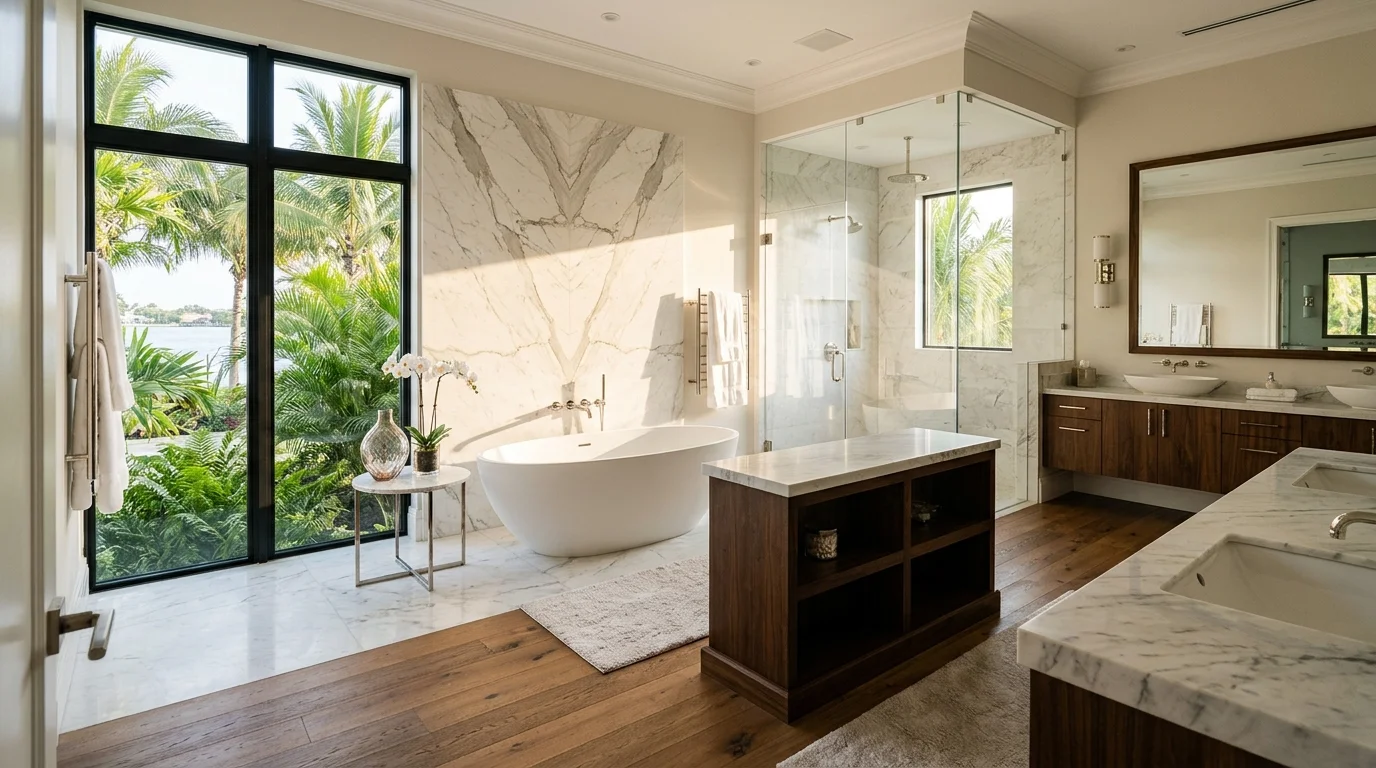
Master bathroom remodel ideas get thrown around constantly on Pinterest and Instagram, but pulling them off in a real Palm Beach County home is a different story. Square footage is fixed. Plumbing stacks don't move without real money. And South Florida's humidity punishes bad material choices fast. At South Florida Kitchen & Bath Design, our crews work on master bathrooms across Boca Raton, Delray Beach, Wellington, Jupiter, and throughout Palm Beach County every week. This guide cuts through the inspiration noise and gives you practical direction on layout, double vanities, walk-in showers, and freestanding tubs, plus what things actually cost here.
Start With Layout: The Decision That Drives Everything Else
Before you fall in love with a freestanding tub or a double vanity from a design magazine, look hard at your existing layout. The single most expensive line item in any master bathroom remodel is moving plumbing. If your GC needs to relocate a drain, stub out a new supply line, or reroute a vent stack, you're adding $2,000-$6,000 to the project before a single tile goes up. We always tell homeowners: work with the plumbing footprint when you can.
Most master baths in Palm Beach County homes built between 1985 and 2005 follow a predictable pattern, a double vanity on one wall, a toilet compartment, a tub/shower combo on the back wall. The tub/shower combo is almost always the first thing homeowners want to split into separate fixtures. That's a reasonable upgrade, but it requires your GC to plan the drain locations carefully before our team can design the shower pan and tile layout around them.
The three layout moves we see most often in master bathroom renovations here:
- Convert a tub-shower combo into a standalone walk-in shower plus a freestanding tub. Works well when the room is at least 80-90 square feet. The existing drain location often stays put for the shower; the tub gets a new supply and drain stub in a different spot.
- Expand into an adjacent closet. Common in older homes in Boca Raton and Delray Beach where the master closet sits directly against the bathroom wall. Recaptured square footage can add room for a larger vanity or a wet room configuration. Your GC handles the structural wall work.
- Rethink the toilet compartment. Private water closets add real value. If you have 10-12 inches of depth to work with, enclosing the toilet with a short wall or full partition makes a huge difference in how the space feels.
Get the layout locked before anything else. Every other decision, vanity size, shower footprint, tub placement, flows from it.
Double Vanity Design: Size, Style, and What to Avoid
A double vanity is the most requested feature in master bathroom remodels across Palm Beach County. And for good reason. Shared sink space causes daily friction; two sinks and adequate counter space on each side solves it. But we see a lot of homeowners size the vanity wrong, and it creates problems that are hard to fix after the fact.
Standard double vanity widths run 60 inches to 72 inches. That gives each person roughly a 30-36 inch zone, which works. Go below 60 inches and you've essentially built a wide single vanity with two small bowls crammed in. Go above 84 inches and you need to make sure the room can physically accommodate the run without blocking the door swing or the toilet compartment entry.
For vanity height, the old standard was 32 inches. We recommend 36 inches for most adults, it's a more comfortable working height and it matches the ergonomics of a kitchen counter. If you're designing with future needs in mind, our article on aging in place bathroom design covers height, clearance, and grab bar blocking in detail.
Cabinet style matters a lot in South Florida's climate. Frameless construction with a moisture-resistant cabinet box holds up better than traditional framed cabinetry in high-humidity environments. A floating vanity, wall-mounted with open floor space beneath, also makes cleaning easier and gives the room a more open feel. Take a look at our floating vanity bathroom ideas for specific configurations that work well in Palm Beach County homes.
For countertop material on a double vanity, we recommend quartz over marble for most households. Marble looks incredible but it etches and stains with daily use, toothpaste, face wash, and haircare products are brutal on a polished marble surface. A white or light-veined quartz gives you the look with far less maintenance. If you want the real stone feel, a honed quartzite is a middle ground we genuinely like for master baths.
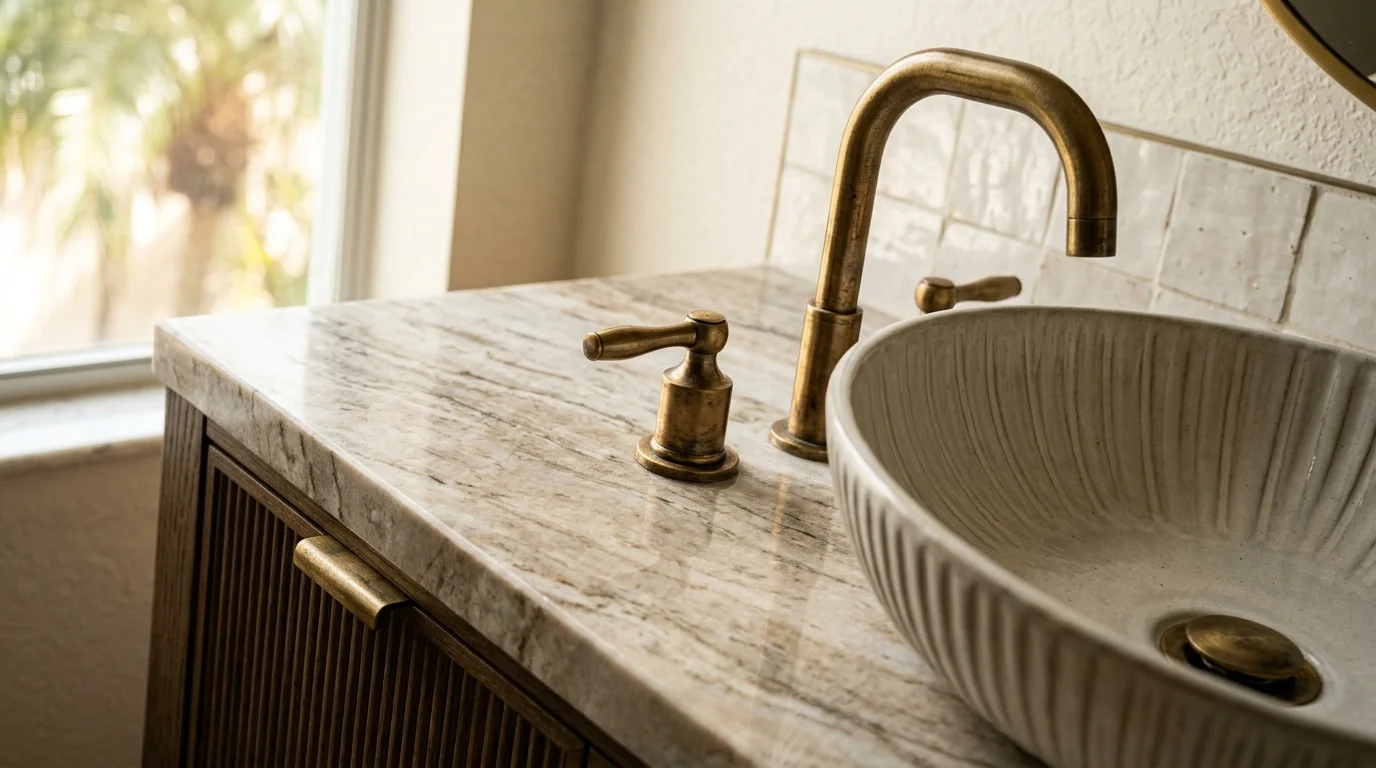
Fixtures finish the vanity. Matte black and brushed nickel remain the most popular choices in the communities we work in. Unlacquered brass and warm gold tones are gaining ground in higher-end projects in Jupiter and North Palm Beach. Whatever finish you choose, keep it consistent across all fixtures in the room, faucets, shower hardware, towel bars, and robe hooks. Mixing finishes without intention looks unplanned.
For more direction on fixture choices, our guide to bathroom vanity ideas for Palm Beach County remodels covers styles, storage configurations, and material options in detail.
Walk-In Shower Ideas That Actually Work in South Florida
The walk-in shower is where most of the design energy goes in a master bathroom remodel. It's also where most of the budget risk lives if it's not planned correctly. Waterproofing failures, grout that grows mold in six months, tile that looks dated in three years, these are all avoidable with the right choices up front.
Size first. A comfortable walk-in shower starts at 36x36 inches, but that feels cramped for most people. We prefer a minimum of 42x48 inches for a primary shower, and 60x36 inches or larger is where the experience really opens up. If you're designing a zero-threshold entry for accessibility or just a cleaner aesthetic, the shower floor needs to drain properly, your GC needs to establish the correct slope before our team sets tile.
Tile selection is where the visual impact comes from. Large format porcelain tile, 24x48 or 24x24 slabs, reads as high-end and has fewer grout lines to maintain. We like them for shower walls in master baths. For the floor, a textured or matte-finish tile in a smaller format gives better slip resistance. Glossy large-format tile on a shower floor is a liability. Our guide to best tile for shower walls in Florida's humid climate explains the porosity, slip ratings, and maintenance differences worth knowing.
Niche placement matters more than most homeowners realize. A recessed shower niche needs to land between studs, and in a tiled shower, it needs to be waterproofed and back-buttered the same as every other surface. Our team designs niches into the layout from the start, not as an afterthought. Horizontal niches at elbow height on the long wall are the most practical. Vertical niches are a design statement but hold fewer products.
Frameless glass enclosures are standard in master bath remodels at mid-range and above. A 3/8-inch tempered glass panel with a minimal hardware profile looks clean and makes the tile work the star. Semi-frameless works fine too and costs less. Framed shower doors are harder to justify aesthetically in a full master bath remodel at this price point.
Proper waterproofing underneath everything is non-negotiable in Florida. We use a full membrane waterproofing system, Schluter Kerdi or a comparable liquid membrane, on every shower project. If you want to understand why this matters so much here, read through our bathroom waterproofing guide for Florida homes. The short version: South Florida's humidity and temperature swings create conditions that punish any shortcut in the waterproofing layer.
Freestanding Tub: When It Makes Sense and When It Doesn't
A freestanding tub is the most visually dramatic element you can add to a master bathroom. It also gets used the least of any fixture in the room for most households. That's not a reason to skip it, it's a reason to be clear-eyed about why you want one before you spend $1,500-$6,000 on the tub itself plus plumbing rough-in costs.
The case for a freestanding tub is straightforward in the Palm Beach County market: it photographs beautifully, it reads as a luxury feature to buyers, and for homeowners who actually use a soaking tub, there's nothing better. If resale is part of your thinking, a freestanding tub in a well-designed master bath adds perceived value, particularly in Wellington equestrian neighborhoods, Jupiter waterfront homes, and higher-end Boca Raton communities where buyers expect the feature.
The case against is equally straightforward. Freestanding tubs require floor-mounted filler faucets or wall-mounted tub fillers, both of which need supply lines stubbed out in specific locations determined before tile goes down. Change your mind about tub placement after rough-in, and you're tearing up tile. They're also harder to get in and out of than a traditional built-in tub, which matters as homeowners age.
Material choices for freestanding tubs include acrylic (lightweight, affordable, retains heat reasonably well), cast iron (heavy, requires floor reinforcement in some cases, excellent heat retention), and composite stone resin (the look of stone at lower weight). Acrylic is our most commonly specified option in the $5,000-$15,000 total tub installation range. Cast iron makes sense in larger, luxury projects where weight isn't a constraint.
Placement: center the tub in front of a window when possible. It's the classic composition for a reason, natural light, a view, and the tub as a visual anchor. If no window is available, placing the tub against the wall opposite the shower creates a balanced layout. Just make sure there's a minimum of 24 inches of clearance on each side for access and cleaning.
Our detailed comparison of freestanding tub vs built-in options covers resale value data, pros and cons by material, and cost breakdowns if you want to dig deeper on this decision.
Master Bathroom Remodel Cost Guide for Palm Beach County
These are real numbers from our projects across Palm Beach County, not national averages. Material costs, labor rates, and permitting here run higher than most online sources suggest. Use these ranges as a starting framework, not a final budget. Every project has variables: existing plumbing locations, tile selections, fixture grades, and scope of work your GC handles separately.
For a full breakdown by city, our bathroom remodel cost Palm Beach County guide covers pricing across the region in detail.
Permits are scope-dependent. If your project involves relocating the tub drain, moving the shower to a new wall location, or running new electrical circuits for heated floors, your GC will handle permitting through the Palm Beach County Building Division. A finish-only update, new tile over existing, vanity swap in the same footprint, countertop replacement, typically does not require a permit. When in doubt, ask your GC to confirm scope before work starts.
Hidden costs catch a lot of homeowners off guard. Old drywall behind existing tile that's been wet for years often needs to be replaced with cement board. Outdated GFCI wiring that doesn't meet current code gets flagged during an electrical inspection. Shower pan liners that failed years ago but never caused visible damage. Budget a 15-20% contingency on any master bathroom remodel where you're getting into the walls. Our guide to hidden costs in bathroom remodels gives you a full list of what to watch for.
South Florida Considerations: What Makes Our Market Different
Palm Beach County bathrooms face conditions that most of the country doesn't deal with. Humidity that rarely drops below 60% even in winter. Salt air in coastal communities from Jupiter down through Boca Raton. Water that's high in mineral content and leaves calcium deposits on fixtures and glass in a matter of weeks. These aren't reasons to scale back your master bathroom remodel, they're reasons to make smarter material choices.
Grout is the first casualty of bad material choices in Florida bathrooms. Sanded grout in a shower that isn't properly sealed grows mold fast. We specify unsanded grout or an epoxy grout in shower applications and seal everything before handoff. That said, the grout is only as good as the waterproofing membrane underneath it. Don't let anyone skip that step to save money.
Ventilation is underrated. A properly sized exhaust fan, at least 1 CFM per square foot of bathroom, vented to the exterior not the attic, is standard on every project we work on. South Florida code requires exterior venting. An undersized or improperly terminated fan is one of the most common causes of persistent moisture problems in local master baths. Your GC handles the venting rough-in; make sure it's on the scope.
For tile, porcelain outperforms ceramic in high-humidity environments. The lower water absorption rate matters here. Our breakdown of porcelain vs ceramic tile for South Florida bathrooms explains the technical differences and where each makes sense. The short answer: use porcelain for floors and shower surrounds, and don't cut corners on rectified edges if you're going large format.
Coastal communities have an additional concern: salt air accelerates corrosion on metal fixtures. If your home is within a mile of the water in Juno Beach, Jupiter, or along the Intracoastal in Boca Raton, specify marine-grade or PVD-coated fixtures. Standard chrome and even brushed nickel can show corrosion within a year or two in those environments. Matte black PVD and brushed gold PVD finishes hold up significantly better.
HOA and ARB requirements apply to a surprising number of master bathroom remodels in Palm Beach County's gated communities and planned developments. If your project involves changes visible from outside, new window placement, for example, your GC or homeowner association liaison needs to confirm approval before work begins. Our crews are familiar with the process in communities throughout Wellington, Boca Raton, and Palm Beach Gardens.
If your project scope leans toward a high-end finish package, our luxury bathroom remodel ideas for Palm Beach County article covers the premium materials, brands, and design moves worth considering at that budget level. And if you want a broader look at what's trending right now in bathroom design, the bathroom remodel ideas for 2026 guide is a good companion read.
According to Remodeling Magazine's Cost vs. Value report, a midrange bathroom addition recoups roughly 35-55% of cost at resale nationally, but in South Florida's competitive real estate market, a well-executed master bath remodel on a home in the right price bracket often performs better than that average, particularly when the project includes a walk-in shower, double vanity, and updated finishes throughout.