Beadboard & Louvered Cabinet Doors: Coastal Detail Done Right
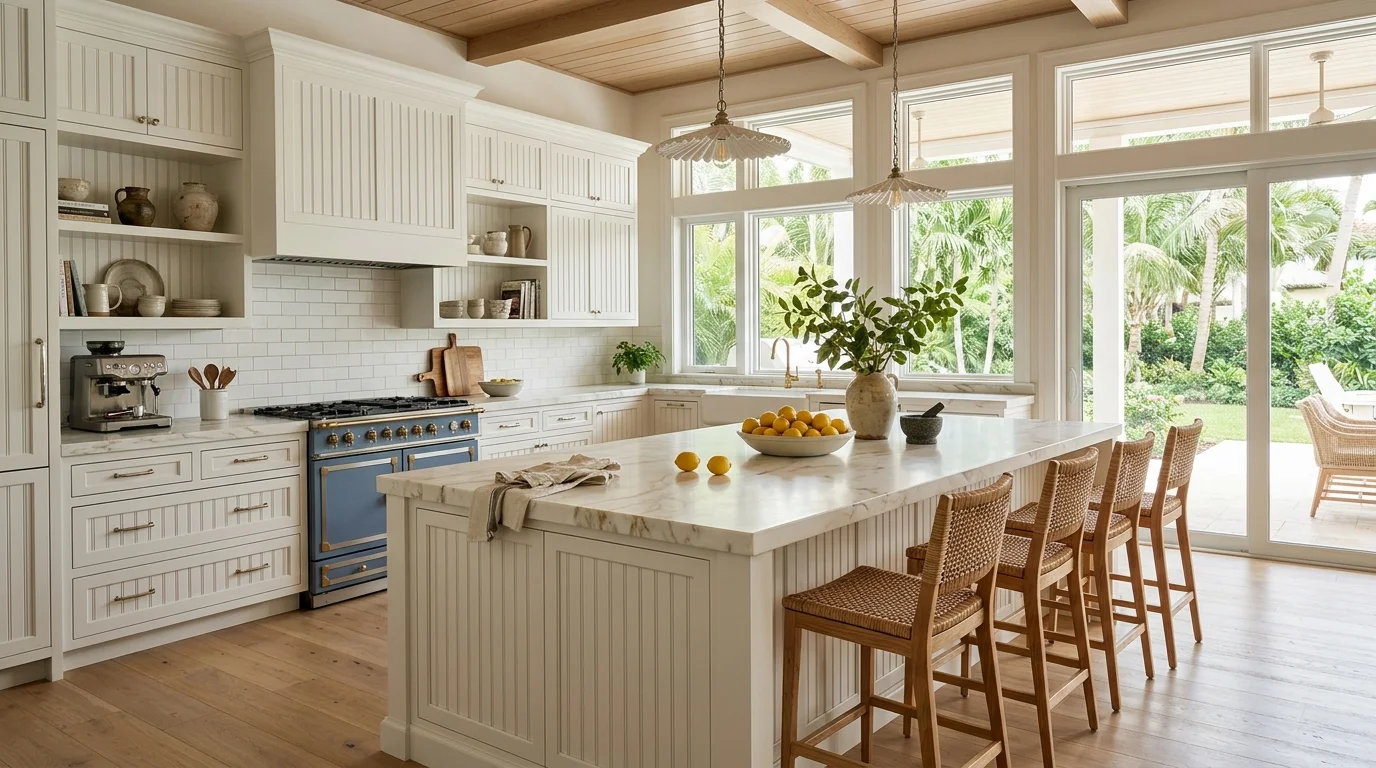
Beadboard cabinet doors are one of those details that immediately read as coastal, traditional, or cottage without being costume-y about it. Here in Palm Beach County, where homes in Delray Beach, Jupiter, and Wellington range from Old Florida cottages to newer Mediterranean builds, this door style keeps showing up in remodels for a good reason: it works. Whether the project is a full kitchen overhaul or a bathroom vanity swap, beadboard and louvered cabinet doors add texture and character that flat-panel or even standard shaker doors just don't deliver. This guide covers what each style actually is, where each belongs, what they cost in the South Florida market, and the material choices that hold up in our humidity.
What Beadboard & Louvered Doors Actually Are
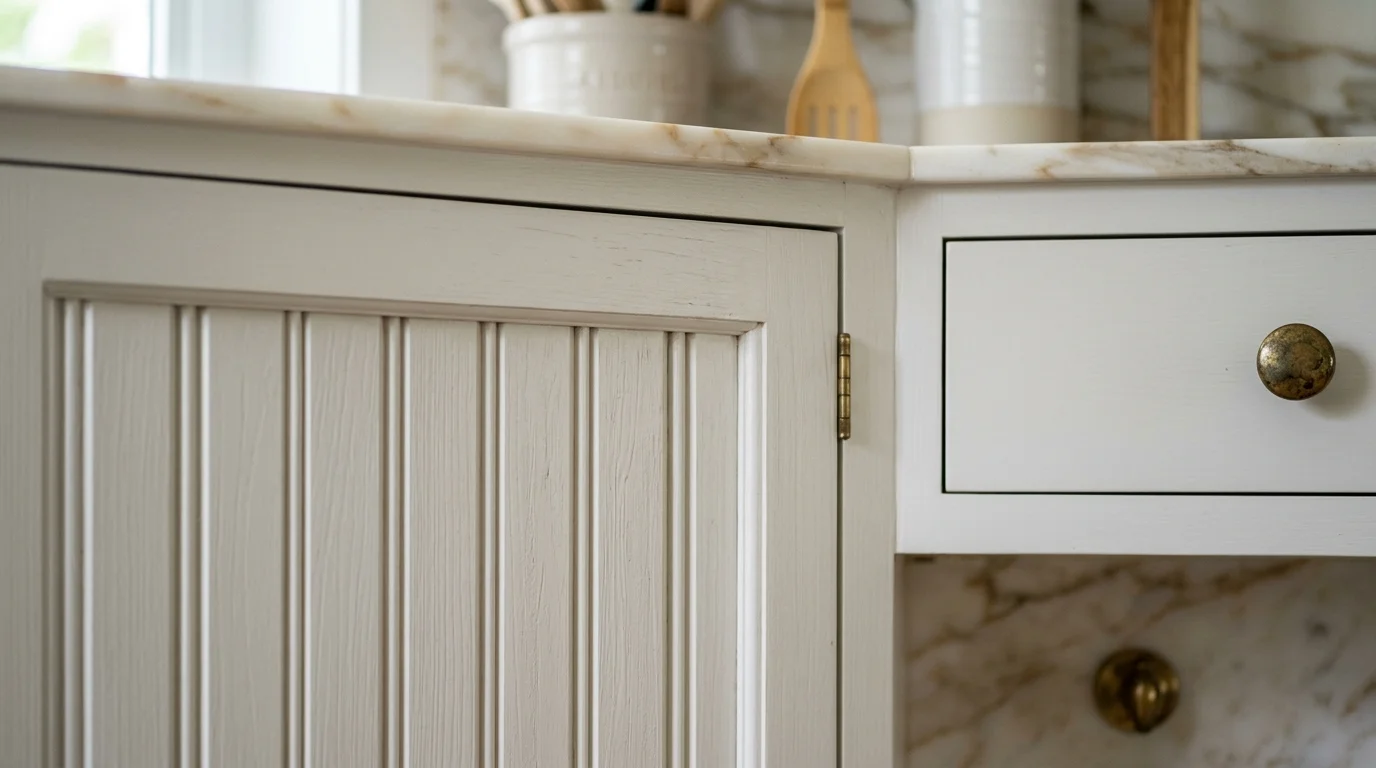
Beadboard cabinet doors feature a raised panel insert made from narrow vertical planks separated by small rounded grooves, called beads. The result is a ribbed, textured surface that looks hand-crafted even when it comes from a semi-custom line. Traditionally this was tongue-and-groove wood. Today most cabinet manufacturers produce it as a routed MDF panel or a true wood-frame door with a beadboard plywood center, and both versions are widely available through semi-custom and custom lines.
Louvered cabinet doors are a different animal. Instead of a solid or beaded panel, the insert is a series of angled horizontal slats, like mini plantation shutters built into the door frame. They let air circulate through the cabinet, which is the whole point historically. They also create a very specific visual rhythm, tight and geometric, that reads as tropical, British Colonial, or Old Florida depending on the finish you put on them.
Both styles belong to the broader world of raised-panel and decorative insert doors. If you want a fuller picture of how they stack up against shaker, flat-front, and other options, our guide to cabinet door styles is a good place to start. But if you already know you want that coastal texture, keep reading.
One thing worth saying clearly: these are not budget-only or luxury-only options. We see beadboard doors on painted maple in a $20,000 kitchen refresh and on custom alder in a $90,000 whole-home remodel. The door style itself doesn't determine the price tier. The box construction, finish, and hardware do.
Beadboard vs. Louvered: Which One Fits Your Home?
Our crew gets asked this constantly, so here is the honest take.
Beadboard doors are more versatile. They pair easily with shaker uppers, glass-front cabinets, or even a more transitional flat-panel design on an island. The texture is subtle enough that it doesn't fight the rest of the room. They work in kitchens, bathroom vanities, built-ins, and mudrooms. Paint them white or a soft coastal color and they look right at home from Boca Raton to the Intracoastal waterfront in North Palm Beach. If you are remodeling a 1980s Florida home and want to move toward a more timeless coastal aesthetic, beadboard door inserts on painted cabinetry are one of the most effective single changes you can make. We've covered that kind of update in detail in our article on remodeling a 1980s Florida kitchen.
Louvered doors are a stronger design statement. They have a very specific personality. Done well, they look elegant and intentional. Done carelessly, they look like an afterthought from a hotel bar. We recommend them in a few specific scenarios: a kitchen or butler's pantry where you want air circulation around a pantry cabinet or appliance garage, a bathroom vanity where the aesthetic skews British Colonial or tropical traditional, or an accent bank of lower cabinets paired with solid upper doors. Using louvered doors on every cabinet in a kitchen usually feels like too much. A few strategic doors, particularly on a pantry tower or a furniture-style base cabinet, land much better.
We recommend beadboard over louvered for most kitchens in the Palm Beach County market, because beadboard reads as coastal without locking you into a single historical style. Louvered doors are a deliberate commitment to a specific look, and that's perfectly fine as long as you know that going in.
Both styles look their best with the right hardware. Bin pulls in brushed brass or oil-rubbed bronze, cup pulls on drawers, or simple round knobs all complement the textured panel without competing with it. Our guide to choosing kitchen cabinet hardware gets into the specifics of matching finish and style.
Where to Use Them in Your Kitchen or Bath
Placement matters as much as the door style itself. Here's how our team typically approaches beadboard and louvered doors in actual projects across South Florida.
Kitchen lowers with solid or glass uppers. This is the most common configuration we use. Beadboard lower doors add visual weight and texture at eye level when you're seated or working at the counter, while cleaner upper doors keep the room from feeling cluttered. It's a smart way to introduce the coastal detail without overwhelming the space.
Island accent. A kitchen island with beadboard panels on the end caps and base doors, painted a contrasting color to the perimeter cabinets, creates a furniture-like focal point. This works especially well in open-concept layouts where the island is visible from the living area. Pair this with a two-tone cabinet approach for a look that feels intentional rather than mismatched.
Pantry tower or appliance cabinet. Louvered doors shine here. A floor-to-ceiling pantry with louvered doors provides natural ventilation for dry goods and creates a strong vertical design statement. In Wellington and Jupiter homes with larger kitchens, we often pair a louvered pantry tower with shaker perimeter cabinets for contrast that works.
Bathroom vanity. Both door styles translate well to bathroom cabinetry. Beadboard vanity doors in a coastal bathroom, paired with a marble-look countertop and nickel or brass fixtures, are one of the most requested looks we see from Delray Beach homeowners redoing a primary or guest bath. Louvered doors on a vanity work in a more tropical or British Colonial bathroom scheme. Either way, the door detail can anchor the room's whole personality.
Built-ins and mudrooms. Beadboard cabinet doors on a built-in bench with storage below, or on a mudroom locker system, give the piece a custom millwork quality without the full custom price tag.
One thing to avoid: mixing beadboard and louvered doors in the same cabinet run. They both create horizontal or vertical rhythm, and when placed side by side they compete rather than complement. Pick one or the other for each zone of a kitchen or bath, and keep the other as a separate accent application if you want both in the same space.
For coastal kitchens specifically, beadboard doors pair naturally with subway tile or zellige backsplashes, shiplap accents, and light stone countertops. Our full breakdown of coastal kitchen design ideas for South Florida shows how these elements work together across different layout types.
Cost Guide
What beadboard and louvered cabinet doors cost in Palm Beach County depends heavily on whether you're doing a door-only swap, a cabinet refacing project, or a full cabinet replacement. Here's how the numbers break down in our current market.
Door-only replacements, where the existing cabinet boxes stay and only the doors and drawer fronts are swapped, are the most affordable path. This is a good fit for homeowners who like the layout and box condition of their current cabinetry but want to change the look entirely. A typical 10x10 kitchen with beadboard doors in painted MDF or painted maple runs $2,800-$5,500 for the doors and drawer fronts alone, not including installation or hardware. Custom solid wood doors in alder, cherry, or painted poplar run higher, $4,500-$8,000 for the same scope.
Louvered doors cost more to produce than beadboard because the slat assembly requires more precise joinery. Expect to add 15%-25% over equivalent beadboard pricing for the same door count.
Full cabinet refacing, where you replace the doors, drawer fronts, and reface the exposed cabinet boxes with a matching veneer or laminate, runs $6,000-$14,000 for a typical kitchen. That range reflects the difference between painted MDF beadboard and custom hardwood. Our detailed article on cabinet refacing cost in Palm Beach County breaks this down further.
If you're doing a complete kitchen cabinet replacement with beadboard or louvered doors, the cost sits within the same tiers as any other door style, because the door profile is only one line item in a larger cabinet package.
Hardware is separate from all of these ranges. Budget $8-$35 per piece for quality pulls and knobs from brands like Amerock or Hickory Hardware, and $35-$120 per piece for unlacquered brass or custom forge finishes. On a full kitchen, hardware alone can run $400-$1,800 depending on count and finish choice.
Permits are not typically required for a door swap, refacing, or cabinet replacement that stays on the existing footprint with no plumbing, electrical, or gas work involved. If your remodel does include moving a sink, adding circuits, or reconfiguring the layout, your general contractor will determine what permits are needed through Palm Beach County Building Division. For a full overview of when permits come into play, see our kitchen remodel permit guide for Palm Beach County.
South Florida Considerations
Humidity is the first conversation we have with homeowners in Palm Beach County who fall in love with beadboard or louvered doors. Florida's climate is not forgiving to wood that hasn't been properly specified, finished, and installed.
Solid wood beadboard panels, the true tongue-and-groove variety, can expand and contract with seasonal humidity swings. In a coastal home in Jupiter or along the Intracoastal in Delray Beach, that movement is enough to cause cracking in the finish over time if the doors aren't built to accommodate it. This is why we typically recommend routed MDF beadboard inserts inside a solid wood or engineered wood door frame for painted applications. MDF doesn't move the way solid wood does, the paint finish holds longer, and the visual result is identical. For a stained wood application, you need an actual wood panel, and in that case we specify kiln-dried hardwood with a proper sealer and discuss the maintenance expectations upfront.
Louvered doors have a different humidity challenge. The individual slats are thin, and if they're solid wood in a high-humidity environment without proper climate control, they can warp or bind over time. Our team specifies louvered doors in painted MDF or a composite material for most South Florida applications unless the home is well air-conditioned and the cabinet location isn't near a range, dishwasher, or exterior wall. For a bathroom vanity with louvered doors, we lean toward a catalyzed finish on a hardwood species, which holds up much better against steam and humidity than a standard paint. The Woodwork Institute publishes finishing specifications that inform how quality cabinet shops approach humid environments, and it's worth knowing that those standards exist when you're comparing quotes.
Finish choice matters as much as material here. A standard latex paint on MDF beadboard doors in a kitchen near Boca Raton will perform fine with normal care. But if you want the doors to hold up for 15 years without chalking, yellowing, or peeling, a catalyzed conversion varnish or a two-part polyurethane finish is worth the added cost. Most quality cabinet shops in South Florida offer this. Ask specifically about the finish system, not just the paint brand, when you're getting quotes.
Salt air is a real factor for homes within a mile of the coast. The hardware you choose on beadboard and louvered doors should be rated for coastal environments. Solid brass, stainless steel, or zinc-based hardware with a quality plating process will outlast cheaper options significantly. We see too many beautiful cabinet jobs in Palm Beach County where the owner went budget on hardware and had to replace corroded pulls within three years.
Finally, warping is the most common complaint we hear about louvered doors in particular. It's almost always traced back to improper construction, low-quality slat material, or installation in a location with direct moisture exposure. If you've already got a warped door situation, our guide on how to fix a warped cabinet door covers the repair options. But the better move is specifying it right from the start.
The bottom line on South Florida and these door styles: beadboard and louvered cabinet doors absolutely work here. Our crews install them throughout Palm Beach County every month. The keys are the right material for the application, a proper finish system, quality hardware, and a realistic conversation about maintenance. Get those four things right and these doors will look great for a long time.