Biophilic Kitchen Design: Bring Nature Indoors
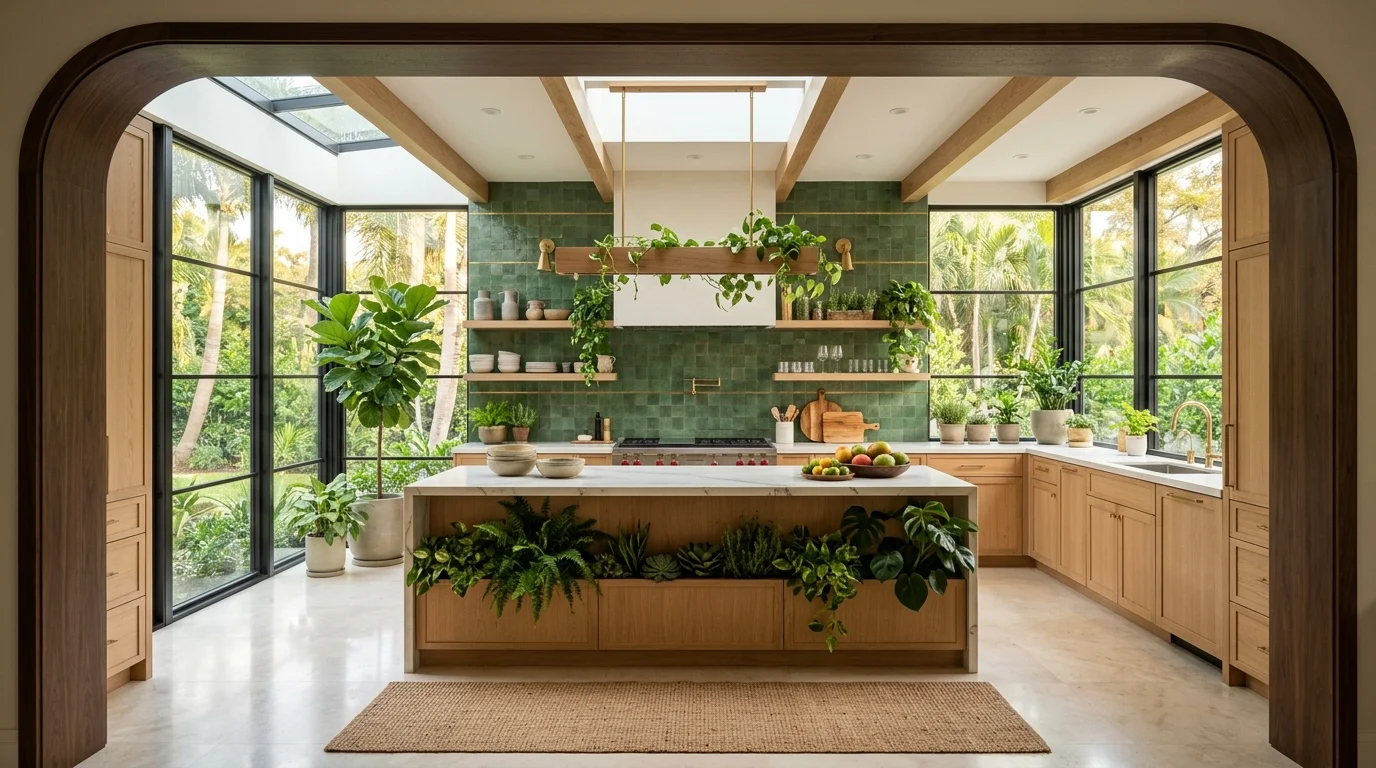
Biophilic kitchen design is one of the most requested directions we hear from homeowners across Palm Beach County right now. And honestly, it makes complete sense for South Florida. We already live in one of the most naturally beautiful climates in the country. The goal of biophilic design is to bring that outside world into your kitchen through natural materials, abundant light, living plants, and textures that feel organic rather than manufactured. When it's done right, the kitchen stops feeling like a utility space and starts feeling like a place you actually want to spend time in.
What Is Biophilic Kitchen Design?
The term comes from the concept of biophilia, the human instinct to connect with nature. In architecture and interior design, biophilic principles translate into spaces that use natural light, natural materials, organic shapes, and living elements to reduce stress and improve how a room feels to inhabit. The International WELL Building Institute has studied the connection between nature-integrated spaces and measurable improvements in wellbeing, and that research has steadily influenced residential kitchen design over the past decade.
For kitchens specifically, biophilic design shows up in several concrete ways. Wood-toned cabinetry. Stone countertops with visible veining. Large windows or skylights. Herbs and trailing plants integrated into the layout. Matte, textured finishes rather than high-gloss synthetic surfaces. Earth tones on cabinet faces. The idea is not to make your kitchen look like a greenhouse. It is to make the space feel grounded, calm, and connected to the world outside your walls.
What we find in practice is that most homeowners are already drawn to these elements. They just don't have a name for it. Someone tells us they want warm wood cabinets, a stone countertop that looks almost geological, and a spot over the sink where they can keep herbs. That is biophilic kitchen design. We help them execute it in a way that holds up to South Florida heat, humidity, and daily use.
Biophilic kitchens pair naturally with other design directions. If you are curious how the approach intersects with minimalist aesthetics, our guide on warm minimalism kitchens covers exactly that overlap.
Wood, Stone and Natural Materials
Materials are where biophilic kitchen design lives or dies. The wrong choices look forced. The right ones feel inevitable.
Wood cabinetry is the most direct expression of biophilic design in a kitchen. We recommend real wood stain finishes over painted cabinet faces for this aesthetic. Rift-cut white oak is especially popular right now, and for good reason. The grain is linear, calm, and architectural without being fussy. Quarter-sawn maple and hickory both work well too. What matters is that the wood grain is visible, honest, and allowed to be the focal point. Our article on natural wood kitchen cabinets in South Florida goes deeper on species selection and what holds up in our climate.
For countertops, we lean toward natural stone over engineered quartz when the budget allows. Quartzite is our top recommendation for a biophilic kitchen. It has the visual warmth and geological character of marble with significantly better durability. Taj Mahal quartzite in particular, with its soft cream and gold veining, reads as genuinely organic. Granite in leathered or honed finishes is another strong choice. The leathered finish adds tactile texture that polished stone lacks, which matters in a biophilic context. Our guide to leathered granite explains what that finish involves and how to care for it.
If the budget does not stretch to full stone slabs, wood-look porcelain tile on the floor can carry the natural material story without the maintenance demands of real wood in a wet kitchen environment. Kitchen flooring options with their pros and cons breaks down the full range of choices available to Palm Beach County homeowners.
Backsplash material is another layer. Zellige tile, with its hand-made imperfection and slight variation in glaze, fits perfectly in a biophilic kitchen. So does natural stone mosaic tile, or even a slab backsplash in the same quartzite as the countertop. What we steer away from in this aesthetic is anything that reads as overly industrial or perfectly uniform. Nature is not perfectly uniform, and your backsplash should reflect that.
Hardware choices matter more than people expect. Unlacquered brass ages like a natural patina. Matte black is acceptable. Brushed nickel works. Chrome does not belong in a biophilic kitchen. The goal is finishes that look like they could have come from the earth rather than a factory floor.
Natural Light and Living Greenery
Natural light is the single most powerful biophilic tool in any kitchen. No amount of wood or stone will make a dark kitchen feel connected to nature. Light is non-negotiable.
In South Florida, we are lucky. The sun is aggressive and consistent. The challenge is managing it, not hunting for it. For kitchens facing east or south, the goal is to maximize the opening while controlling glare and heat gain. Casement windows above the sink are a classic approach. Clerestory windows or a solar tube skylight can flood a galley or interior kitchen with natural light without sacrificing wall space. Impact-rated sliding glass doors that open to a lanai or outdoor kitchen area blur the line between inside and outside, which is a core biophilic goal.
When natural light is limited, artificial lighting strategy matters. Warm-toned LEDs in the 2700K-3000K range feel far more natural than cooler white light. Under-cabinet lighting with a warm tone keeps the work surface feeling connected to the rest of the room. Pendant lighting over an island should use fixtures with organic shapes, rattan, ceramic, or aged metal rather than stark industrial steel.
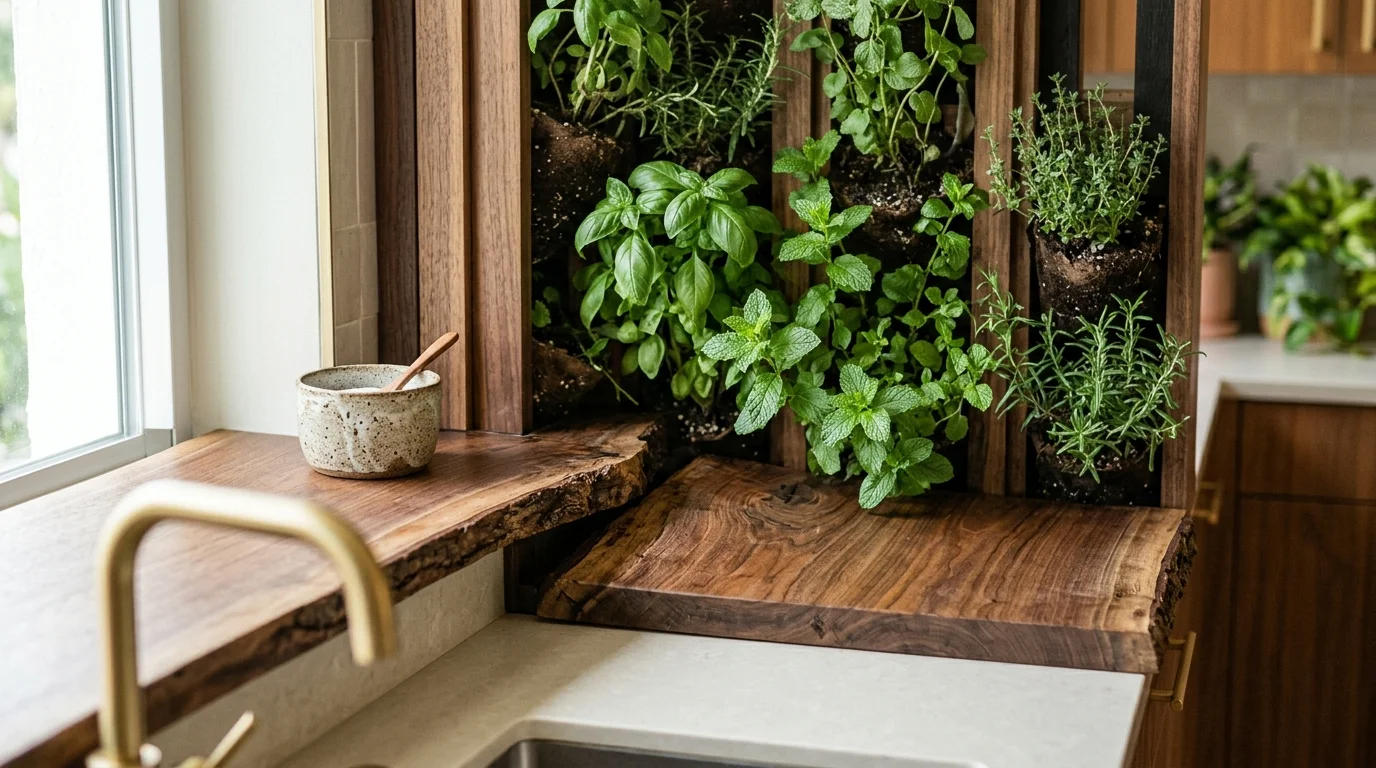
Plants deserve a real plan, not an afterthought. A single small succulent on a windowsill does not read as biophilic design. We are talking about a dedicated herb strip integrated into the upper cabinet layout near the cooking zone, a trailing pothos on a floating shelf, or a large-leaf tropical plant in a floor planter near the dining side of an open kitchen. South Florida gives you a natural advantage here. Many plants that struggle in colder climates thrive in our humidity and light. Golden pothos, monstera, snake plants, and ferns all work well in kitchen environments.
Built-in plant integration takes it further. Some of our clients in Delray Beach and Jupiter have incorporated a dedicated open shelf section between upper cabinets specifically sized for a row of terracotta herb pots. Others opt for a hanging rail system below upper cabinets on one wall. These elements are designed into the cabinet layout from the start, not squeezed in after the fact. That is the difference between intentional biophilic design and decoration.
Open shelving in a biophilic kitchen should display objects that reinforce the nature connection. Ceramic vessels, wood cutting boards, woven baskets for bread storage, linen dish towels. If your shelves end up holding mismatched plastic containers and appliance packaging, the whole effect falls apart. Our take on open shelving in the kitchen covers the honest trade-offs you should consider before committing to that look.
Color palette is worth addressing here as well. Biophilic kitchens live in earth tones. Warm whites, creams, greens, terracottas, ochres, and taupes. Cabinet colors like sage green and warm olive tie the palette directly to natural landscapes. We have written specifically about sage green kitchen cabinets if that direction interests you. For a more complete look at where color is heading, our kitchen color trends for 2026 article shows warm neutrals and green tones dominating the conversation right now, which lines up directly with biophilic design principles.
Cost Guide: Biophilic Kitchen Remodel in Palm Beach County
A biophilic kitchen remodel costs roughly the same as any kitchen remodel at the same scope level. The material choices are what shift the budget. Natural stone costs more than engineered quartz. Real wood cabinet finishes cost more than painted MDF. High-quality organic-shaped fixtures cost more than basic hardware-store picks. Here is how the numbers shake out for Palm Beach County homeowners.
The material upgrades that move a standard remodel into biophilic territory are not necessarily budget-busting. Choosing a wood stain over paint on the same cabinet box adds relatively little. Selecting a quartzite slab instead of a base-level quartz adds cost per square foot but is well within reach at mid-range budgets. The bigger investment is usually lighting and built-in plant integration, which require more design planning upfront. For a broader look at how kitchen remodel budgets shake out in our market, see our Palm Beach County kitchen remodel cost guide.
South Florida Considerations for Biophilic Kitchens
South Florida is both the best and most demanding environment for biophilic kitchen design. The climate gives you extraordinary natural beauty to draw from. It also throws real durability challenges at the materials you choose.
Humidity is the first consideration. Real wood cabinetry in solid wood construction can expand and contract with seasonal humidity swings in Palm Beach County, particularly in homes without consistent air conditioning or in older houses that run warm in summer. Plywood-box construction handles this better than solid wood box construction. Thermally fused or UV-primed finishes on wood cabinet faces resist moisture penetration better than raw stain alone. This matters most in homes near the water in Jupiter, Juno Beach, or coastal Boca Raton, where salt air compounds the humidity challenge.
Natural stone requires maintenance that homeowners need to understand before committing. Quartzite and granite both need periodic sealing, typically once a year for kitchens with heavy use. Marble, while gorgeous, is porous and acid-sensitive, which makes it a harder choice for a working kitchen surface. We lean toward quartzite as the biophilic stone choice precisely because it delivers the natural visual drama of marble with better durability. If you are seriously considering marble, read through our honest assessment of marble countertop pros and cons for Florida kitchens before making a decision.
Plants need a maintenance plan. The kitchens in Wellington and Delray Beach that look stunning in design photos are the ones where someone actually tends the plants regularly. Overwatered herbs rot. Underwatered trailing plants go crispy. If the homeowner is not genuinely interested in caring for live plants, we recommend leaning harder on the material palette and skipping the plant integration rather than adding elements that will look neglected within six months.
Permits are scope-dependent on any kitchen remodel. A material refresh involving new cabinets, countertops, and backsplash on the existing layout typically does not require permits. If the project moves the sink location, relocates the dishwasher, adds or modifies gas lines, or opens walls, your general contractor will need to pull the appropriate permits through Palm Beach County. We handle the design and installation of cabinetry, countertops, and tile. Structural, plumbing, or electrical changes fall under your GC's scope.
HOA and ARB considerations apply in many of the gated communities across Palm Beach County, from Broken Sound in Boca Raton to Ibis in West Palm Beach. Interior kitchen changes rarely require HOA approval, but if your biophilic kitchen design involves changing windows or exterior-facing elements, your GC will need to navigate that process. We provide design drawings and material samples to support whatever approval package is needed.
One final note specific to our climate: biophilic design works exceptionally well when the kitchen opens to an outdoor cooking or dining area. South Florida's year-round outdoor season means an indoor kitchen that visually and physically connects to a covered lanai or outdoor kitchen creates a genuinely biophilic living experience. That indoor-outdoor connection is something we design for intentionally, and it costs nothing extra when it is built into the layout from the start.