Two-Tone Countertops: Island vs. Perimeter
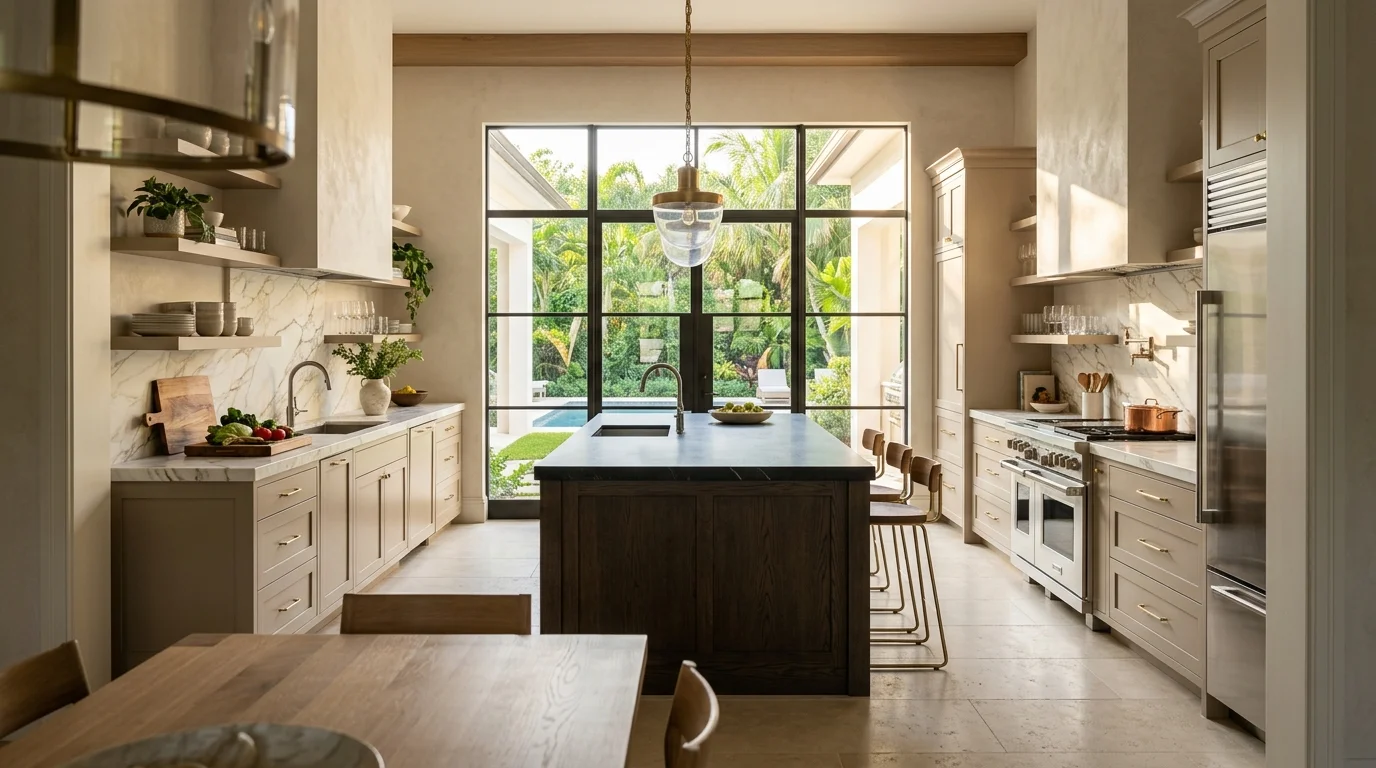
Two tone countertops are one of the smartest design moves you can make in a kitchen remodel. The concept is straightforward: use one material on the perimeter counters and a different material on the island. But executed well, the result is a kitchen that looks custom-designed, balanced, and expensive. We see this approach constantly in homes across Palm Beach County, from modern builds in Wellington to coastal renovations in Delray Beach and Jupiter. The perimeter stays neutral and grounded. The island becomes the focal point. When the two materials are chosen thoughtfully, they do more design work than any cabinet color or backsplash ever could.
Why Two-Tone Countertops Work
A single countertop material across every surface is safe. It's also flat. When everything matches perfectly, the kitchen reads as one undifferentiated slab of surface. Two tone countertops break that monotony without requiring you to redesign your layout or replace your cabinets.
The island is already doing architectural work in your kitchen. It's usually the piece people gather around, eat at, prep on, and notice first when they walk in. Giving it a distinct countertop material acknowledges that reality. The perimeter, on the other hand, is your workhorse: it runs along the walls, flanks the range, wraps the sink. It should be durable, low-maintenance, and visually quiet enough to let everything else breathe.
There's a practical argument for this approach too. Slabs of premium natural stone like quartzite or marble are expensive. Running them on every inch of counter in a large kitchen can push material costs well past what the design actually needs. By reserving the statement stone for the island and using a more economical engineered stone on the perimeter, you get the visual impact without doubling the material bill. That's not compromise. That's smart allocation.
If your kitchen already has two-tone cabinets, the two-tone countertop approach layers on naturally. See how we approach two-tone kitchen cabinets for the full picture on mixing finishes across both surfaces at once.
Best Material Combinations
Not every pairing works. Some combinations fight each other. Others are so safe they disappear. Here's what we actually recommend, and why.
Quartzite island, white quartz perimeter. This is our most requested combination right now, and for good reason. A book-matched Taj Mahal quartzite island has movement, warmth, and veining that photographs beautifully. White quartz on the perimeter keeps the walls grounded without competing. The two materials are close enough in tone to feel cohesive but distinct enough to register as intentional. We cover the Taj Mahal option in depth in our Taj Mahal quartzite guide for Palm Beach County kitchens.
Honed black granite or soapstone island, light quartz perimeter. High-contrast combinations work when the rest of the kitchen has enough visual weight to support them. Dark cabinets, black hardware, or a bold backsplash give the dark island something to connect with. If your perimeter cabinets are white or light wood, a near-black island reads as intentional rather than jarring. Black countertops cover this territory in more detail if you're considering a darker island.
Calacatta quartz island, greige or warm white quartz perimeter. This is the luxury-builder staple in Boca Raton and North Palm Beach right now. The island gets the dramatic veining. The perimeter gets a softer, warmer version of the same white family. They read as a set, not a mismatch. Our Calacatta quartz guide breaks down the best brands and what to expect from each.
Leathered granite island, polished quartz perimeter. Texture contrast is underused in countertop design. A leathered finish on the island reads tactile and organic while the polished perimeter stays clean and reflective. The difference in sheen does half the design work for you. Honed versus polished finishes on countertops is a choice that matters more than most homeowners realize. Our breakdown of honed vs. polished countertops explains when to use each.
Dekton or porcelain island, quartz perimeter. If durability is the priority, Dekton on the island handles heat, UV exposure, and heavy use without sealing or much maintenance. Pair it with quartz on the perimeter for a kitchen that performs as well as it looks. If you're weighing those options, our porcelain vs. quartz comparison walks through the tradeoffs honestly.
What we steer people away from: mismatched warm and cool tones without a connecting element. Beige-veined travertine next to a cool gray quartz, for example, tends to look accidental rather than designed. If your tones are pulling in different directions, you need a cabinet color, hardware finish, or backsplash material to bridge them. Without that bridge, two-tone countertops read as two countertops that don't belong together.
Design Rules That Actually Matter
Plenty of design advice on this topic is vague. We're going to be specific.
Keep the perimeter neutral, let the island lead. The perimeter runs more linear footage and shares space with more visual elements: the range, the hood, the backsplash, the sink, the upper cabinets. Loading all of that with a busy statement stone creates a kitchen that never lets your eye rest. The island is isolated, usually surrounded by flooring on all sides. It can hold more visual weight. Give it the interesting material.
Stay within the same tonal family. Warm tones with warm tones, cool with cool, or neutral with neutral. You can mix the intensity, running a soft warm white on the perimeter against a deeper cream-veined quartzite on the island. But mixing a warm honey-toned stone with a blue-gray engineered stone is a fight most kitchens lose.
Match the finish when in doubt. If you're pairing two different materials, keeping both polished is an easy way to make the combination feel intentional. Mixing finishes (leathered and polished, for example) is a more advanced move that requires the rest of the kitchen to be simple enough to support it.
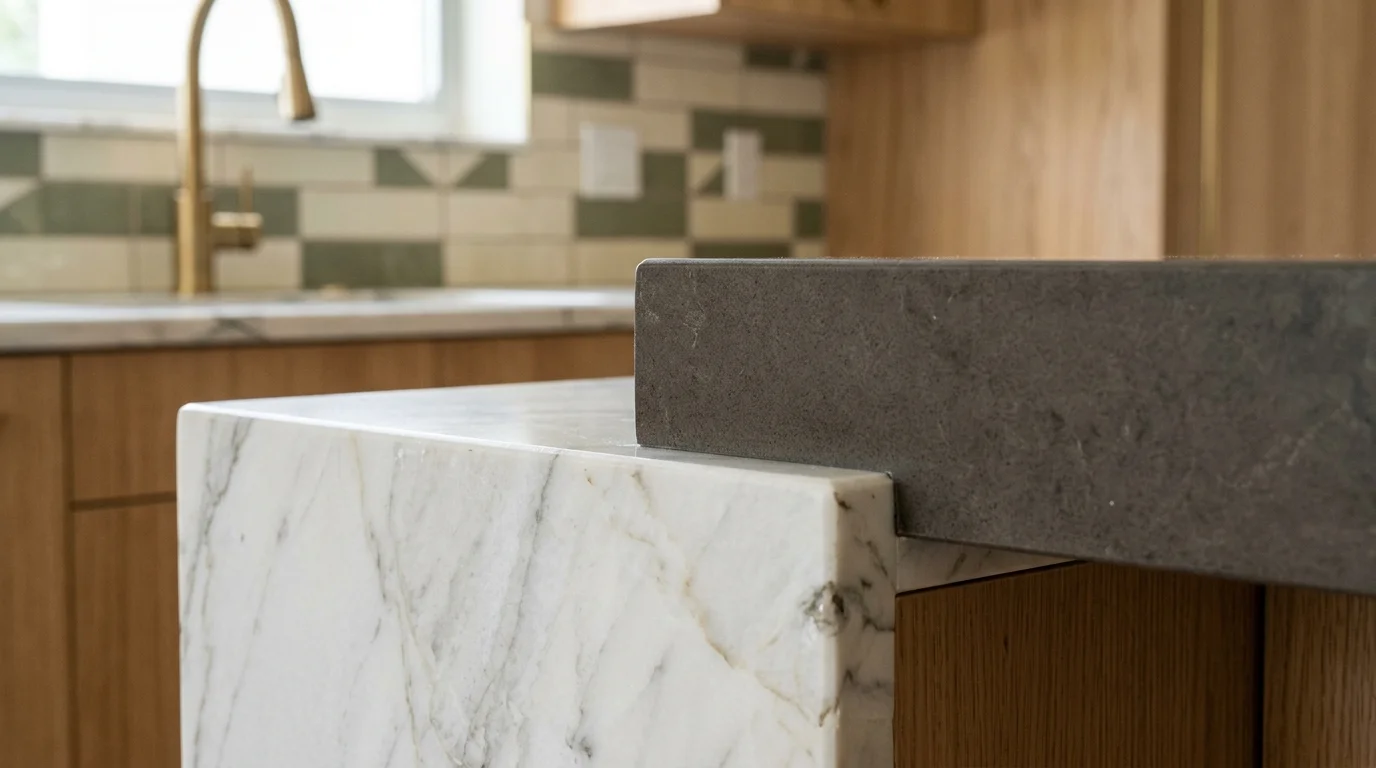
Consider the waterfall edge separately. If your island has a waterfall edge, the material choice becomes even more critical because the stone is now vertical and fully exposed. Engineered quartz with minimal movement tends to work better for waterfalls because the pattern repeat is consistent. Natural stone waterfalls are stunning but require careful slab selection to avoid awkward grain breaks. Waterfall countertop costs and ideas cover this in full detail.
Think about edge profiles together. Running the same edge profile on both the island and perimeter is the simplest way to unify two different materials. An eased edge on both reads as a deliberate design decision. Mixing a bullnose on the perimeter with a mitered edge on the island for no design reason reads as inconsistency. Our countertop edge profiles guide for Palm Beach County breaks down which profiles work with which material thicknesses and cabinet styles.
Pull samples in your actual kitchen. The color temperature of Florida light, especially the way afternoon sun hits interiors in west-facing kitchens in Wellington or Lake Worth, changes how stone reads. A sample that looks perfect in a showroom can pull yellow or gray in your space. Always evaluate material samples in situ before finalizing the combination.
Cost Guide
Two-tone countertops don't have to cost more than a single-material kitchen. In many cases, the combination actually saves money because you're running the premium material only on the island. Here's what to expect in the Palm Beach County market as of 2025-2026. Prices include material and installation.
The biggest cost variables are slab size, material rarity, edge profile complexity, and seam placement. A 10-foot island with a waterfall on both ends in book-matched Taj Mahal quartzite is a fundamentally different budget item than a 6-foot island with a simple eased edge in a standard quartz pattern. Be specific when you request quotes. Vague descriptions lead to vague numbers. Our full countertop installation cost guide for Palm Beach County breaks down per-square-foot rates by material category if you want to get granular before your estimate.
For context on how countertop costs fit into the broader project budget, Remodeling Magazine's Cost vs. Value report tracks national and regional kitchen remodel return data annually. South Florida trends toward the higher end of those ranges given land values in Palm Beach County.
South Florida Considerations
Designing kitchens here isn't the same as designing them in the Northeast or Midwest. A few things specific to Palm Beach County and the Treasure Coast should factor into your two-tone countertop decision.
Humidity and natural stone. Florida's humidity doesn't damage most countertop materials directly, but it does accelerate problems with improperly sealed natural stone. If your island is going to be a porous quartzite or marble, sealing matters more here than in a dry climate. Granite on the perimeter around the sink needs the same attention. See the best countertop materials for Florida humidity for a full breakdown of how each material holds up in our climate before you commit.
UV exposure. Florida sun is aggressive. South and west-facing kitchens in Boca Raton, Delray Beach, and coastal Jupiter get afternoon light that fades and yellows certain materials over time. Quartz with organic pigments can shift in high UV exposure. Dekton and sintered surfaces handle UV better than any other category. If your island is near a window wall or a sliding door to a pool deck, factor UV resistance into the material choice.
HOA and ARB considerations. Some gated communities and historic districts in Palm Beach County require design review for interior renovations that are visible from the street or common areas. This is more relevant for kitchen renovations in front-facing spaces. Your general contractor handles permit submission if the scope requires it. Our team supplies design drawings and material samples to support that process, but the GC submits any required packages to the building department or architectural review board.
Resale and buyer expectations. Buyers in Palm Beach County expect elevated finishes. A two-tone countertop combination with a statement island reads as a design choice, not a budget workaround, and it photographs well for listings. If you're remodeling with resale in mind, this approach checks a box that buyers in Wellington, Jupiter, and North Palm Beach are actively looking for. Read our thoughts on how kitchen remodels affect home value in Palm Beach County to understand where countertop upgrades land in the ROI picture.
Where to source slabs locally. We work with several slab yards in the area that carry natural stone inventory worth seeing in person. Stone must be seen at full slab scale before you can judge veining, color consistency, and book-matching potential. A 12-by-12 sample in a showroom tells you almost nothing about how a 10-foot island will read. Our guide to the best places to buy countertop slabs in Palm Beach County lists the local sources worth visiting.
One more thing: two-tone countertops work best when the cabinet plan supports them. If you're also reconsidering cabinet colors as part of this project, our guide to how to choose countertop colors walks through the process of matching stone tones to cabinet finishes without guessing.