White Kitchen Cabinets: Timeless 2026 Looks
- Warm White vs Bright White: Which Do You Actually Want?
- Pairing Countertops & Backsplash with White Cabinets
- How to Avoid the Sterile All-White Trap
- Two-Tone Ideas That Work in South Florida Kitchens
- Cost Guide for White Cabinet Projects in Palm Beach County
- South Florida Considerations
- Frequently Asked Questions
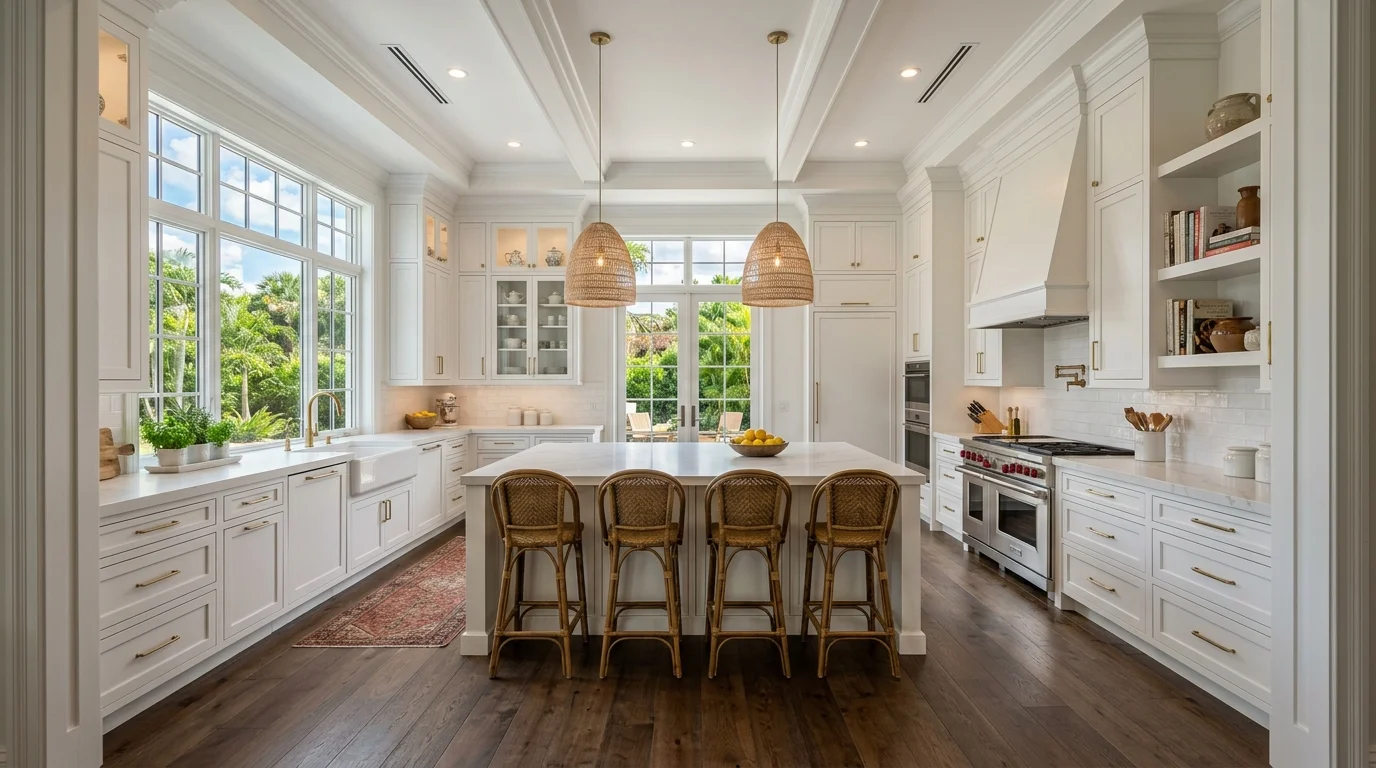
White kitchen cabinets remain the most requested cabinet color we see at South Florida Kitchen & Bath Design, across Boca Raton condos, Wellington single-family homes, Jupiter waterfront properties, and Delray Beach townhouses alike. They reflect natural light brilliantly in our south-facing kitchens, pair with almost any countertop material, and hold resale value better than nearly any other color choice. But "white" covers a wide spectrum, and the difference between a kitchen that feels clean and airy versus one that feels cold and clinical often comes down to decisions most homeowners don't think about until they're standing in a finished space wishing they had. Here's what our team has learned from hundreds of white kitchen cabinet projects across Palm Beach County.
Warm White vs Bright White: Which Do You Actually Want?
This is the first question we ask every client who says "I want white cabinets." Because warm white and bright white are completely different looks, and they behave differently under Florida light.
Bright whites, think Benjamin Moore Chantilly Lace, Sherwin-Williams Extra White, or a true optical white like Pure White, read crisp and clean. They work beautifully in modern, minimalist kitchens where you want a sharp contrast against dark hardware or a bold backsplash. In a kitchen with north-facing windows or limited natural light, bright whites can actually start to look blue-gray or even slightly dingy depending on your bulb temperature. We see this a lot in older Palm Beach County homes with smaller window openings.
Warm whites, Benjamin Moore White Dove, Sherwin-Williams Alabaster, Chantilly Lace's softer cousin SW Alabaster, carry just enough cream or yellow undertone to feel inviting rather than sterile. They pair naturally with wood tones, unlacquered brass hardware, and warmer stone countertops like Taj Mahal quartzite or a cream-veined quartz. In South Florida's intense natural light, warm whites hold their true tone throughout the day far better than their cooler counterparts.
Our recommendation: if your kitchen gets direct sun for most of the day, which describes most homes in Boca Raton and Delray Beach, bright white can work without looking cold. If your kitchen faces north or has significant shade from a deep overhang (common in older CBS homes), go warm. You'll thank yourself every evening when the cooler light bulbs make bright white cabinets look like they were painted in a different decade.
Door style matters here too. A flat-front slab door in bright white reads very contemporary. A shaker door in warm white reads transitional to traditional. If you're not sure which profile fits your home, our article on flat front vs shaker cabinets in South Florida breaks down exactly when each style makes sense.
One more thing on paint: if you're painting existing cabinet boxes rather than replacing them, the sheen level matters enormously in a humid Florida climate. We prefer a satin or semi-gloss finish, it wipes clean easily and holds up to the moisture and cooking splatter that a flat finish simply can't survive long-term. Our full breakdown of paint choices lives in our guide to the best paint for kitchen cabinets in Palm Beach County.
Pairing Countertops & Backsplash with White Cabinets
White kitchen cabinets are a blank canvas, which sounds like a gift until you realize every countertop and backsplash choice is now fully exposed. There's no dark cabinetry absorbing a questionable decision. Everything shows.
Here's how we think about countertop pairings:
Quartz with white cabinets is the most popular combination we install in Palm Beach County, and for good reason. A white or light gray quartz keeps the kitchen bright and easy to maintain. Calacatta-style quartz with bold gray or gold veining gives the kitchen drama without adding color. For warm white cabinets specifically, we like quartz with warm ivory or champagne undertones, a stark bright-white quartz against warm white cabinets will clash visibly. The materials need to share undertones. Our white shaker cabinets with quartz countertops guide goes deep on the most successful pairings we've used locally.
Quartzite and natural marble are increasingly popular in Jupiter and the higher-end Boca Raton market. Taj Mahal quartzite against white cabinets is one of the best combinations in South Florida design right now, the warm gold-cream tones in the stone pick up brass hardware beautifully. Be aware: natural stone requires sealing and some maintenance. Many homeowners in Florida's high-humidity environment prefer engineered quartz for that reason, and we respect both choices.
Butcher block works as an accent countertop, an island in white oak or walnut next to white perimeter cabinets adds warmth that stone can't match. Full-run butcher block in a busy South Florida kitchen is a harder sell for us; the humidity and heat cycles here are rough on solid wood. We'd rather see it on an island where it gets used intentionally.
On backsplash: the single biggest mistake we see with white cabinets is choosing a plain white subway tile backsplash. It saves money on paper, and then the kitchen looks like a fast food prep station. White cabinets deserve a backsplash with texture, movement, or contrast. Some options that work consistently well here:
- Zellige tile in warm white or ivory, the handmade variation creates depth that flat subway tile simply can't. It's one of the hottest backsplash choices in 2026 and works beautifully with both warm and bright white cabinets. See our full guide to zellige tile for sizing, grout, and installation notes.
- A slab backsplash in the same material as the countertop, if you're doing a statement quartzite or quartz countertop, continuing it up the wall behind the range creates a pulled-together look that's very popular in high-end South Florida kitchens right now.
- Textured ceramic or porcelain in a warm neutral, not white, not gray, but a tone that bridges your cabinets and countertop.
- Classic marble-look tile in a larger format, a 4x12 or 4x16 with a brick pattern reads more refined than standard 3x6.
For the height question, 4-inch backsplash versus full-height, our answer with white cabinets is almost always full-height, particularly behind the range. It reads cleaner, protects more wall surface, and gives you the opportunity to make a real design statement. Our detailed breakdown of 4-inch vs full-height backsplash walks through the cost difference and when each makes sense.
How to Avoid the Sterile All-White Trap
White kitchens get a bad reputation sometimes, and it's earned, when they're done wrong. The kitchens that look cold, hospital-clean, and lifeless all share the same failure: no variation in texture, tone, or material. Everything is the same temperature of white, the same sheen level, the same flat surface. That's a design mistake, not a color mistake.
Here's how we break up the monotony on white cabinet projects:
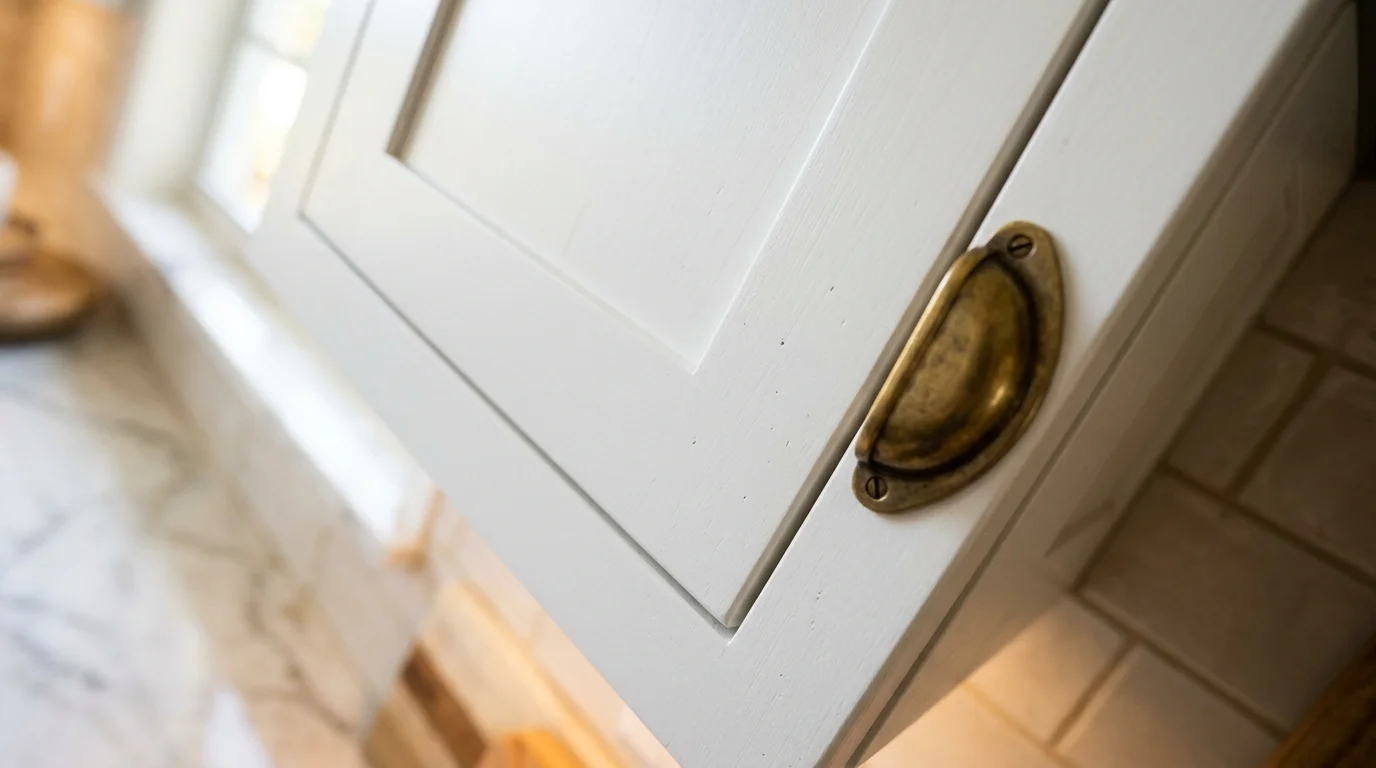
Hardware with personality. Brushed brass or unlacquered brass pulls on white cabinets is one of the best combinations in residential design right now. It's warm, it photographs beautifully, and it ages in a way that flat black or chrome simply doesn't. Matte black hardware on white cabinets works too, it's a sharper, more modern look. Either way, the hardware is doing real design work here, not just opening doors. Our guide to brass cabinet hardware in 2026 covers why this finish is holding strong heading into the second half of the decade.
Open shelving as an accent. Replacing one or two upper cabinet sections with open shelves, especially flanking a range hood, breaks up the wall of white and gives you a place to introduce wood tones, greenery, or ceramic pieces. We're not saying rip out all your uppers. One section on each side of the hood is usually enough. Read through our honest take on open shelving pros and cons before committing, it's not for every household.
Warm wood floors or a wood island. White cabinets floating over warm wood flooring is a classic South Florida combination. The contrast grounds the kitchen and prevents the all-white flatness. If you're keeping existing tile floors, a wood-look LVP or porcelain plank in a warm tone does the same job.
Under-cabinet lighting. This one gets overlooked constantly. Warm LED strips under your upper cabinets cast a completely different glow on white cabinet doors than overhead recessed lights. It adds depth, dimension, and makes the kitchen look intentional at night. It's also one of the better dollar-for-dollar improvements on any kitchen remodel.
A statement range hood. A plaster hood, a wood-wrapped hood, or a bold metal hood above a white cabinet run is an anchor point. It signals to anyone walking in that this is a designed kitchen, not a default one.
Vary your upper and lower cabinet profiles. Not every door needs to be the same. A glass-front upper on either side of the range hood, or a beaded-inset center panel on a few doors, adds visual interest that plain shaker doesn't. These details matter more in an all-white kitchen than anywhere else because there's no color doing the work.
Two-Tone Ideas That Work in South Florida Kitchens
Two-tone kitchens, white uppers with a contrasting lower cabinet or island, are one of the strongest design moves you can make in a mid-size or larger kitchen. Done right, they look intentional and custom. Done wrong, they look like you ran out of paint. Here's what works in our market.
The most reliable combination we install is white uppers with navy or deep blue lowers. It's a coastal reference that fits naturally in Palm Beach County homes from Wellington to Jupiter, and the contrast is clean without being trendy. White and sage green is another strong pairing, soft, organic, and increasingly popular in 2026. White and warm greige reads very transitional and works well in homes where the rest of the house leans neutral.
For islands specifically, a white perimeter with a colored island is a lower-commitment way to try two-tone. The island is one unit, if you ever decide you want to change the color, it's a single refinishing or replacement job rather than retouching your entire lower cabinet run. We've done white perimeters with charcoal islands, warm walnut-stained islands, and deep forest green islands, all of them work when the countertop material ties the two zones together.
What doesn't work: picking two whites that are supposed to look intentional but don't. Warm white uppers with a cool-toned white lower cabinet just looks like a mistake. If you're going two-tone, make the contrast clear. There should be no question in anyone's mind that the color difference was deliberate.
Our dedicated article on two-tone kitchen cabinets has 15 specific Florida-appropriate combinations with notes on which work in smaller versus larger kitchens. Worth a read before you finalize your color selections.
Also: if you're on a tighter budget and considering whether full replacement or a refinishing job makes more sense for your white cabinet project, that comparison is worth working through carefully. Our breakdown of cabinet refacing vs full replacement in Palm Beach County gives you the honest cost and quality tradeoffs so you're not guessing.
Cost Guide for White Cabinet Projects in Palm Beach County
Here's what real white kitchen cabinet projects cost in our market. These are SFKB installed prices, cabinetry, countertops, backsplash tile, and finish carpentry. Plumbing, electrical, and permit work (when scope requires it) are coordinated through your general contractor separately.
Note on permits: most cabinet refreshes and countertop swaps on an existing layout don't require permits. Permits come into play when your project involves moving a sink or appliance, adding circuits, running new gas lines, or opening walls. Your GC will advise on what your specific scope triggers under Florida Building Code.
For a deeper look at full kitchen remodel pricing across all cabinet styles and scopes, our kitchen remodel cost guide for Palm Beach County is the most thorough resource we publish. It covers everything from basic refreshes to full layout changes with all the line items you'll actually see on a contractor quote.
South Florida Considerations
White cabinets in South Florida face a few challenges that homeowners in cooler, drier climates don't deal with. Here's what our team watches for on every white cabinet installation.
Humidity and cabinet box construction. South Florida's year-round humidity, especially in coastal communities like Boca Raton and Delray Beach, is hard on cabinet boxes that aren't built for it. We recommend all-plywood box construction over particleboard, full dovetail drawer boxes, and soft-close hardware as standard. Particleboard swells. Plywood doesn't. This matters more in white cabinets than stained ones because swelling and warping are very visible on flat painted surfaces. If you notice a door that won't close properly, check our guide on how to fix a warped cabinet door in humid Floridait's a common issue in homes without adequate climate control.
UV exposure and yellowing. Bright white painted cabinets in direct sun, particularly west-facing kitchens common in Wellington and western Palm Beach County, can yellow over time if the paint formulation doesn't include UV inhibitors. This is one reason we're specific about paint brands and finishes on white cabinet projects. A quality conversion varnish or catalyzed lacquer finish holds color far longer than a standard latex paint. Ask specifically about this when reviewing your cabinet spec sheet.
HOA and ARB approvals in gated communities. Many Palm Beach County communities, from Mizner Park-adjacent buildings in Boca to the equestrian estates in Wellington, have architectural review boards that require design drawings and material samples before a remodel begins. Our team supplies detailed design drawings and finish samples that your GC or homeowner submits to the HOA or ARB for approval. This process adds time, typically 2 to 6 weeks depending on the community, and should be factored into your project timeline from day one.
Resale value. White kitchen cabinets consistently outperform most other color choices when it comes to broad buyer appeal in the South Florida resale market. According to Remodeling Magazine's Cost vs. Value data, kitchen remodels in the South Atlantic region recover a strong share of investment, and neutral, timeless finishes like white perform better than trend-driven colors in that equation. If you're remodeling with an eye toward selling within a few years, white cabinets are one of the safer bets in our market.
The 30% rule check. Before committing to a full white cabinet replacement project, it's worth running a quick sanity check on your overall renovation budget relative to your home's value. Our breakdown of the 30 percent rule in remodeling explains why over-improving relative to your neighborhood's price ceiling is a real risk, and how to calibrate your kitchen spend accordingly if you're in a $400K Delray townhouse or a $2M Jupiter waterfront home.